
Dysgraphia: signs, causes and solutions
Dysgraphia - a specific learning disorder that affects a person's ability to write correctly and fluently.

What dysgraphia is
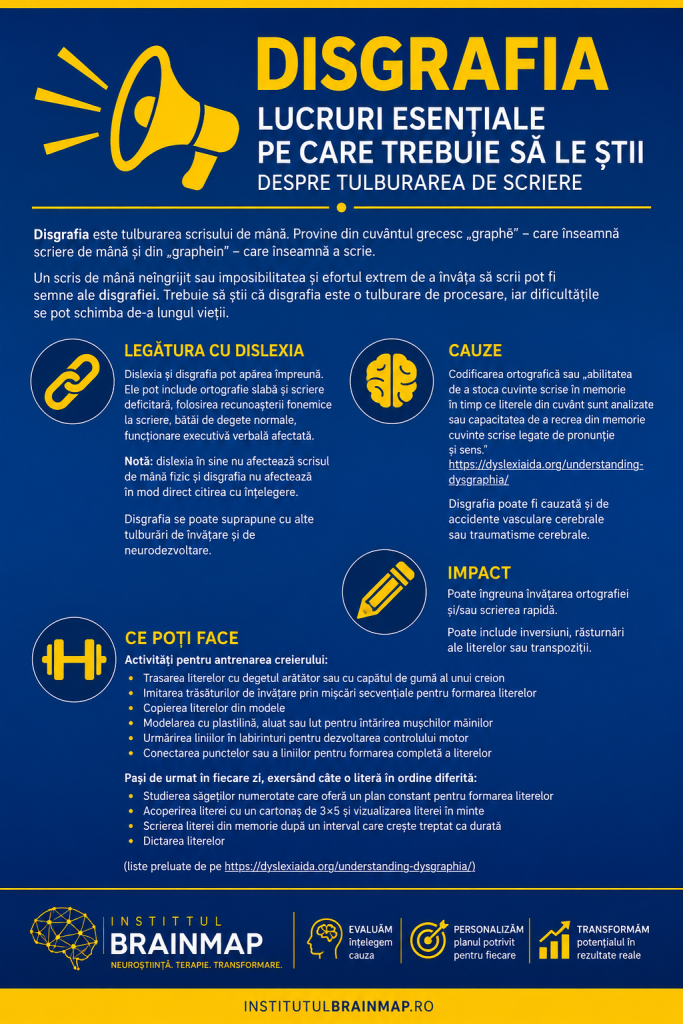
Dysgraphia is a specific learning disorder that affects a person's ability to write correctly and fluently. It is not related to a lack of intelligence or a lack of desire to learn, but to the way the brain processes and coordinates the information involved in the act of writing. People with dysgraphia may have difficulty forming letters, keeping their handwriting legible, organising their ideas on paper or coordinating the fine movements needed for writing. In many cases, the child or adult knows what they want to say, but has difficulty putting their thoughts down in writing, which can lead to frustration, mental fatigue and a drop in self-confidence.
Dysgraphia can appear as early as childhood, when the child starts learning to write, but sometimes the difficulties only become obvious in the higher grades, when school demands increase. The manifestations can include slow and messy handwriting, reversed letters, spelling difficulties, problems with spacing between words or marked fatigue during writing activities. Some people may avoid activities that involve writing because these require far greater cognitive and motor effort than normal. In certain situations, dysgraphia can also appear after brain injuries or neurological conditions that affect motor and cognitive functions.
It is very important to note that dysgraphia frequently appears together with other neurodevelopmental or processing disorders. One of the most common associations is with ADHD, where difficulties with concentration, impulsivity and organisational problems can accentuate writing difficulties. Dysgraphia can also coexist with dyslexia, motor coordination disorders, autism spectrum disorders or other cognitive and emotional difficulties. In these cases, the person may simultaneously experience difficulties with attention, language processing, organisation and written expression, which makes a comprehensive assessment and a personalised approach necessary.
From a neurofunctional perspective, dysgraphia involves imbalances in the brain areas responsible for motor coordination, language processing, working memory and executive functions. That is why the intervention does not aim only at improving handwriting itself, but also at developing the cognitive and neurofunctional mechanisms involved in the learning process. Therapies can include fine motor exercises, personalised educational interventions, cognitive training and, in some cases, modern methods such as neurofeedback, which aim to optimise brain activity and improve attention, self-regulation and processing capacity. With appropriate support and early intervention, many people with dysgraphia can make significant progress and improve their academic and professional functioning.
How to recognise dysgraphia in children
Dysgraphia can be hard to spot in the early stages, because many children have imperfect handwriting while they are learning to form letters. However, when the difficulties persist and significantly affect the child's school work, written expression and confidence, a specialist assessment is important. Children with dysgraphia are often labelled "inattentive" or "disorganised", even though their difficulties are based on real neurocognitive mechanisms.
Common signs of dysgraphia in children:
- messy or barely legible handwriting;
- incorrectly formed letters or letters of different sizes;
- difficulty staying on the lines and spacing words correctly;
- slow and tiring writing;
- reversing or omitting letters;
- difficulties with spelling and punctuation;
- too much or too little pressure on the writing instrument;
- pain or fatigue in the hand while writing;
- difficulty copying texts;
- poor organisation of ideas on paper;
- avoidance of activities that involve writing;
- frustration, anxiety or reduced self-confidence in school settings.
In some children, dysgraphia may affect only the motor side of writing, while in others the organisation of ideas, working memory or processing speed are affected as well. That is why it is important for the difficulties to be analysed in the context of the child's overall development and of any associated disorders, such as ADHD, dyslexia or motor coordination disorders.
The causes of dysgraphia
Dysgraphia does not have a single cause: it usually appears through the interaction of several neurological, cognitive and developmental factors. In many situations, the difficulties are linked to the way the brain coordinates the processes involved in writing: movement planning, attention, language processing and working memory. Identifying the causes is important for choosing a personalised and effective intervention.
1. Neurofunctional imbalances and brain development
Dysgraphia is frequently associated with differences in the functioning of the brain areas involved in fine motor coordination, language and executive functions. Some areas of the brain may be slower to process information related to movement planning or to the organisation of writing. These neurofunctional imbalances can affect the child's ability to quickly turn thoughts into coherent and legible written expression.
2. ADHD and attention difficulties
Many children with dysgraphia also have ADHD. Problems with concentration, impulsivity and difficulties with organisation can make the writing process much harder. The child may easily lose their train of thought, may write chaotically or may have difficulty following the rules of writing and structuring a text. In these cases, dysgraphia and ADHD can influence each other.
3. Motor coordination disorders
Writing involves very precise coordination between brain, hand and eye. Children who have fine motor difficulties may have problems controlling the pencil, forming letters or keeping up a writing rhythm. Sometimes these difficulties appear as part of developmental coordination disorder, in which fine movements are harder to control and automate.
4. Dyslexia and language processing difficulties
Dysgraphia frequently appears together with dyslexia or other language processing disorders. In these situations, the child may have difficulties both with reading and with written expression. Problems with phonological processing, spelling and language organisation affect the ability to write fluently and correctly, even when the intellectual level is normal or above average.
5. Emotional factors and chronic stress
Anxiety, stress prolonged stress or negative experiences related to school performance can make writing difficulties worse. A child who is constantly afraid of making mistakes can become more rigid, more tense and more insecure during writing activities. Over time, this emotional pressure can reduce motivation and can accentuate cognitive and motor blockages.
6. Neurological injuries or medical conditions
In certain cases, dysgraphia can appear after brain injuries, neurological conditions or other medical conditions that affect the functioning of the nervous system. These situations are rarer, but they can influence the motor coordination, memory and processing speed needed for writing. Neurological and neurofunctional assessment becomes very important in such cases.
The impact on the child's life
The impact on school performance
Dysgraphia can significantly influence a child's school performance, even when the child has a normal or high intellectual level. Many children understand the lessons, know the answers and can take part actively in oral work, but face major difficulties when they have to write. The long time needed to write, mental fatigue and problems organising ideas can lead to lower marks and to the mistaken impression that the pupil is not making enough effort. Over time, the child may start to avoid school activities that involve writing and to develop anxiety related to homework, tests or assessments.
The impact on self-confidence
Children with dysgraphia frequently compare themselves with their classmates and notice that their writing is slower, messier or harder to produce. Negative comments, repeated corrections or frustrations in the school environment can strongly affect their self-esteem. Many children come to believe that they are "not good enough" or that they are "not intelligent", even though their difficulties have a real neurofunctional basis. Over time, this negative self-perception can lead to insecurity, avoidance and lack of motivation in academic and social settings.
The emotional and psychological impact
Dysgraphia can generate constant emotional stress, especially when the child makes great efforts without obtaining the desired results. Accumulated frustration can lead to irritability, anxiety, increased sensitivity to criticism or even episodes of emotional withdrawal. Some children develop a fear of making mistakes or of being judged by classmates and teachers, which can turn school activities into a permanent source of tension. Without appropriate support, these emotional difficulties can persist into adolescence or adulthood.
The impact on social relationships
Academic difficulties and a lack of self-confidence can also influence a child's social relationships. Some children with dysgraphia avoid group activities that involve writing or academic exposure and can become more withdrawn within the group. Repeated experiences of failure or of not being understood can also create the feeling that they are "different" from other children. In certain cases, the child may become more sensitive to rejection, more anxious in social settings, or may avoid taking an active part in educational and recreational activities.
The impact on autonomy and organisation
Dysgraphia does not affect only writing, it can also influence a child's ability to organise and plan. Seemingly simple activities, such as writing down homework, organising information or completing exercises, can require far greater effort than normal. The child may have difficulty managing time, finishing tasks or following complex instructions. These difficulties can affect autonomy and can create increased dependence on help from parents or teachers.
The long-term impact
When dysgraphia is not identified and addressed properly, its effects can extend into adolescence or adult life. Difficulties with written expression, organisation and task management can influence a person's educational path, career choice and general level of professional functioning. However, with a correct assessment, educational support and personalised intervention, many children with dysgraphia manage to develop the strategies they need in order to function effectively and to make the most of their intellectual and creative potential.
How it differs from ordinary writing difficulties
Many children have difficulties when they are learning to write, especially in the first years of school. Uneven letters, slow writing or spelling mistakes can be part of the normal developmental process. In dysgraphia, however, the difficulties are far more persistent and more intense, and they significantly affect the child's academic and emotional functioning. The main difference is that dysgraphia is not just a temporary stage of learning, but a neurofunctional difficulty that constantly interferes with the writing process.
1. The persistence of the difficulties over time
In most children, handwriting improves progressively through practice and maturation. In dysgraphia, however, the difficulties persist even after a great deal of practice and after the child has had enough time to learn the rules of writing. The handwriting can remain messy, slow and hard to read for long periods, without progress proportional to the child's age and educational level.
2. Disproportionate effort for the writing activity
Children with ordinary writing difficulties may need more practice, but they manage to write without an excessive expenditure of energy. In dysgraphia, the writing process requires very great mental and motor effort. The child may tire quickly, may avoid writing activities or may become frustrated after short periods of work. Sometimes simply copying a text can take much longer than it does for classmates of the same age.
3. Inconsistent and disorganised handwriting
In ordinary difficulties, the mistakes tend to be relatively predictable and to decrease over time. In dysgraphia, the handwriting can be very inconsistent: the letters are of different sizes, the spacing is irregular, the lines are not respected and organising ideas on the page is difficult. Even when the child knows the correct answer, they may find it hard to express it coherently in writing.
4. Association with other neurodevelopmental difficulties
Dysgraphia frequently appears together with ADHD, dyslexia, motor coordination disorders or other cognitive and emotional difficulties. The child may simultaneously have problems with concentration, organisation, working memory or language processing. Ordinary writing difficulties, by contrast, usually appear in isolation and improve as the child practises and develops.
5. Significant emotional and functional impact
A child who simply finds it harder to learn to write may sometimes become frustrated, but in dysgraphia the emotional impact is far deeper. The child may start to avoid school, to lose self-confidence or to develop anxiety related to academic performance. Constant difficulties and the feeling of making a lot of effort without results can affect motivation and the relationship with the learning process.
6. The need for a specialist assessment
Ordinary writing difficulties do not always require specialist intervention and can improve naturally through practice and educational support. When dysgraphia is suspected, a psychological and neurofunctional assessment is important in order to identify the mechanisms involved and any associated disorders. A personalised intervention can make a major difference to the child's progress and can prevent long-term emotional and academic effects.
How the treatment of dysgraphia is approached
The initial assessment and identifying the profile of difficulties
The treatment of dysgraphia always begins with a comprehensive assessment, which aims to identify exactly what type of difficulty is involved: motor, visuospatial, linguistic or integrative. The way the child forms letters, the layout on the page, writing speed and spelling consistency are all analysed. This stage is essential in order to understand whether the dysgraphia is isolated or associated with other learning disorders, such as dyslexia or ADHD.
Speech therapy and educational intervention
Speech therapy plays a central role in correcting dysgraphia, through specific hand-eye coordination exercises, the structuring of written language and the development of phonological awareness. At the same time, an adapted educational intervention helps the child learn more effective writing strategies, reducing overload and frustration. The work is progressive, with clear objectives adapted to the child's developmental level.
Developing fine motor skills and coordination
An important aspect of treatment is training fine motor skills, through exercises that involve control of the hand, of the fingers and of the pressure applied to the writing instrument. Activities such as tracing shapes, guided writing or repetitive graphic exercises help automate the movements needed for fluent writing. Over time, these exercises reduce the effort involved in the act of writing.
Emotional support and building self-confidence
Children with dysgraphia can develop frustration and avoidance towards school activities, which is why emotional support is essential. The work focuses on reducing performance-related anxiety and on building self-confidence. Encouraging progress, even small progress, has a significant impact on motivation and involvement.
Neurofeedback in dysgraphia
Neurofeedback can be used as a complementary method in dysgraphia, with the aim of improving brain self-regulation, attention and the coordination between the areas involved in language processing and fine motor control. During the sessions, brain activity is monitored in real time and the brain receives feedback so that it learns to work more efficiently. In dysgraphia, this process can help reduce motor impulsivity, increase concentration and stabilise the neuronal activity involved in writing.
Although neurofeedback does not replace speech therapy or educational intervention, it can amplify their results by optimising basic cognitive functions. Many children with dysgraphia have difficulties not only with writing, but also with sustained attention and organisation, and neurofeedback can help improve these aspects. Integrating it into a personalised therapeutic plan allows a more complete approach, centred on the way each child's brain works. If you would like to understand the situation better and to find out what type of intervention is suitable, we invite you to fill in the contact form for a free talk with a specialist. During this conversation, we can look at your specific needs and guide you towards the right steps for support and progress.
Do you want to understand what is happening in your brain?
Book a talk with the specialists of the BrainMap Institute and find out how a BrainMap and brain training can help you.