What happens in your brain when depression sets in, and how can you change it?

Discover the real cause of depression and treat it right at the source, through brain training personalized to the uniqueness of your brain.
What is depression?
Depression is a mood disorder with deep roots in the chemistry and functioning of the brain. It affects the way a person thinks, feels, sleeps, moves, interacts with others and sees their own worth.
Often, depression sets in quietly and slowly. Other times it appears suddenly, after too great an emotional strain or a period in which the brain stays stuck in survival mode. In both cases, body and mind react deeply through exhaustion, emotional shutdown and a reduced capacity to adapt.

Do you recognize yourself in any of the states below?
- You wake up tired, even after 8+ hours of sleep
- Activities you used to enjoy no longer feel meaningful
- You have crying spells, irritability or social withdrawal
- You feel worthless, critical and distant from yourself
- Persistent negative thoughts, sometimes even suicidal
- Unexplained physical pain (head, back, chest)
Classic treatment methods
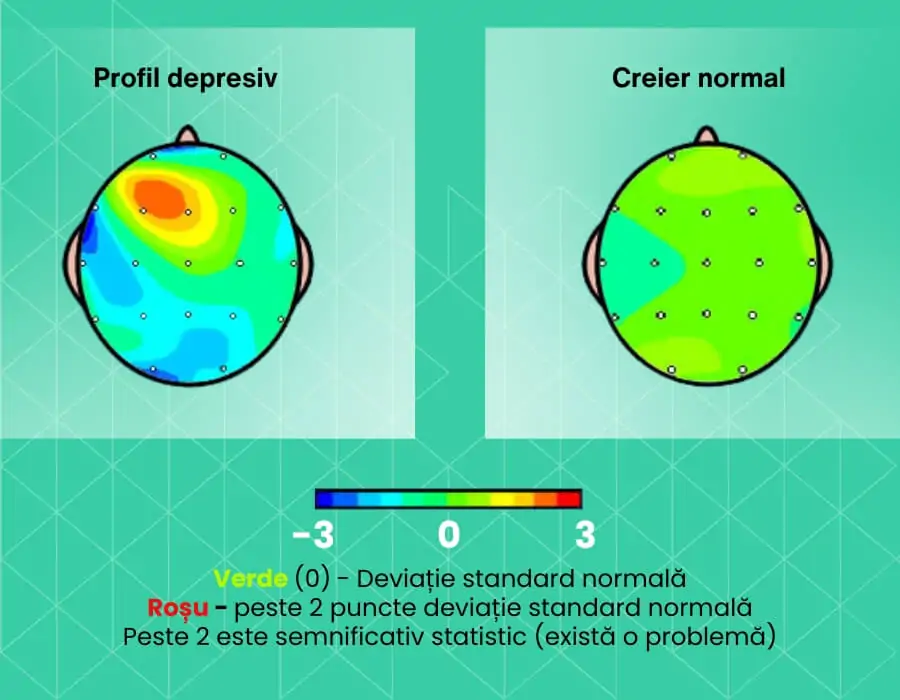
Treating depression often involves a combination of psychotherapy, medication and self-care techniques. Psychotherapy, such as cognitive behavioural therapy, can bring emotional clarity and support in difficult moments. Antidepressant medication helps regulate brain chemistry and can offer temporary stability.
In some cases these approaches help manage the symptoms, but the benefits tend to vary from person to person, and emotional balance sometimes remains fragile without a deeper intervention on brain activity.
Brain training versus classic methods
Brain training
- ✅ Addresses the real cause: Yes
- ✅ Side effects: None
- ✅ Relapse risk: Low
- ✅ Personalization: Complete
- ⏱️ Time to results: After a few sessions
Medication
- ❌ Addresses the real cause: Symptoms only
- ❌ Side effects: Yes
- ❌ Relapse risk: High
- ⬜ Personalization: Limited
- ⏳ Time to results: 2–6 weeks
Psychotherapy
- ⬜ Addresses the real cause: Partially
- ⬜ Relapse risk: Variable
- ⬜ Personalization: Standard
- ❔ Time to results: Variable
How brain training works in the case of depression
- Normalizes brain activity in the affected areas
- Reduces persistent depressive symptoms
- Increases resilience and emotional responsiveness
- Helps you reconnect with a sense of wellbeing
- Is non-invasive and involves no medication
What do the studies say?
Treating depression through brain training
Discover how we helped a teenager overcome depression and enjoy life again, after the tragic loss of the family member dearest to them.
Just fill in the form and you instantly receive the case study by email in digital PDF format:
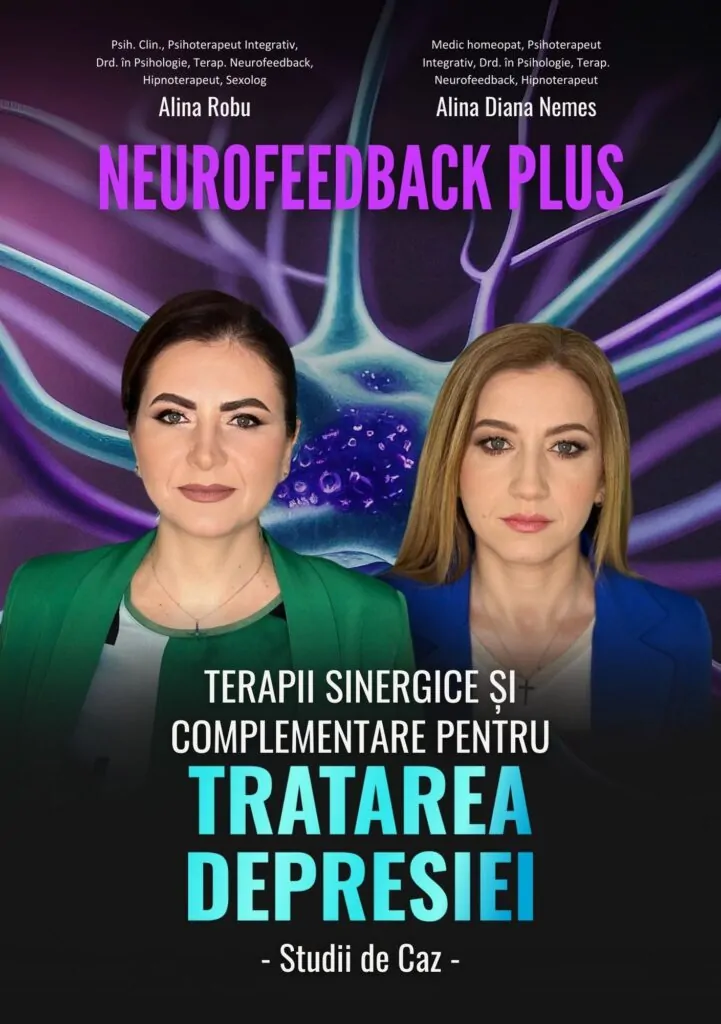
Brain Training – Synergistic and Complementary Therapies for Treating Depression
Discover the world of neuroscience and the secrets hidden by the human brain, alongside Alina Robu and Dr. Alina Diana Nemes, the Neurofeedback therapists who have changed the lives of over 15,000 patients, using a medical protocol unique in Europe, non-invasive, with permanent results.
29.00 RON
Have you already tried therapy or medication, but the symptoms persist? Brain training acts directly on the brain's imbalances. Beyond easing the effects, this method trains the brain's internal mechanisms for real change.
Brain training regulates the imbalanced brain activity that sustains depressive states. Using real-time feedback, the brain is guided to create new neural pathways and function within optimal parameters again.
The results have been documented in hundreds of clinical studies, demonstrating this method's effectiveness in regulating brain activity and improving overall health.
Strehl et al. (2006)
After an SCP neurofeedback protocol, children with affective symptoms were followed for 2 years. Not only did the symptoms decrease significantly, they stayed at a low level, with no relapse or further treatment. It is rare evidence that brain training can trigger real mechanisms of emotional self-regulation that last over time.
Arns et al. (2009)
Their landmark meta-analysis showed that the effects of neurofeedback are maintained or even intensify over time - a rarity among non-invasive therapies. In depression, where relapses are frequent, this stability offers a valuable alternative to treatments that lose their effect once stopped.
European ADHD Guidelines Group (2014)
The specialists validated only 3 types of protocols as clinically effective - and among them, SCP is frequently used in depression to regulate imbalances in cortical activity. Not every kind of neurofeedback works, but when applied correctly it can create clear transformations in emotional state.
We analyse the brain's electrical activity through a state-of-the-art neurocognitive assessment (qEEG), to identify the areas of abnormal activity associated with the onset of depression.
Based on your brain map, you receive the interpretation of the results and a treatment plan adapted 100% to your brain pattern, prepared by Dr. Alina Diana Nemes and Clin. Psych. Alina Robu.
Your brain learns to self-regulate, responding differently to stress, fear and triggers. The training sessions are relaxing, non-invasive and help you reduce the intensity and frequency of panic attacks without medication.
Can neurofeedback help with treatment-resistant depression?
Yes. Precisely in the cases where other solutions did not bring stable results, neurofeedback can offer a promising alternative. Through personalized training, the brain learns to regulate the activity associated with apathy, deep sadness or lack of energy. Several studies show that the effects last over time and support a gradual return to emotional balance.
How long until the first results appear?
Many clients start noticing subtle changes after 10–15 sessions – more restful sleep, steadier energy, clearer thoughts. Results build gradually, usually over the course of 30–40 sessions, depending on emotional history, lifestyle and level of commitment.
Is it a safe method?
Yes. Neurofeedback is a non-invasive, scientifically validated method, used for over 40 years in clinics around the world. It involves no shocks, impulses or medication - only measuring brain activity and guiding it through audio-visual feedback. Sessions are comfortable and adapted to each client.
What happens during a session?
During a session, sensors are placed on the scalp to measure brain activity in real time. Based on this data, the client interacts with a game, a film or an animation that changes according to the brain's reactions. This way, the nervous system learns to maintain states associated with calm, clarity and emotional stability.
Can neurofeedback be combined with other forms of therapy?
Neurofeedback perfectly complements psychotherapy, medication or other recommended interventions. By regulating brain activity, it increases the effectiveness of the other treatments and provides more stable ground for deep healing.
29.00 RON
Brain training unique in the world
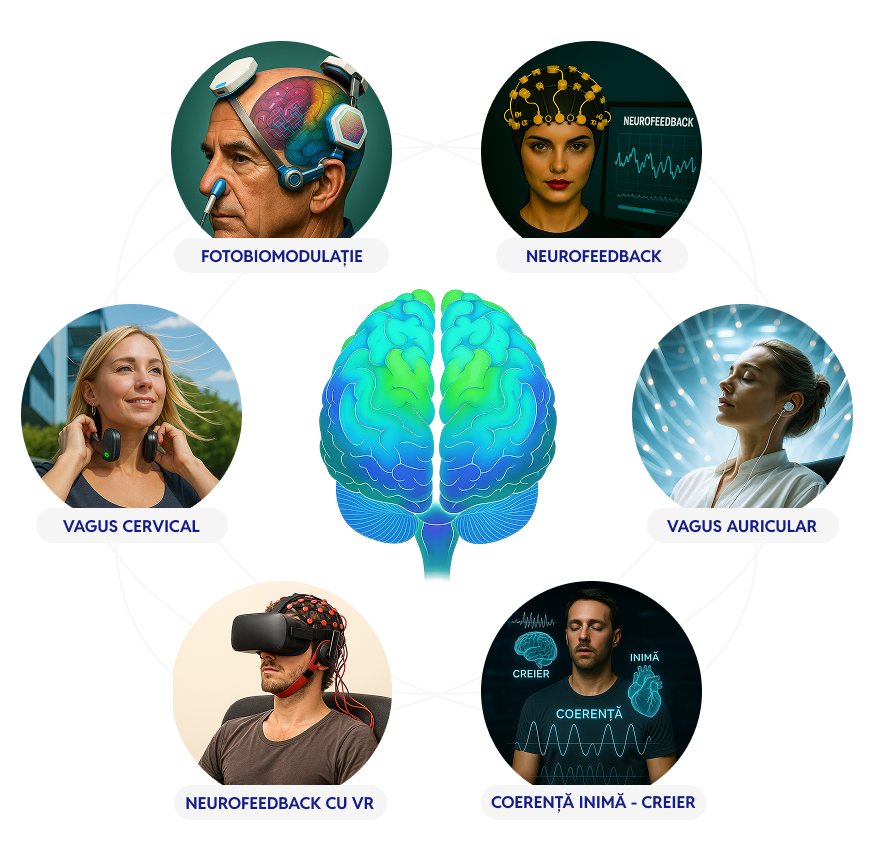
Brain training unique in the world, combining neurofeedback with other complementary neurotechnologies such as photobiomodulation, heart–brain coherence and vagus nerve stimulation, to help you reach your full potential and live the best life possible.
- Results up to 50% faster than classic neurofeedback
- Treats neuropsychiatric and pathological conditions
- Works directly on the cause, not the symptoms
- Restores emotional balance, sleep and mental clarity
- Increases focus, resistance to stress and cognitive performance
- A protocol 100% personalized to the uniqueness of your brain
- Validated by 65+ years of research in neuroscience
Book a free phone consultation with one of the BrainMap Institute's specialists
- You get answers to any questions you have about BrainMap and brain training
- You find out how brain training is applied to the uniqueness of your brain and your situation
- You will know the exact steps to follow to live the best life possible
Effectiveness proven in international scientific studies
What our patients say
Read the experiences of those who overcame their condition.
See testimonialsDo you want to understand what is happening in your brain?
Book a call with the BrainMap Institute's specialists and find out how a BrainMap and brain training can help you.
Book a free call