
The prefrontal cortex: its role in decisions, self-control and emotions
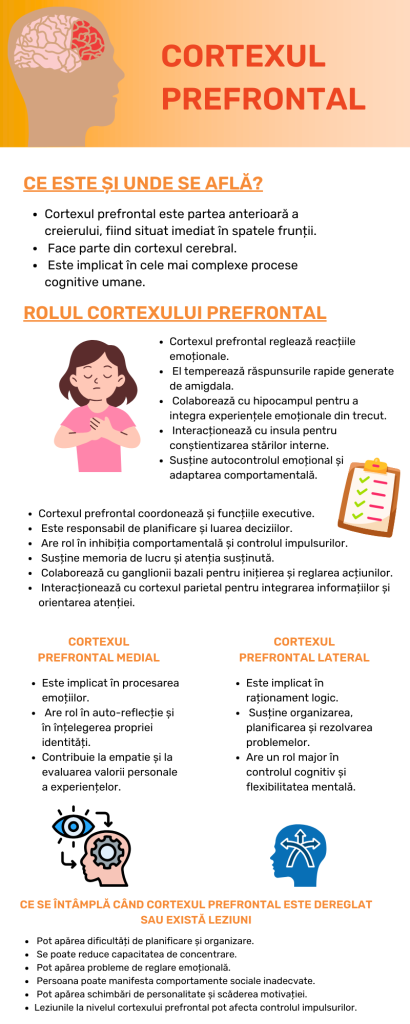
The prefrontal cortex is the front part of the brain, in the frontal lobe just behind the forehead, and it is one of the most evolved.

What the prefrontal cortex is and where it is located
The prefrontal cortex is the front part of the brain, located in the frontal lobe, just behind the forehead, and it is one of the most highly evolved regions of the cerebral cortex. It occupies the front portion of the frontal lobe and is responsible for the most complex cognitive functions of the human being, such as abstract thinking, planning, decision-making and behavioural control. This region integrates information coming from other cortical and subcortical areas, coordinating the higher mental processes that set us apart from other species. It keeps developing until around the age of 25, which explains why teenagers can sometimes struggle to control their impulses or to anticipate long-term consequences.
The role of the prefrontal cortex in everyday life
In everyday life, the prefrontal cortex works like the brain's "executive manager". It helps us organise our activities, set priorities and adapt our behaviour to the context. For example, when we plan our schedule for the next day, when we make a financial decision or when we choose to postpone an immediate reward for a future benefit, this region is intensely involved. It is also what allows us to focus our attention, filter out distractions and keep information active in short-term memory, a process known as working memory.
The prefrontal cortex also plays an essential role in regulating social behaviour. It helps us interpret social norms, anticipate other people's reactions and control our impulses in tense situations. When we choose not to say the first thing that comes to mind in a conversation, or when we handle a conflict diplomatically, this region coordinates our emotional and behavioural responses. In practice, it contributes to self-control, responsibility and the ability to make rational decisions in complex situations.
Prefrontal cortex, emotions and stress
The prefrontal cortex is closely connected to structures involved in processing emotions, in particular to the amygdala. While the amygdala reacts quickly to stimuli perceived as threatening, the prefrontal cortex assesses the situation in a more rational way and can inhibit excessive emotional reactions. This interaction makes it possible to regulate emotions and to adapt our response to the real context of the situation.
Under moderate stress , the prefrontal cortex can work efficiently, helping us solve problems and make quick decisions. However, in situations of intense or prolonged stress, raised levels of cortisol can negatively affect the functioning of this region. At such moments, emotional reactions become harder to control, and the capacity to concentrate and think logically can drop considerably.
Over time, chronic stress can lead to structural and functional changes in the neural connections of the prefrontal cortex. This can show up as difficulty planning, increased impulsivity and problems with emotional regulation. That is why stress management strategies such as adequate sleep, physical exercise and relaxation techniques are essential for keeping this brain region healthy.
What happens when the prefrontal cortex is overloaded
- Reduced ability to concentrate
When the prefrontal cortex is overloaded, it becomes difficult to keep your attention on a task. Distractions grow stronger and productivity falls, because cognitive resources are already depleted. - Impulsive decisions
Mental fatigue reduces the ability to analyse and anticipate consequences, which can lead to hasty or risky choices. In practice, rational control weakens and emotional reactions take over. - Irritability and emotional instability
An overloaded prefrontal cortex regulates emotions less well, which can lead to overreactions, edginess or sudden mood swings. - Reduced working memory
The ability to hold and manipulate information over the short term decreases, affecting performance at work or in academic activities. - A feeling of mental exhaustion
A person may experience "brain fog", difficulty organising their thoughts and a general state of cognitive fatigue, even without any intense physical effort.
The link with self-sabotage, anxiety and ADHD
Self-sabotage often appears when there is an imbalance between emotional impulses and the executive control capacity of the prefrontal cortex. When this region fails to regulate the reactions generated by the amygdala efficiently, a person may avoid important tasks, may put off decisions or may quickly give up on long-term goals. In practice, the desire for immediate comfort or the fear of failure becomes stronger than rational planning, which leads to repeated self-sabotaging behaviour.
In the case of anxiety, the prefrontal cortex has the job of assessing threats realistically and calming exaggerated emotional reactions. When its functioning is affected by chronic stress or overload, thinking becomes rigid and there appear ruminations and a negative anticipation of the future. The person can therefore stay stuck in a vicious circle of worry, because the mechanisms of cognitive regulation are no longer able to temper the intense emotional activity.
In ADHD (attention deficit hyperactivity disorder), the prefrontal cortex is directly involved in the difficulties with attention, organisation and impulse control. Studies show differences in the activity and connectivity of this region, which explains the problems with sustaining concentration, managing time and regulating behaviour. For this reason, interventions that support the executive functions can have a significant impact on the symptoms.
How the prefrontal cortex can be supported
Quality sleep
Adequate sleep supports memory consolidation and the recovery of neural connections, allowing the prefrontal cortex to maintain its capacity for concentration and emotional regulation.
Regular physical exercise
Movement stimulates cerebral circulation and the release of neurotrophic factors, supporting cognitive flexibility and the ability to plan.
Cognitive training and organisation
Setting clear goals, using lists and practising working memory exercises all help strengthen the executive functions.
Stress regulation techniques
Conscious breathing, meditation and regular breaks lower cortisol levels and protect the functioning of the prefrontal cortex in demanding situations.
A balanced diet
An adequate intake of protein, omega-3 fatty acids and micronutrients supports the optimal functioning of the neurotransmitters involved in attention and self-control.
The prefrontal cortex and neurofeedback
Neurofeedback is a non-invasive method of training brain activity that can support the regulation of the prefrontal cortex by monitoring and adjusting brainwave patterns. Through sensors placed on the scalp, the brain's electrical activity is measured and returned as visual or auditory feedback, and the brain gradually learns to optimise its own patterns of functioning. In cases of attention difficulties, anxiety or impulsivity, this training can help improve self-regulation, increase the capacity to concentrate and stabilise the emotional response. In practice, neurofeedback acts as a "coach" for the prefrontal cortex, helping it regain its flexibility and functional efficiency. If you are dealing with concentration difficulties, anxiety, impulsivity or a constant feeling of mental exhaustion, neurofeedback can be a personalised solution for supporting and regulating the prefrontal cortex. Book an assessment and discover how training your brain activity can help you regain your clarity, emotional balance and cognitive performance.
🧠 How does your brain work?
Download the guide for FREE and find out what your brain map shows.
📖 Our books - Real case studies with brain maps
📖 Vindecarea Depresiei (Healing Depression, in Romanian) - 29.00 RON
📖 Vindecarea Anxietatii (Healing Anxiety, in Romanian) - 29.00 RON
📖 Eliminarea Atacurilor de Panica (Ending Panic Attacks, in Romanian) - 29.00 RON
Do you want to understand what is happening in your brain?
Book a call with the BrainMap Institute's specialists and find out how a BrainMap and brain training can help you.