When losing and winning come to mean the same thing
It is 23:47 and the only light in the house comes from the phone in your hand. Everyone is asleep, you are not. Your finger slides across the screen and the app opens instantly. You don't even have to look for the password anymore, because it remembers it on its own. You tell yourself you are just checking something. And you know very well that you are lying the very second the thought crosses your mind.
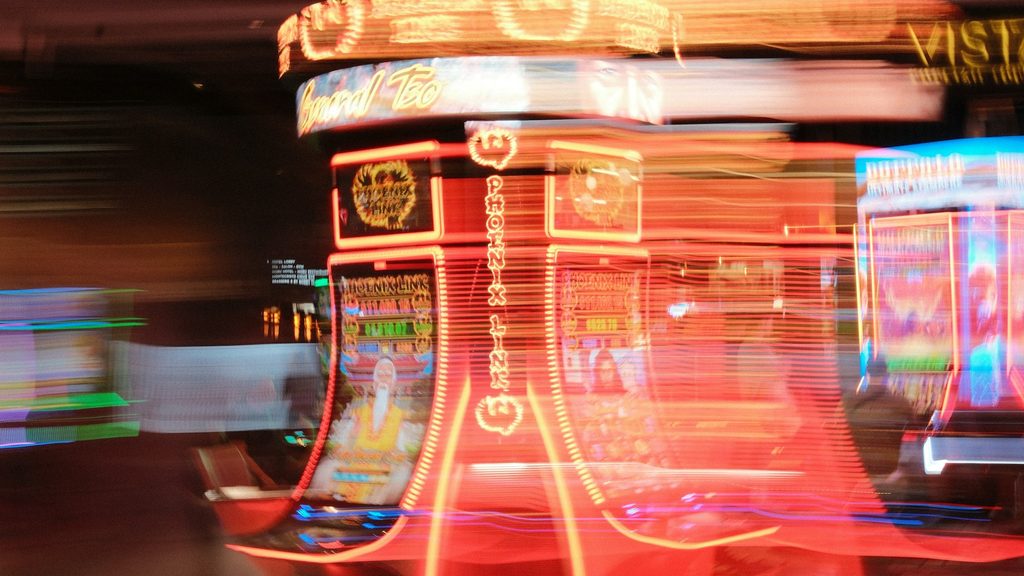
Maybe for you it isn't the phone, but the gaming hall on the corner. Maybe it is sports betting, live roulette, online poker, the lottery or the slot machines at the gas station. The form differs from one person to another. The mechanism behind it stays the same, though, and you know it better than you would like to admit. First there is the tension before the result, that suspended moment when everything still seems possible, and then comes either the euphoria of winning, which is never quite enough, or the pain of losing. The strange thing is that losing also pushes you to play again, instead of stopping you.
The explanation is simpler and more disturbing than it seems. In your brain, losing and winning have come to feed the same circuit.
An addiction without a substance is still an addiction
For a long time, problem gambling was treated as a vice, a matter of discipline and character. Truly strong people would stop with a simple decision, or so it was said. The diagnostic manuals used today say something else entirely. In the DSM-5, gambling disorder was moved alongside substance addictions. It is the first behavioral addiction officially placed there. The reason is as concrete as it gets: although nothing enters the body in the case of gambling, the brain circuits involved are largely the same as in a substance addiction.
This completely changes the way you should see yourself. What is happening to you is not a moral defect. It is a reward system that has learned something it should never have learned. The people who come to us with this problem are usually responsible, intelligent and very hard on themselves, and the shame they carry does not help them at all. When you understand what has actually changed in your brain, the shame starts to make room for curiosity. Only from there does a road begin that actually leads somewhere.
The brain that falls in love with uncertainty
The main character of the story is dopamine. It is often said, wrongly, to be the pleasure molecule. It is rather the molecule of wanting and anticipation, the signal that shows you what deserves effort and attention. And here comes the detail that explains almost everything. The nucleus accumbens, part of the ventral striatum, does not react to the win itself, but to surprise, that is, to the difference between what you expected to get and what you actually got.
The phenomenon is called reward prediction error. When a win comes unexpectedly, the release of dopamine is massive. When the outcome becomes predictable, the signal fades. That is why a certain reward bores the brain, while an unpredictable one keeps it hooked, and gambling is built on exactly this principle, with rewards that are rare, random and impossible to anticipate. It is exactly the pattern that locks in a behavior most strongly. None of this is a coincidence. It is design.
Why “almost” feels like a win
The truly perverse part is only now coming. The brain does not react only to wins, but also to the narrow misses, to what researchers call a near-miss: 2 identical symbols out of 3 on the machine, a goal that would have changed your betting slip, a lottery number that was 1 digit off. Financially, all of these are plain losses. Neurologically, they activate largely the same circuits as a real win. Instead of reducing the urge to continue, they increase it.
Your brain reads “almost” as a good sign. Just a little more, next time it will work out, that is what the signal seems to say. The mathematical reality looks completely different. In every round, the odds are exactly the same. The machine remembers nothing, owes you nothing and is not getting any closer to a win. The impression that a win is “coming” is an illusion produced by the very system that should be guiding you, and it is the engine that keeps you in your seat long after the moment you wanted to leave.
When the director is tied to the chair
In a brain that works in balance, the prefrontal cortex is the one that applies the brakes. It weighs the consequences and compares the pleasure of now with the price of tomorrow. It is also the one that should say clearly that you have already lost 3,000 lei this month and that it is time to stop. The problem appears as the gambling repeats. The signals coming from the limbic system grow stronger and stronger, and the rational voice is drowned out more and more often.
The image that best describes the situation is that of a company where the director has been tied to the chair, and the decisions are made by an impulsive intern who wants everything right now. This explains why you no longer play for the money, but for the feeling. And why, on the days you don't play, there is an emptiness that nothing else seems to fill. Losses stop stopping you and become a reason to continue in themselves, because the only option that seems to fix the situation is the very one that created it. The pattern appears in other addictions too. The same reward system gets hijacked in drug addiction or in alcohol addiction, only there it runs on a different fuel.
Brain training: how you put the director back in charge
At the BrainMap Institute we start from an assessment that shows us how your brain works now, not how it should work in general, and based on it we build a personalized protocol in which a few methods work together and support one another.
- Neurofeedback: it shows you your brain activity in real time and trains the prefrontal cortex to regain its authority over the reward circuit. Session after session, the ability to resist the impulse grows, not through willpower, but through neural reconnection. We have written at length about the way we work in the article on neurofeedback plus therapy.
- Heart-brain coherence: in people who gamble compulsively, the heart rhythm becomes chaotic precisely in the moments of impulse. Coherence training helps you recognize the body's signal of “I want to play” before the decision is made, as if your body were building its own alarm system.
- Vagal stimulation: it activates the parasympathetic nervous system through the vagus nerve and brings a state of deep calm. When your body knows what real calm feels like, it has less need for the false calm after “the last round”.
We see these methods as tools within a broader plan, with stronger evidence for neurofeedback and evidence still accumulating for the others. Their purpose is not to promise a cure. It is to create the conditions in which your brain can resume its work of regulation. We have written at length about how these patterns set in, in the article on how addictions develop and how neurofeedback can help.
You no longer play for the money, but for the feeling. And the feeling is produced by a circuit that can be retrained.
BrainMap Institute
A serious word about safety
Gambling addiction does not bring only financial losses. Debt, repeated lies and the feeling that you have destroyed everything you built significantly increase the risk of depression and suicidal thoughts. It is a real risk, documented in this disorder. If you have such thoughts, call 112 immediately and tell someone what is happening to you, without waiting for it to pass on its own.
On the practical side, it helps enormously not to rely only on the decision of the moment. Block access to apps and websites. Hand financial control to someone you trust. Ask explicitly about the self-exclusion options that licensed operators are required to provide. Each of these steps simply reduces the number of opportunities in which the impulse has something to act on.
It is important to say clearly what we are not, too. Brain training, with neurofeedback, coherence and vagal stimulation, is a complementary approach that can support recovery. It does not replace psychotherapy, where cognitive behavioral therapy has the strongest evidence in this disorder, and it works best alongside it, as well as alongside support groups or debt counseling.
This is the only bet worth making
We know it's hard. We also know you have probably promised dozens of times that you would stop. And we know why the promises didn't hold. The problem was never the promise, but the brain that wouldn't let you keep it. That is exactly why we are not asking you for another one.
We are asking you for 50 minutes of one day, the length of an initial assessment. In it we show you concretely what is happening in your brain and where it is possible to intervene. The conversation is confidential and free of judgment, and if it is the first thing you are saying out loud to someone, you are all the more welcome exactly as you are now. Write to us at office@institutulbrainmap.ro or on WhatsApp at 0770 390 190. This is the only bet worth making.
References
- National Health Service. Gambling addiction. [online] Available at: nhs.uk/live-well/addiction-support/gambling-addictio….
- World Health Organization. Addictive behaviours: Gaming disorder. [online] Available at: who.int/news-room/questions-and-answers/item/addicti….
- National Institute on Drug Abuse. Drugs, Brains, and Behavior: The Science of Addiction. [online] Available at: nida.nih.gov/publications/drugs-brains-behavior-scie….
Frequently asked questions
Is gambling addiction a real illness or just a lack of willpower?
It is recognized as a disorder in the diagnostic manuals used today, and in the DSM-5 it was placed alongside substance addictions, as the first behavioral addiction included there. The reason is biological, because, although no substance enters the body, the reward circuits involved are largely the same. Willpower remains important, but it is fighting a real mechanism, and recovery means retraining that mechanism, not blaming yourself.
Why do I keep gambling even after I lose?
Because losing has come to work as a reason to continue, not as a signal to stop. A brain used to unpredictable rewards is constantly looking for the correction, and the only option that seems to fix the situation is the very one that created it. On top of that, the area that should apply the brakes, the prefrontal cortex, is overwhelmed by the signals coming from the reward system.
What are “near-misses” and why do they matter so much?
They are the moments when you miss by a hair, 2 symbols out of 3 on the machine or a goal that would have changed your betting slip. Financially, they are plain losses. Neurologically, they activate largely the same circuits as a real win and increase the urge to continue. The brain reads “almost” as proof that you are on the right track, although the odds stay identical in every round.
Does neurofeedback help with gambling addiction?
Neurofeedback trains the brain to regain its self-regulation, especially in the area that makes decisions and applies the brakes. We use it as part of a broader plan, alongside psychotherapy and the support of the people around you, not as a single method. We consider it a valuable aid to recovery, without ever presenting it as a guaranteed cure.
How do I actually start?
The first step is a conversation. You write to us at office@institutulbrainmap.ro or on WhatsApp at 0770 390 190 and we schedule an initial assessment, confidential and free of judgment. We start from where you are now, we explain what we have observed and together we build a plan that fits you. You don't need certainties to begin, only the wish to find out more.