
Intrusive thoughts: why they appear and 5 ways to control them
Discover what intrusive thoughts are, how they affect your life and effective ways to control them for a calmer mind and sharper focus.

What intrusive thoughts are
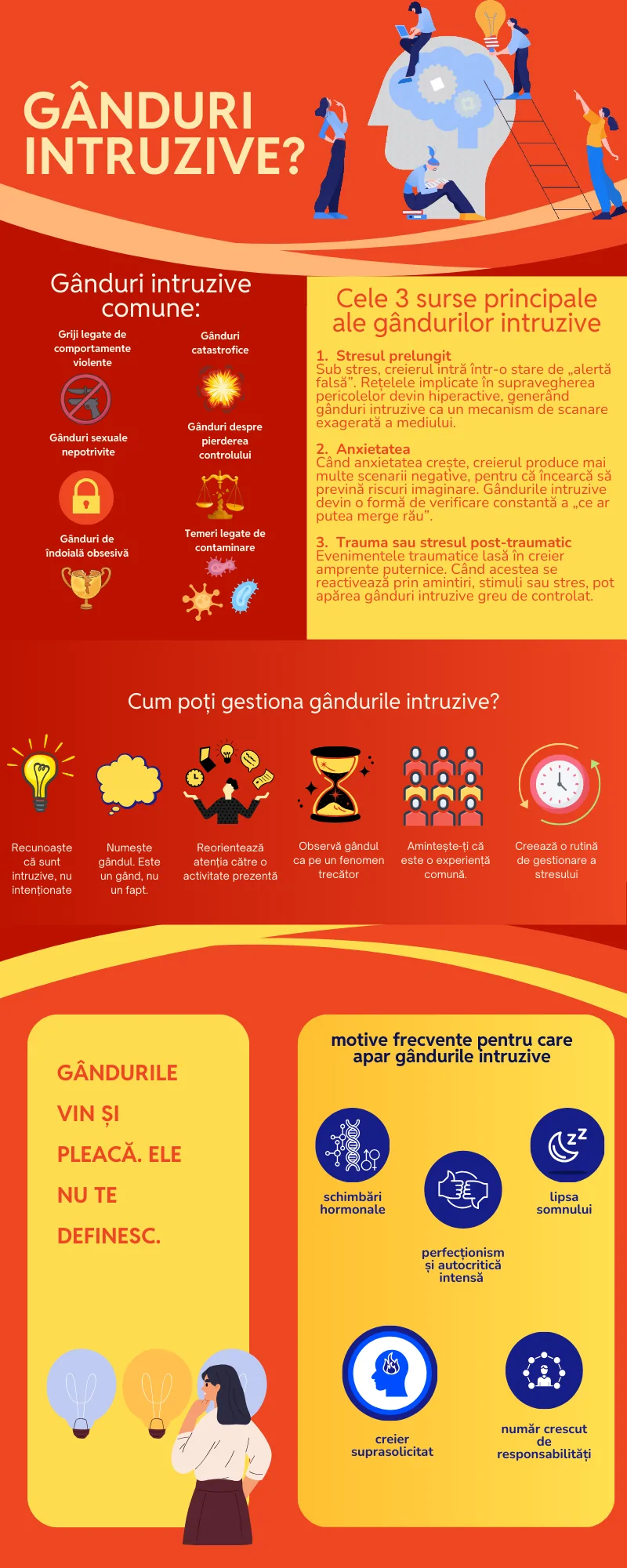
Intrusive thoughts are ideas, images, impulses or scenarios that appear suddenly in the mind, against our will, and that can be disturbing, absurd or completely at odds with our personal values. They reflect neither real desires nor genuine intentions. They are, in fact, the product of a brain that is overactive, anxious or under stress. Most people have intrusive thoughts from time to time, but the difference lies in how we react to them: some let them pass, others read them as dangerous or meaningful.
In most cases these thoughts are harmless and say nothing about a person's character or morals. They become a problem when they are taken too seriously, when they provoke fear, guilt or excessive self-criticism, or when they start to shape everyday behaviour. That is exactly why understanding their nature is essential to stripping them of their power.
Intrusive thoughts often appear in contexts marked by stress, fatigue, anxiety, perfectionism or imbalances in the brain circuits involved in attentional control and inhibition. That is why they are common both among people with anxiety and in disorders such as OCD, where they become more persistent and harder to ignore.
- Aggressive intrusive thoughts
These are scenarios about hurting someone or doing something dangerous for no reason. For example: "What if I push someone?" or "What if I lose control?". Such thoughts are usually completely at odds with the person's personality and appear precisely because they are unacceptable. They do not point to real desires but to an overactivation of the brain centres responsible for assessing danger.
- Intrusive thoughts about contamination or illness
These take the form of an excessive fear of microbes, toxins or germs, or the idea that you might pass an illness on to someone else. The person knows logically that the risk is small, yet the thought keeps coming back obsessively. Such thoughts are fed by brain networks that amplify the sense of "possible danger", even when there is no real evidence.
- Religious or moral intrusive thoughts (scrupulosity)
These show up as a fear of committing a sin, of harbouring an "impure" intention, or of being a bad person simply because an inappropriate thought has surfaced. The person becomes extremely sensitive morally and reads every spontaneous idea as real guilt.
- Sexual intrusive thoughts
These can include uncomfortable or inappropriate scenarios that generate shame and anxiety. They do not reflect sexual preferences; they appear precisely because they are perceived as unacceptable and the brain over-analyses exactly those sensitive themes.
- Intrusive thoughts about doubt
These take the form of: "What if I forgot something important?", "What if I made a mistake and cannot remember it?", "What if I am a bad person?". This type of thought fuels repeated checking, distrust of one's own memory and a rigid inner critic.
The connection between intrusive thoughts and OCD
Intrusive thoughts are present in everyone, but in OCD (obsessive-compulsive disorder) they take on far more significance than they should. The brain of a person with OCD reads these thoughts as dangerous or as signalling a real intention, which triggers intense anxiety and the need to "neutralise" the thought through compulsive behaviour. In practice, the thought is not the problem: the catastrophic interpretation of it is. In OCD, the brain networks that process error and danger are overactive, which makes a passing thought feel like a genuine threat.
Over time the person starts avoiding situations, objects or people for fear that they might trigger the thoughts. Compulsions (checking, excessive washing, repeated prayers, mental self-analysis) become a way of reducing anxiety, but they reinforce the OCD cycle: the harder you try to "control" the thought, the stronger it becomes. The brain learns that thoughts are dangerous and must be monitored, which makes them more frequent.
Neuroscience has shown that OCD involves a particular pattern of functioning in the fronto-striato-thalamic circuits, the networks responsible for inhibition, attentional control and information filtering. This is why intrusive thoughts persist and cannot simply be "let go". Treatment becomes essential in order to recalibrate these circuits. Interventions such as neurofeedback, cognitive behavioural therapy (ERP) and, in some cases, medication can reduce the overactivation, helping the brain return to a healthy way of filtering and controlling information. The result: intrusive thoughts lose their intensity and no longer lead to compulsions.
Why intrusive thoughts appear
Intrusive thoughts appear when the brain is in a state of overactivation, anxiety or constant stress and the systems responsible for filtering information become overloaded. Normally the brain generates thousands of automatic thoughts a day, but most are fleeting and never catch our attention. In tense periods, however, thoughts with a stronger emotional or moral charge are perceived as "alerts" and the brain amplifies them. An entirely random idea thus becomes an intense preoccupation, not because it matters, but because the nervous system can no longer filter it properly.
Another reason intrusive thoughts appear has to do with the way the brain reacts to fear and uncertainty. Areas such as the frontal cortex, the amygdala and the inhibitory networks are involved in impulse control and in suppressing useless information. When these circuits are out of balance (because of anxiety, fatigue, trauma or genetic predisposition) the brain can read unusual thoughts as dangerous or meaningful. That leads to rumination: the harder you try to push the thought away, the more strongly it returns, because your attention reinforces it.
Intrusive thoughts can also appear where there is a tendency towards perfectionism, emotional hypervigilance or heightened sensitivity to "inappropriate" ideas. People who place great emphasis on responsibility, morality, control or performance are often more affected, precisely because they perceive spontaneous thoughts as threatening and "wrong". This catastrophic interpretation does not reflect reality, but it keeps the anxiety cycle going. On top of that, imbalances at the level of the brainwaves (an excess of fast activity in certain areas and too little inhibition in others) can encourage these cognitive phenomena.
5 effective ways to manage intrusive thoughts
1. Observing the thought without judging it
The first step is to recognise the thought as an automatic mental process, not as the sign of a real problem. Label it: "This is just an intrusive thought." That distance reduces the emotional intensity and cuts into its power. The less you interpret it, the faster it passes.
2. Practising anchoring in the present (mindfulness)
Breathing techniques, body scans and mindful attention exercises help reduce mental overactivity. When the mind is firmly focused on the present, intrusive thoughts lose ground. Regular practice lowers emotional reactivity and increases the brain's ability to "let thoughts pass".
3. Reducing avoidance
Avoiding the situations that trigger intrusive thoughts keeps them alive and makes them stronger. Gradual exposure (mental or behavioural) helps the brain learn that there is no real danger. Over time, the triggers lose their "charge".
4. Normalising the experience
Remember that almost everyone has intrusive thoughts. The difference is that some people simply pay them no attention. Normalising them reduces guilt and anxiety, releases pressure and allows the brain to stop overreacting.
5. Recalibrating the brain's rhythm (neurofeedback or somatic therapies)
Directly changing the way the brain works (balancing the brainwaves, reducing excessive fast activity, strengthening frontal control) drastically reduces the frequency and intensity of intrusive thoughts. These interventions act on the neurobiological root of the problem.
How does neurofeedback work in regulating intrusive thoughts?
Neurofeedback acts directly on the cortical networks involved in the emergence of intrusive thoughts, regulating the brain activity that generates hyperalertness, rumination and poor inhibition. Many people with intrusive thoughts show an excess of fast beta waves in the frontal regions, which are responsible for overthinking and anxiety, alongside too little activity in the areas that should inhibit and filter thoughts. Neurofeedback trains these areas to work at an optimal rhythm, which significantly reduces the "mental noise".
During training, the brain receives real-time feedback about its own brainwaves. When it produces healthy patterns it receives positive stimulation; when it slips back into the patterns that sustain intrusive thoughts, the feedback stops. The brain learns, exactly like a muscle, to work in a stable, calm and efficient way. This self-regulation reduces the impulse to generate intrusive thoughts and, more importantly, reduces the emotional reaction to them.
As brain activity becomes more stable, the areas responsible for attentional control and frontal inhibition grow stronger. The amygdala and the systems that process danger reduce their overactivity, and the connectivity between them and the frontal lobes improves. The result is a visible drop in mental intrusions, less rumination and a better ability to ignore disturbing thoughts.
Over time, neurofeedback produces lasting change, because it does not merely mask the symptoms: it corrects the brain mechanism that generates them. Intrusive thoughts therefore appear less often, are weaker and no longer set off spirals of anxiety.
Frequently asked questions about intrusive thoughts
1. Are intrusive thoughts a sign that I have a serious problem?
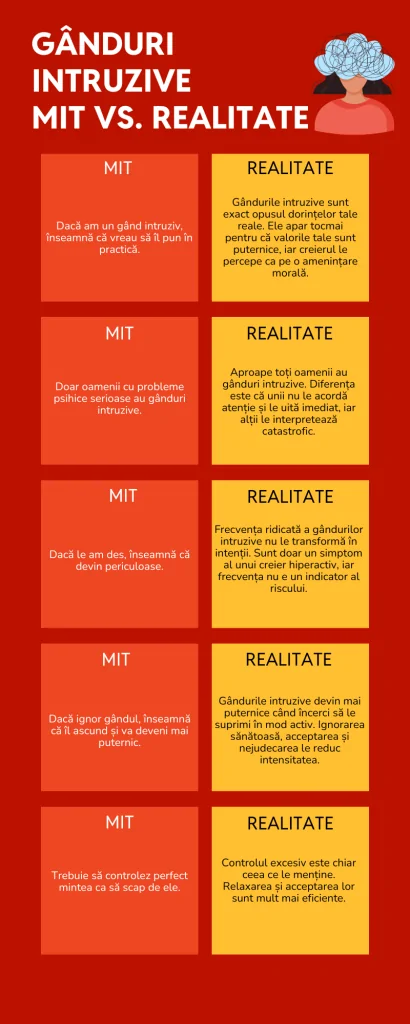
No. They are common and occur in most people. They become a problem only when they provoke intense anxiety or affect behaviour.
2. Do these thoughts mean I want to do what I am imagining?
No. Intrusive thoughts are completely at odds with a person's real intentions. They are the result of an overactive brain, not of your desires.
3. Why do the thoughts come back when I try to push them away?
Because attention feeds them. The brain reads the effort to get rid of them as a sign that they matter.
4. Does medication help?
Sometimes it does, especially when the anxiety or the OCD is severe. Medication, however, does not regulate the brain mechanism itself: it temporarily reduces the intensity of the symptoms.
5. Do intrusive thoughts disappear completely?
Not necessarily, but they can become so weak and so rare that they no longer have any impact. With management techniques and neurofeedback, the mind can return to a calm and balanced rhythm.
6. Does neurofeedback help if I have OCD as well?
Yes. It is one of the most effective non-drug methods for reducing the brain overactivity that sustains obsessions and rumination.
7. Should I avoid the triggers of intrusive thoughts?
In the long run, avoidance keeps them going. Gradual exposure and brain training are far more effective.
8. Are these thoughts dangerous?
No. Ideas are not actions, and intrusive thoughts do not predict behaviour. They are a symptom, not an intention.
🧠 How does your brain work?
Download the guide for FREE and find out what your brain map shows.
📖 Our books - Real case studies with brain maps
📖 Vindecarea Depresiei (Healing Depression, in Romanian) - 29.00 RON
📖 Vindecarea Anxietatii (Healing Anxiety, in Romanian) - 29.00 RON
📖 Eliminarea Atacurilor de Panica (Ending Panic Attacks, in Romanian) - 29.00 RON
Do you want to understand what is happening in your brain?
Book a call with the BrainMap Institute's specialists and find out how a BrainMap and brain training can help you.