
Grief: what you feel after a loss and how neurofeedback can help
Grief: what you feel after a loss and what helps. Understand the emotional and neurobiological process of adapting to loss and how to support your balance.

What grief is
Grief is the psychological, emotional and neurobiological process through which a person adapts to the loss of a close being, of an important relationship, of a stage of life or of a significant element of their identity. Although it is most often associated with the death of a loved one, grief can also appear after a divorce, a break-up, the loss of health, a severe medical diagnosis, the loss of a job or any major change that profoundly alters a person’s reality. From a psychological point of view, grief is the process through which the mind tries to integrate a new and difficult reality, in which what existed before is no longer available.
From a neuroscientific perspective, grief is not only an emotional experience: it involves complex changes at the level of the brain and of the nervous system. Close relationships are represented in the brain through stable neural networks, and when an important person is no longer there, for a while the brain keeps functioning as if that person were still present. This is why many people have the impression that they want to call the person they lost, that they involuntarily look around for them or that they expect to meet them in the usual places. In essence, grief involves the reorganization of these networks and the gradual adaptation to the new reality.
It is important to understand that grief is not an illness and is not a sign of psychological weakness. It is a normal reaction to a significant loss. Its intensity and duration can vary greatly from one person to another, depending on the nature of the relationship that was lost, on the person’s emotional history, on their psychological resources and on the social support available. There is no “right” or “wrong” way of going through grief. Some people express their emotions intensely and visibly, while others process the loss in a more inward way. Both forms can be normal when they allow a gradual adaptation to the loss.
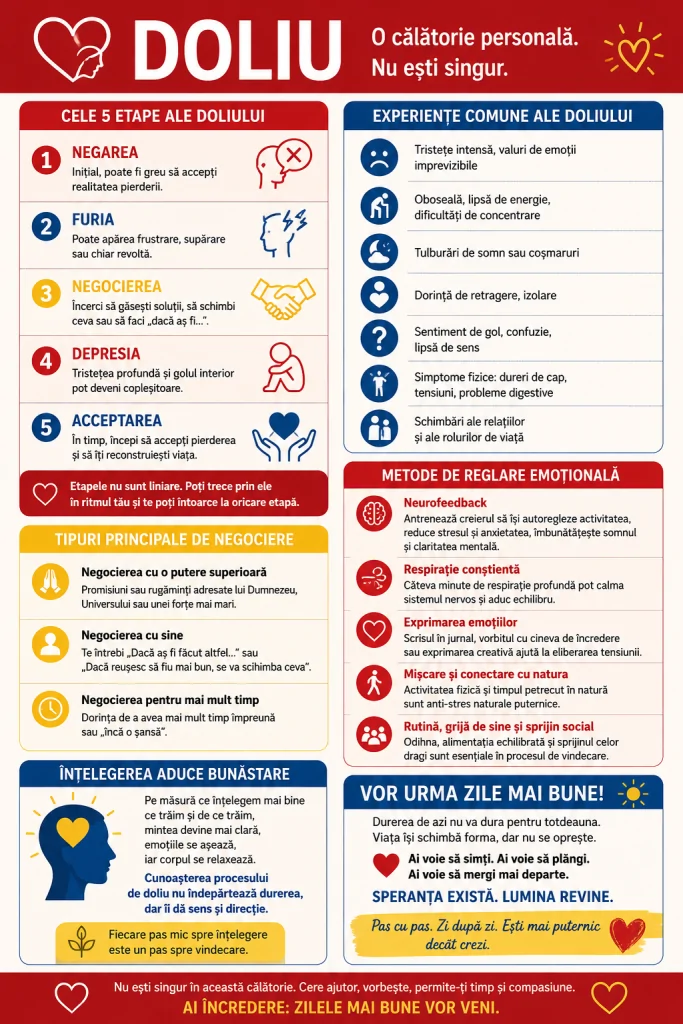
How long grief lasts and how it shows itself
The duration of grief varies a great deal and cannot be reduced to a fixed interval of time. Although many people expect the pain to disappear after a few weeks or months, the process of adaptation can last a year, two years or even longer, without this necessarily being pathological. In the first months the reactions are often intense and fluctuating, and afterwards they tend to become less frequent and less overwhelming. What matters is not how long grief lasts, but whether the person gradually starts to regain their capacity to function and to integrate the loss into their own life story.
On an emotional level, grief can include deep sadness, longing, a feeling of inner emptiness, anxiety, irritability, anger, guilt or even episodes of emotional numbness. Sometimes people are surprised to discover that they can feel apparently contradictory emotions, such as relief and sadness at the same time, especially when the loss was preceded by a long period of suffering. Emotional swings are normal and reflect the effort of the psychological system to integrate a difficult experience. There are days when the person can function relatively well and days when the pain returns with great intensity, triggered by memories, anniversaries or situations associated with the person who was lost.
The manifestations of grief are not only emotional. On a physical and cognitive level there can appear marked fatigue, sleep disturbances, changes in appetite, a feeling of lack of energy, muscle tension, headaches or digestive problems. From a cognitive point of view, many people describe difficulties in concentrating, frequent forgetfulness, a feeling of “mental fog”, a reduced capacity to plan and a constant preoccupation with the person or the situation that was lost. These symptoms do not necessarily indicate a neurological condition; they reflect the large consumption of resources involved in processing a significant loss.
The stages of grief
1. Denial
Denial is often the first reaction to a loss and acts as a mechanism of psychological protection. In this stage the person can have difficulty accepting the reality of the event and can feel that everything is unreal or that a mistake has been made. This is not a conscious denial of reality, but the temporary inability of the psychological system to fully integrate the information. Denial gives the brain time to process the emotional impact of the loss step by step.
2. Anger
As the reality of the loss begins to be acknowledged, anger can appear. It can be directed towards doctors, family, friends, towards the person who was lost, towards oneself or even towards life and fate. Anger is often an expression of pain and of the feeling of helplessness. Although it can be difficult to accept, this emotion is frequently part of the normal process of grief and reflects the person’s attempt to find a meaning for what has happened.
3. Bargaining
In this stage the person begins to think about alternative scenarios and hypothetical possibilities. Thoughts such as “if I had done something else”, “if I had intervened sooner” or “if things had unfolded differently” appear frequently. Bargaining is the mind’s attempt to regain a sense of control in a situation that seems beyond control. Although it can be accompanied by guilt, this stage reflects the natural process of searching for meaning and explanations.
4. Depression
The depression that occurs within grief is not necessarily the same as major depressive disorder. It is the moment when the person begins to fully realize the extent of the loss and its impact on their life. Deep sadness, social withdrawal, a lack of interest in usual activities and the feeling that nothing is the same any more can appear. This stage can be one of the most difficult, because it confronts the person directly with the reality of the absence and with the changes it brings.
5. Acceptance
Acceptance does not mean forgetting, nor does it mean that the pain disappears. It means integrating the loss into one’s own life and developing the capacity to move forward without denying what has happened. The person begins to reorganize their routine, to regain their interest in the future and to find ways of keeping a symbolic connection with what they have lost. The pain may still be present, but it no longer dominates the whole of existence and no longer prevents daily functioning.
It is important to mention that the stages of grief do not always appear in this order and are not experienced by everyone in the same way. Sometimes people return to an earlier stage, oscillate between several states or experience manifestations that do not fit perfectly into this model. Grief is an individual process, and its purpose is not “to pass”, but to allow an important loss to be integrated in a way that makes it possible to continue living.
Types of grief
Normal (uncomplicated) grief
Normal grief is the natural response to a significant loss. The person experiences sadness, longing, emotional pain and difficulties in adapting, but these reactions tend to diminish gradually over time. Even if the pain can be intense in the first months, the person gradually manages to resume daily activities, to rebuild their routine and to integrate the loss into their own life. Normal grief does not mean the absence of suffering, but the existence of a process of adaptation that unfolds naturally.
Anticipatory grief
Anticipatory grief appears before the loss actually takes place. It is frequently encountered when a loved one suffers from a serious, terminal or degenerative illness. The family and the affected person begin to process the possibility of the loss emotionally before it happens. Sadness, anxiety, a feeling of helplessness and even periods of emotional detachment can appear. Although it is painful, this type of grief can to some extent make the subsequent adaptation to the actual loss easier.
Complicated (prolonged) grief
Complicated grief appears when the process of adaptation remains blocked and the pain continues to be just as intense for very long periods of time, significantly affecting daily functioning. The person can remain deeply preoccupied with the loss, can avoid any associated memory or, on the contrary, can be unable to imagine life without the person who was lost. Unlike normal grief, in which the pain gradually begins to change, in complicated grief the suffering remains persistent and interferes with personal, social and professional life.
Delayed grief
In delayed grief, the emotional reactions associated with the loss do not appear immediately or are very limited at first. The person can seem surprisingly calm and functional in the period immediately following the event, but after months or even years intense manifestations of sadness, anxiety or other symptoms associated with grief appear. This phenomenon can occur when circumstances force the person to focus on urgent responsibilities and to postpone the emotional processing of the loss.
Inhibited (masked) grief
Inhibited grief appears when the emotions associated with the loss are repressed or expressed indirectly. Instead of showing obvious sadness, the person can develop physical symptoms, irritability, anxiety, insomnia, digestive problems or difficulties in concentrating. Sometimes not even the person concerned realizes that these manifestations are linked to an unresolved loss. The nervous system continues to process the trauma of the loss, but in a less obvious form.
Traumatic grief
This type of grief appears when the loss is sudden, violent, unexpected or associated with traumatizing circumstances, such as accidents, suicides, natural disasters or acts of violence. In these situations the person is confronted not only with the pain of the loss, but also with the impact of the trauma. Intrusive images, nightmares, hypervigilance, severe anxiety and symptoms similar to those of post-traumatic stress disordercan appear. The process of grief is often more complex and requires a longer period of adaptation.
Ambiguous grief
Ambiguous grief appears when there is a loss that is not completely clear or definitive. A frequent example is the case of people with advanced dementia , where the person is physically present but profoundly changed from a psychological and cognitive point of view. It can also appear in cases of disappearances without confirmation of death. The lack of a clear conclusion makes the process of adaptation difficult, because the person remains suspended between hope and acceptance.
Collective grief
Collective grief is experienced at the same time by large groups of people or by entire communities following major events such as pandemics, wars, attacks or natural disasters. In these situations the loss is shared socially, and individual reactions are influenced by the cultural and community context. Collective rituals, commemorations and social support play an important part in the process of adaptation.
Secondary grief
In addition to the main loss, many people also face secondary losses. For example, after the death of a partner, the person can lose not only the emotional relationship, but also their sense of safety, certain social roles, financial stability or plans for the future. These additional losses can amplify the suffering and can prolong the process of adaptation.
Grief after losing a part of oneself
Not all forms of grief are linked to the loss of a person. Sometimes people go through a process of grief after losing their health, their independence, a physical function, their fertility, a career or an important identity. The person has to adapt to a different version of their own life and to rebuild their sense of self in a new reality. Although it is often less socially recognized, this type of grief can be just as deep and just as difficult as the grief associated with the death of a loved one.
The effects of grief
Grief is one of the most complex human experiences, because it affects a person’s emotions, body, thinking, behavior and social relationships at the same time. Although it is often associated exclusively with sadness, the impact of a significant loss is in reality much broader. When we lose a loved one, an important relationship, our health or any other essential element of our life, the entire psychological and biological system has to adapt to a new reality.
From a neurobiological point of view, grief is a process of reorganization. The brain has to learn to function in a world in which something important is no longer present. This process consumes considerable cognitive and emotional resources, which is why many of the effects of grief can seem surprising or even alarming to those who experience them. In most cases they are normal reactions of the body to a profound change.
Understanding the effects of grief can help a person interpret their experiences more clearly and reduce the anxiety generated by the symptoms they notice. Although every person goes through grief in a unique way, there is a series of frequently encountered effects that appear in different degrees of intensity.
Emotional effects
The best-known effect of grief is emotional suffering. Deep sadness, longing, a feeling of inner emptiness and heartache are normal reactions to a loss. However, in addition to sadness, anger, anxiety, guilt, helplessness, frustration or even moments of apparent absence of emotion can appear. Some people can experience strong emotional swings, going from intense crying to periods of apparent calm. These fluctuations reflect the attempt of the psychological system to integrate the loss and to adapt to the new reality.
Cognitive effects
Grief significantly influences cognitive functioning. Many people describe difficulties in concentrating, memory problems, frequent forgetfulness and a feeling of “mental fog”. Activities that previously seemed simple can now require considerable effort. A constant preoccupation with the person or the situation that was lost is also frequent, as is the repeated appearance of memories and of hypothetical scenarios of the “what would have happened if…” kind. These manifestations do not indicate permanent cognitive deterioration; they reflect the increased consumption of mental resources involved in processing the loss.
Physical effects
The body reacts to grief just as intensely as the mind. Marked fatigue, lack of energy, sleep disturbances, changes in appetite, muscle pain, headaches, increased bodily tension or digestive symptoms can appear. The nervous system and the endocrine system are strongly involved in the response to the stress generated by the loss, which can produce the feeling that the whole body is working differently. Sometimes people who are grieving even describe physical sensations of pressure in the chest or of shortness of breath, without any direct medical cause.
Behavioral effects
Grief can change behavior and daily routine. Some people tend to withdraw socially and to avoid activities they used to enjoy. Others can become hyperactive and get excessively involved in work or other activities in order to avoid confronting the pain. Changes can appear in eating habits, in the sleep schedule or in the ability to fulfil daily responsibilities. These changes are often temporary and reflect the effort of adapting to the loss.
Effects on personal identity
Losing a person or an important role can deeply affect the sense of identity. Many people come to wonder who they are without the person they loved or without the role they previously had. For example, after losing a life partner, someone can feel that they have lost not only the relationship, but also an important part of their own identity. This process can generate confusion and insecurity, but it also represents the beginning of a period of personal reconstruction.
Effects on social relationships
Grief can influence the way a person relates to others. Sometimes a need for isolation and withdrawal appears, while at other times the need for support and closeness increases. Relationships can become tense when the people around do not understand the process of grief or have unrealistic expectations about its duration and intensity. At the same time, the experience of loss can strengthen certain relationships and can deepen the bonds with the people who offer genuine support.
Existential and spiritual effects
For many people, grief triggers profound questions about the meaning of life, death, suffering and the purpose of existence. Sometimes spiritual beliefs are strengthened, and at other times they are called into question. A loss can lead to a re-evaluation of personal priorities and values, resulting in important changes in the way a person sees their life and their future.
Grief is much more than the sadness associated with a loss. It is a complex process that involves the emotions, the body, thinking, behavior, relationships and even a person’s identity. Its effects can be intense and at times overwhelming, but in most cases they are normal manifestations of adaptation to a profound change. Understanding these effects can reduce the feeling of confusion and can give the grieving person a framework through which to understand their experience better.
Although the pain can sometimes seem endless, the purpose of the process of grief is not forgetting, but integrating the loss in a way that allows life to continue. In time, most people discover that the pain does not disappear completely, but that it changes. It becomes a part of their own history, without dominating the present any longer. In this way, grief is not only a process of loss, but also one of adaptation, reorganization and inner reconstruction.
How do you manage grief when it becomes complicated?
Although most people manage, in time, to integrate the loss and gradually regain their balance, there are situations in which the process of grief becomes complicated and starts to affect daily functioning significantly. Complicated grief does not mean that the person “is not trying hard enough” or that they are emotionally weaker. Most of the time it appears when the intensity of the loss exceeds the available resources for adaptation or when there are additional factors that prevent the natural processing of the suffering.
One of the first signs that grief is becoming complicated is the persistence of intense suffering for very long periods of time, without any progressive adaptation appearing. The person can feel that the pain is just as strong after months or even years since the loss, can have major difficulties in resuming usual activities and can remain stuck in a constant preoccupation with the traumatic event. Sometimes there is a complete avoidance of memories connected with the person who was lost, and at other times an excessive preoccupation with the past and with the circumstances of the loss develops.
Managing complicated grief begins with recognizing that the process requires support. In many cases people try to overcome the suffering on their own, considering that it is something that has to be endured in silence. However, when the pain becomes persistent and interferes with normal functioning, specialized support can play an important part. Psychotherapy can help a person process the emotions associated with the loss, reduce feelings of guilt or anger and develop healthy coping mechanisms.
Another essential aspect is maintaining a minimum structure of daily functioning. During periods of intense grief, ordinary activities can seem meaningless or extremely demanding. Even so, keeping a sleep schedule that is as stable as possible, eating regularly, moving and staying in social contact all help to support the nervous system and to reduce the risk of isolation and of a worsening of symptoms.
It is also important for the person to understand that adapting to a loss does not mean forgetting. Many people are afraid that, if they start to feel better, they will lose the emotional connection with the person they loved. In reality, a healthy process of grief means integrating the memory of the person who was lost in a way that allows life to continue without giving up the meaning of the relationship they had.
In situations where grief is associated with severe symptoms of anxiety, depression, persistent insomnia, panic attacks or major difficulties in emotional regulation, a multidisciplinary approach can be useful, one that includes both psychological support and interventions aimed at regulating the nervous system.
The role of neurofeedback in supporting a period of grief
Grief is, first of all, a human and emotional experience that cannot and must not be “erased” or eliminated. The purpose of an intervention such as neurofeedback is not to reduce the pain artificially, nor to eliminate the natural process of adapting to a loss. Instead, neurofeedback can play a supporting part when the nervous system becomes overloaded and starts to have difficulty regulating its own resources.
From a neurophysiological perspective, losing an important person is a major stress factor for the brain. During grief, changes can appear in the activity of the networks involved in emotional processing, attention, sleep, memory and the regulation of the stress response. Some people develop persistent hyperactivation, expressed through anxiety, insomnia, hypervigilance and difficulty relaxing. Others can experience a significant reduction in energy, difficulties in concentrating, social withdrawal and a feeling of emotional numbness.
Through the qEEG assessment, the patterns of brain activity associated with these difficulties can be identified. The analysis provides information about the way the neural networks involved in emotional regulation, attention control and adaptation to stress are working. This data makes it possible to develop a personalized neurofeedback protocol aimed at optimizing the functioning of the nervous system.
Neurofeedback aims to train the brain to function closer to its optimal parameters. In the context of grief, this can contribute to reducing excessive hyperactivation, to improving sleep quality, to increasing the capacity to concentrate and to supporting the natural processes of self-regulation. People who are grieving often describe a feeling of better mental clarity, a reduction in cognitive fatigue and an increased capacity to manage emotional fluctuations.
An important aspect is the fact that neurofeedback does not change the emotional meaning of the loss and does not eliminate the memories associated with it. It acts on the way the brain manages stress and the consumption of resources associated with the process of adaptation. In other words, it does not intervene in the emotional relationship with the person who was lost, but in the capacity of the nervous system to sustain this difficult period without falling into a prolonged imbalance.
In situations where grief is accompanied by severe anxiety, sleep disturbances, emotional exhaustion or persistent difficulties in functioning, neurofeedback can be a valuable complementary component within a broader plan of psychological and neurophysiological support. In this way, the objective is not to hurry the process of grief, but to support the natural capacity of the brain to adapt, to reorganize and to find, in time, a new balance.
A loss cannot be erased, but the way your nervous system responds to it can be supported and regulated. If you feel that grief continues to affect your emotional state, your sleep, your concentration or your ability to function significantly, neurofeedback can be a tool of support in the process of adaptation and recovery. If you feel that the suffering is not diminishing over time or that it is significantly affecting your everyday life, we invite you to book a call with a specialist to discuss it further.
Do you want to understand what is happening in your brain?
Book a call with the BrainMap Institute's specialists and find out how a BrainMap and brain training can help you.