
Burnout syndrome - what it is, causes, symptoms, diagnosis and treatment
Exhaustion, cynicism, falling output? Find out how to tell burnout from stress and depression, plus the concrete steps to get your energy back.

Burnout is a state of physical, mental and emotional exhaustion caused by chronic stress, especially in work settings. This syndrome, which affects more and more people, can have a significant impact on quality of life and on performance at work.
What burnout is
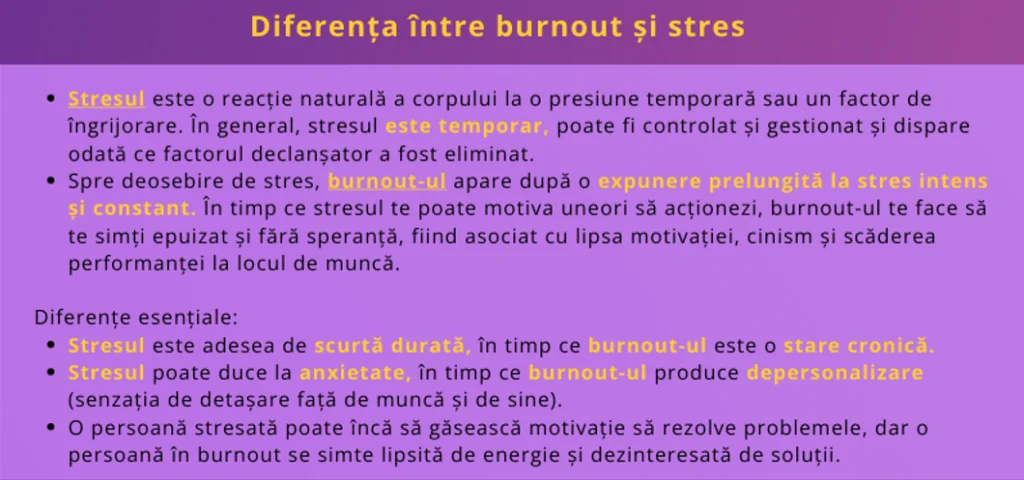
Burnout is defined as a state of intense exhaustion caused by prolonged stress and by excessive demands at work or in personal life. Unlike temporary tiredness, burnout shows up as an inability to cope with everyday challenges and significantly affects mental and physical health.
The term “burnout” was first used by the psychologist Herbert Freudenberger in the 1970s, when he described this state in people working in healthcare professions, such as doctors or nurses.
Although the concept of burnout was first mentioned in the 1970s, its official recognition happened gradually. The World Health Organization (WHO) included burnout in the International Classification of Diseases (ICD-11) as an “occupational phenomenon” in 2019, stressing that it is linked to working life but is not a medical condition. This inclusion marked an important step in validating and standardising burnout syndrome as a global mental health issue.
Burnout is not officially recognised as a separate diagnosis in the Diagnostic and Statistical Manual of Mental Disorders (DSM-5). Even so, its symptoms often overlap with those of other disorders, such as depression or anxiety disorders. The DSM-5 acknowledges chronic stress and exhaustion as factors that can contribute to mental health disorders, but it does not provide a clear set of criteria for burnout itself.
Diagnosing burnout relies largely on assessing the clinical symptoms and the patient's occupational history.
The causes of burnout syndrome at work
- Excessive workload
One of the most frequent causes of burnout is constant overload at work. Excessive demands and tasks that go beyond a person's capacity to handle them can lead to a chronic state of stress. The lack of the resources needed to carry out these tasks makes the situation worse, feeding a sense of helplessness and a loss of motivation. - Lack of control
The feeling of having no control over decisions and over the way you carry out your tasks can contribute greatly to the onset of burnout. When employees feel they have no freedom of action or cannot influence their work environment, frustration builds up, amplifying stress and exhaustion. - Unclear or contradictory expectations
When an employee's tasks or roles are not clearly defined, a state of uncertainty sets in. Unclear expectations or frequent changes in job requirements lead to confusion and anxiety, placing constant pressure on the employee. - Lack of recognition and rewards
Another cause of burnout is the lack of recognition for one's efforts and of rewards matching the work done. When success and dedication are not appreciated, employees lose their motivation and enthusiasm, which contributes to falling job satisfaction and to the onset of burnout. - Unfavourable working conditions
A dysfunctional or toxic work environment can fuel burnout. Conflict with colleagues or superiors, office politics, the lack of support from the team or poor working conditions can all be factors that contribute to employees' physical and emotional exhaustion.
Risk factors for burnout
- Perfectionism
People who hold very high standards and force themselves to do everything perfectly are more prone to burnout. Perfectionists tend to invest excessive time and energy in their tasks, which leads to exhaustion and to a lack of balance between personal and professional life. - Type A personality
This is a personality trait marked by ambition, competitiveness and a constant need for achievement. People with a type A personality are more vulnerable to stress and burnout, because they tend to take on intense activities and find it hard to delegate tasks. - Lack of social support
People who do not receive emotional support from colleagues, superiors or family are at greater risk of developing burnout. A sense of isolation and the lack of effective communication increase the likelihood of exhaustion. - Imbalance between personal and professional life
When the time spent on work far exceeds the time devoted to personal life, the risk of burnout increases. Not having time for relaxation, hobbies and social interaction can lead to emotional and physical exhaustion. - Facing prolonged stressful situations
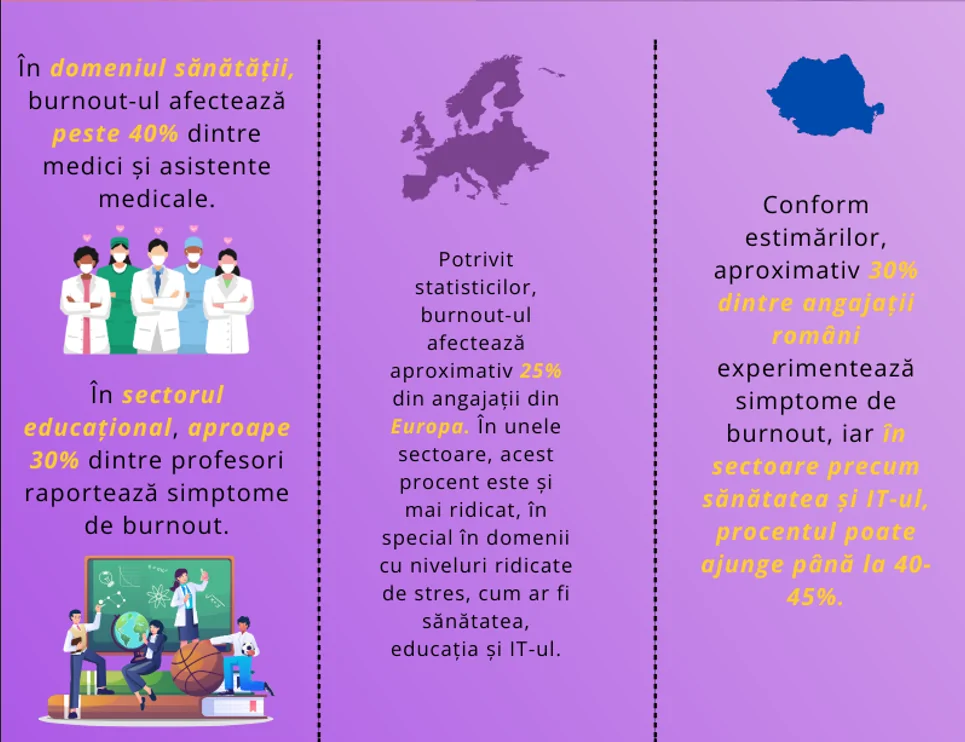
Jobs that involve constant exposure to stress or crisis situations (such as working in healthcare, education or emergency services) can contribute significantly to the development of burnout. The lack of breaks and of the resources needed to cope with these challenges amplifies the risk.
How burnout manifests itself
- Physical and emotional exhaustion
A key manifestation of burnout is the feeling of constant exhaustion, both physical and emotional. It translates into a lack of energy, difficulty coping with daily tasks and the sense that any activity becomes overwhelming. - Distress and cynicism
People suffering from burnout often develop a negative or cynical attitude towards work. They feel emotionally disconnected from their professional activities and lose their motivation, becoming detached and critical towards colleagues or the organisation. - Declining performance and productivity
Burnout directly affects the ability to work efficiently. Those affected find it hard to concentrate, make decisions more slowly and fail to carry out their tasks as effectively as before. Productivity drops significantly and mistakes become more frequent. - Physical health problems
Burnout can also have effects on physical health. Frequent symptoms include headaches, digestive problems, insomnia and a weakened immune system. In the long run, burnout can lead to more serious health problems, such as high blood pressure or cardiovascular disease. - Emotional detachment
Another manifestation of burnout is the lack of emotional involvement in everyday activities. The person affected feels disconnected from those around them, becomes apathetic and loses interest in professional and personal relationships.
The stages of burnout
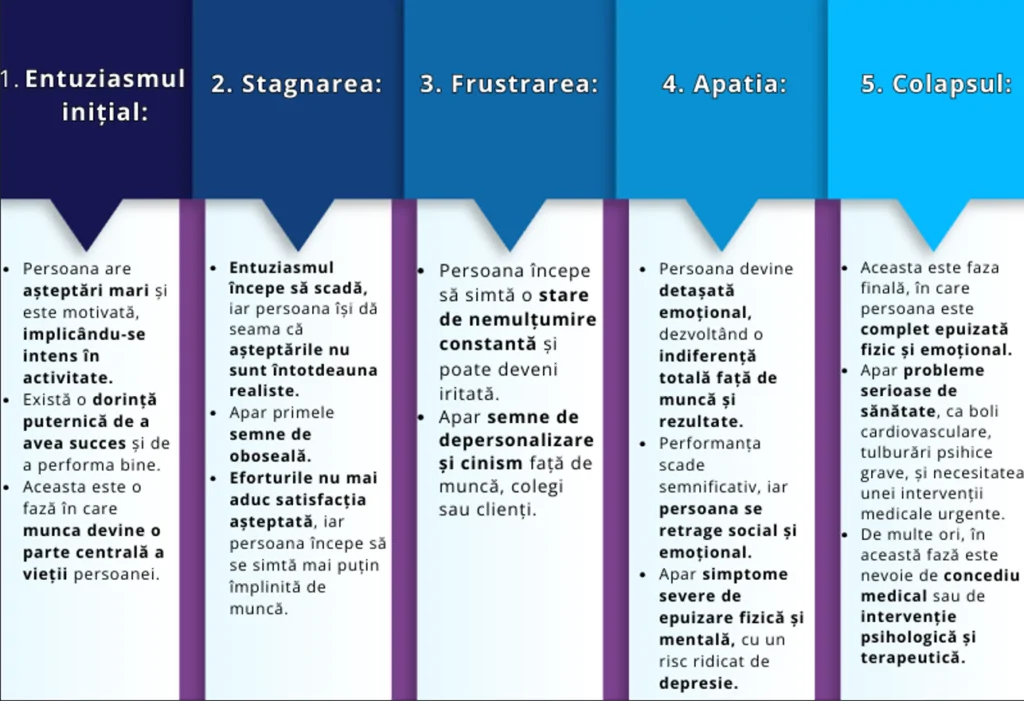
- The initial enthusiasm
In the first stage, employees are usually motivated and enthusiastic about their work. This is a stage in which they tend to get involved passionately, taking on extra tasks and working beyond their hours. At this point the signs of burnout are not visible, but employees are gradually using up their energy reserves. - The stagnation stage
As tasks and pressures increase, the initial enthusiasm begins to fade. At this stage the person feels that their efforts no longer bring satisfying results and frustration sets in. Energy gradually declines and exhaustion becomes more visible. - Frustration and apathy
This is the stage in which burnout becomes more obvious. The person starts to develop a negative attitude towards work, turns cynical and completely loses motivation. Everyday tasks feel hard to accomplish, and the ongoing frustration shows up as irritability, conflicts with colleagues or the avoidance of responsibilities. - Complete exhaustion
In the final stage, the employee is completely exhausted, both physically and emotionally. The capacity to cope with stress is minimal and the symptoms of burnout become chronic. At this point the person may develop mental health disorders, such as depression, and may need medical or psychological intervention.
Diagnosing burnout syndrome
Diagnosing burnout syndrome is not straightforward, because it is not recognised as a distinct medical condition in all international classifications. Burnout is included in the ICD-11 (International Classification of Diseases) as an “occupational phenomenon”, but not as a psychiatric disorder. In the DSM-5 (Diagnostic and Statistical Manual of Mental Disorders), burnout does not appear as a separate diagnosis, but its symptoms are often correlated with depression, anxiety disorders or stress-related disorders. For this reason, a correct diagnosis relies on a comprehensive assessment of physical, emotional and behavioural symptoms.
The assessment usually starts with an in-depth conversation with a doctor or psychologist, in order to better understand the patient's occupational history, exposure to stress and current manifestations. The key symptoms of burnout include physical and emotional exhaustion, detachment from work and declining performance. Psychometric tests may also be carried out, such as the Maslach Burnout Inventory (MBI), in order to measure the level of emotional exhaustion and detachment.
An essential aspect in diagnosing burnout is ruling out other possible medical or mental health conditions that could produce similar symptoms, such as major depression or sleep disorders. A multidisciplinary approach is needed, involving both psychological assessments and physical tests, in order to exclude other causes, such as thyroid conditions or anaemia, which can contribute to symptoms of exhaustion.
Treatment options for burnout
- Cognitive-behavioral therapy (CBT)
Cognitive behavioural therapy is one of the most widely used methods for treating burnout. It helps patients identify and change the thoughts and behaviours that contribute to chronic stress. By learning effective stress and time management techniques, patients can restore a balance between their personal and professional lives. - Psychotherapy
Psychotherapy can help explore the emotional causes of burnout and develop strategies for managing emotional exhaustion. It offers emotional support and can address issues related to perfectionism, anxiety or the feelings of helplessness associated with burnout. - Neurofeedback
Neurofeedback therapy is a non-invasive option that helps regulate brain activity by monitoring brainwaves and adjusting them in real time. It can be effective in reducing symptoms of stress and anxiety, supporting an overall state of relaxation and improving the ability to concentrate. - Relaxation and meditation techniques
Meditation, yoga and breathing exercises can significantly reduce the symptoms of burnout, helping to improve mental health and overall well-being. These techniques promote relaxation, lower stress and improve emotional control. - Social support
Being part of a social support network - whether family, friends or support groups - can have a beneficial effect on recovery from burnout. Open communication and emotional support from others help reduce the feeling of isolation. - Changing the work environment
A change in the work schedule, a reduced workload or the negotiation of more flexible conditions can help lower work-related stress. Delegating responsibilities and organising time efficiently are also essential for preventing relapses. - Medication
In severe cases, when burnout is associated with depression or anxiety, doctors may recommend medication to help manage the symptoms. Even so, medication is often seen as a temporary measure, complementary to non-invasive therapeutic methods.
Complications associated with burnout syndrome
- Physical complications
Burnout can have a direct impact on physical health, leading to cardiovascular disease, high blood pressure, chronic headaches, migraines and digestive disorders. Chronic stress weakens the immune system, increasing the risk of infections and of other serious medical conditions. Lack of sleep and prolonged exhaustion can also aggravate existing health problems. - Psychological complications
On the psychological level, burnout can lead to depression, anxiety and sleep disorders. Those affected may experience a deep loss of meaning and satisfaction in their personal and professional lives, which can cause a significant deterioration in quality of life. In severe cases, burnout can encourage suicidal thoughts or self-destructive behaviours. - The impact on professional life
Burnout has significant consequences in professional life. Declining performance, difficulty concentrating and the loss of interest in work can lead to conflicts with colleagues, professional failures and even job loss. It can also affect career advancement prospects, creating a vicious circle of frustration and exhaustion. - The impact on personal life
Besides its effects on one's career, burnout has a negative influence on personal relationships. Those affected often become irritable and withdrawn, finding it hard to maintain close relationships. The stress that builds up can lead to family conflicts and social isolation, amplifying feelings of loneliness and helplessness.
Tips for preventing burnout
- Set clear boundaries between work and personal life
Learn to separate professional activities from personal ones. Make sure you allow enough time for relaxation and hobbies, and after working hours avoid constantly checking work emails and calls. - Manage your time and tasks efficiently
Prioritise your daily tasks and avoid multitasking. Break large projects down into smaller, realistically achievable steps. Learn to delegate responsibilities and to ask for help when you need it. - Cultivate emotional self-regulation and relaxation practices
Adding meditation, yoga or deep breathing exercises to your daily routine can help lower your stress level. These techniques can help you stay centred and prevent emotional tension from building up. - Seek social support
Make time to spend quality moments with your family and friends. Building a network of emotional support will help you manage stress better and prevent emotional exhaustion. - Take care of your physical health
A healthy lifestyle that includes a balanced diet, regular physical exercise and adequate sleep can reduce the risk of burnout. Physical health is closely linked to emotional health, and looking after your body builds resilience in the face of stress.
If you feel overwhelmed by stress and exhaustion, do not ignore the signs of burnout. Neurofeedback therapy is a non-invasive and effective solution that can help you regain your emotional balance and reduce chronic stress. Contact us today to find out how neurofeedback can support your recovery and how we can give you the support you need. Do not let burnout affect your quality of life!
References
- Kratzke, I.M., Campbell, A., Yefimov, M.N., Mosaly, P.R., Karthik Adapa, Meltzer-Brody, S., Farrell, T.M. and Mazur, L.M. (2021). Pilot Study Using Neurofeedback as a Tool to Reduce Surgical Resident Burnout. the Journal of the American College of Surgeons, [online] 232(1), pp.74-80. doi:https://doi.org/10.1016/j.jamcollsurg.2020.08.762.
- Keynan, J.N., Cohen, A., Jackont, G., Green, N., Goldway, N., Davidov, A., Meir-Hasson, Y., Raz, G., Intrator, N., Fruchter, E., Ginat, K., Laska, E., Cavazza, M. and Hendler, T. (2018). Electrical fingerprint of the amygdala guides neurofeedback training for stress resilience. the journal Nature Human Behaviour, [online] 3(1), pp.63-73. doi:https://doi.org/10.1038/s41562-018-0484-3.
- Hafeez, Y., Ali, A. and Malik, A. (2016). Neurofeedback training content for treatment of stress. [online] ResearchGate. Available online here .
- Kratzke, I.M., Campbell, A., Yefimov, M.N., Mosaly, P.R., Adapa, K., Meltzer-Brody, S., Farrell, T.M. and Mazur, L.M. (2021). Pilot Study Using Neurofeedback as a Tool to Reduce Surgical Resident Burnout. the Journal of the American College of Surgeons, [online] 232(1), pp.74-80. doi:https://doi.org/10.1016/j.jamcollsurg.2020.08.762.
🧠 How does your brain work?
Download the guide for FREE and find out what your brain map shows.
📖 Our books - Real case studies with brain maps
📖 Vindecarea Depresiei (Healing Depression, in Romanian) - 29.00 RON
📖 Vindecarea Anxietatii (Healing Anxiety, in Romanian) - 29.00 RON
📖 Eliminarea Atacurilor de Panica (Ending Panic Attacks, in Romanian) - 29.00 RON
Not sure where you stand? Take the free burnout test → (a few minutes, confidential, not a diagnosis)
Do you want to understand what is happening in your brain?
Book a call with the BrainMap Institute's specialists and find out how a BrainMap and brain training can help you.