
Alzheimer's disease- symptoms, causes and treatment
How to tell Alzheimer's from normal forgetfulness, what the first signs are, how the disease progresses and which treatment options exist today.

Do you look after a loved one with memory problems?
“The Labyrinth of Memory” helps you understand where you stand as a carer and what your first step is. It takes 5 minutes and the result is free.
What Alzheimer's disease is
Alzheimer's disease is a progressive neurodegenerative condition that mainly affects memory, thinking and behavior. It is the most common cause of dementia in older people and is characterized by the build-up of beta-amyloid plaques and neurofibrillary tangles in the brain, which destroy neuronal connections and gradually lead to the death of nerve cells. Although the onset can be subtle, as it progresses the disease affects the person's independence, communication and everyday activities.
Alzheimer's is not a “normal” part of aging, even though the risk increases with age. Besides genetic factors, environmental and lifestyle factors can also contribute. Although there is currently no curative treatment, there are therapies and interventions that can slow the progression of the symptoms and improve quality of life.
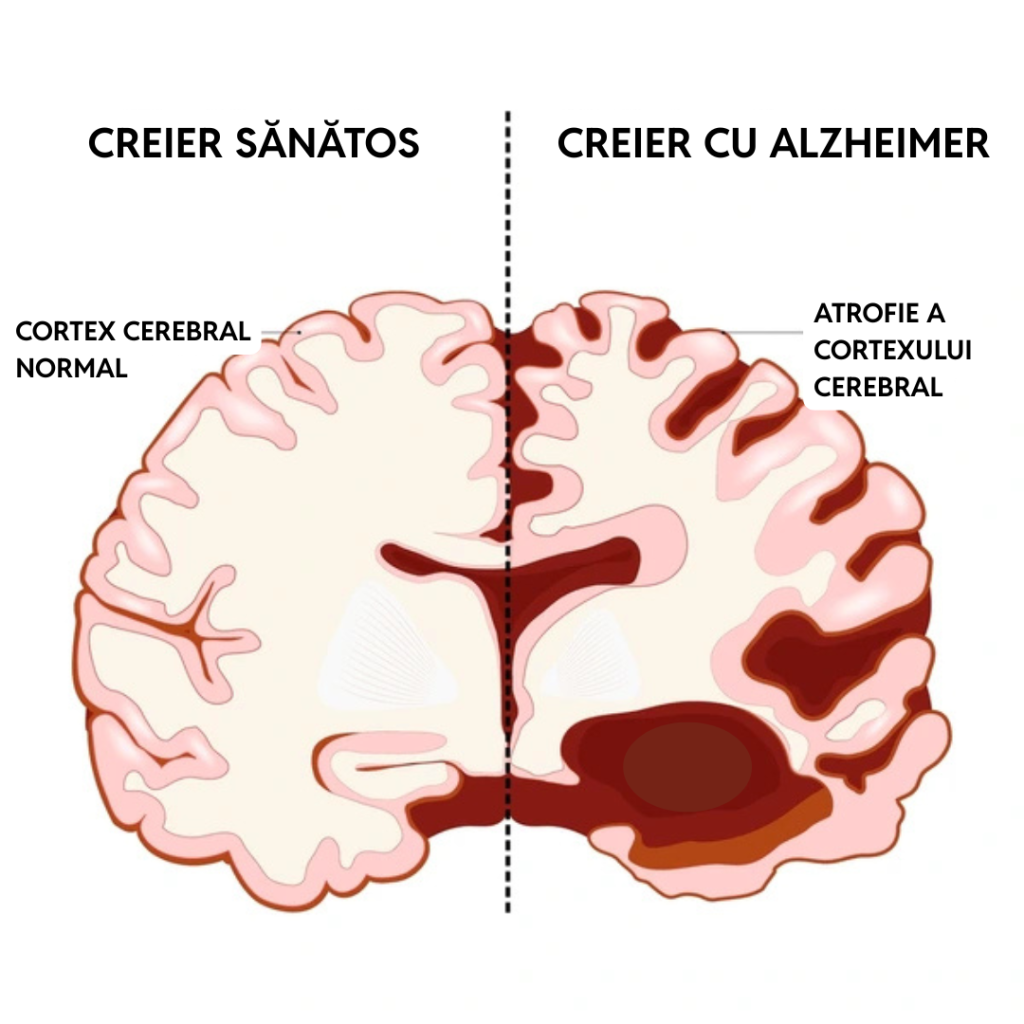
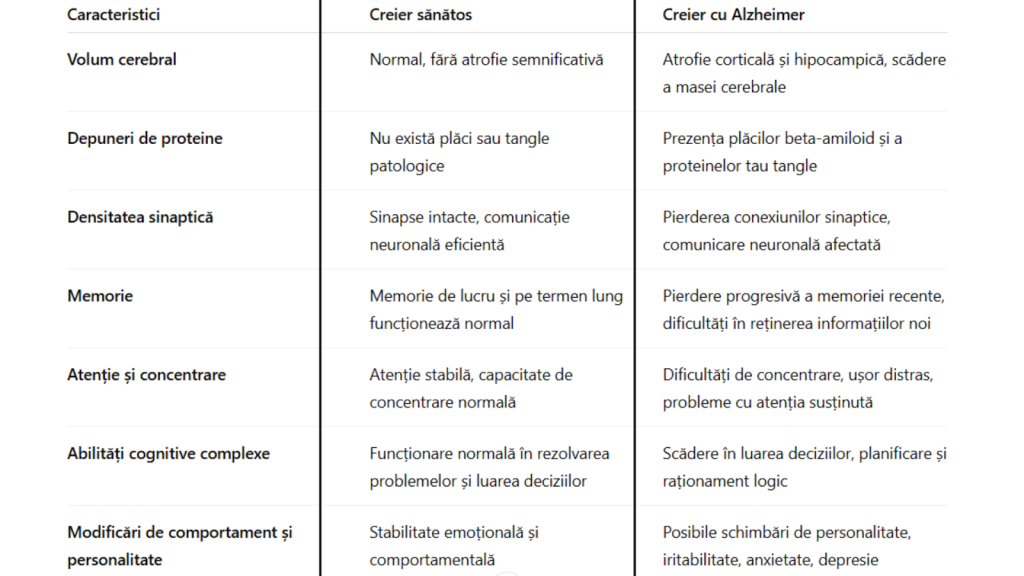
Healthy brain vs. brain with Alzheimer's
The stages of Alzheimer's disease
- The preclinical stage - brain changes appear before the symptoms, but the person functions normally; these changes can be detected only through special investigations.
- Mild cognitive impairment (MCI) - the first difficulties with memory, attention and orientation appear, but the person can still go about daily life relatively normally.
- The early stage - memory problems become obvious, along with difficulty finding words, losing objects and disorientation in time and space.
- The moderate stage - short-term memory deteriorates significantly, confusion and personality changes appear, together with major difficulties in everyday activities (managing money, cooking, getting around).
- The severe stage - the person needs permanent care; swallowing difficulties, loss of mobility and the inability to recognize close relatives may appear.
Causes and risk factors for Alzheimer's
Alzheimer's disease is a complex neurodegenerative condition caused by the interaction of several biological, genetic and environmental factors. Although no single cause has yet been demonstrated, research shows that the development of the disease is influenced by a combination of factors.
1. Advanced age
The most important risk factor for Alzheimer's is getting older. After the age of 65 the risk rises significantly, and after 85 almost one third of people may show symptoms. The natural aging process weakens neuronal resilience, increasing vulnerability to the disease.
2. Genetic predisposition
Certain genes, such as APOE-e4, increase the likelihood of developing Alzheimer's. Although they do not guarantee that the disease will appear, inheriting them significantly raises the risk. In addition, there are rare early-onset forms of Alzheimer's directly linked to specific genetic mutations.
3. Imbalances at brain level
Alzheimer's disease is associated with the build-up of beta-amyloid plaques and tau protein tangles in the brain, which impair communication between neurons and lead to cell death. These biological changes underlie the cognitive decline.
4. Vascular and metabolic factors
High blood pressure, diabetes, high cholesterol and obesity are major risk factors. They affect blood flow to the brain and favor degenerative processes, speeding up the destruction of nerve tissue.
5. Head injuries
Strong blows to the head or repeated accidents can increase the likelihood of developing Alzheimer's later in life. The link between brain trauma and the onset of neurodegenerative processes is increasingly supported by studies.
6. Lifestyle and environment
Smoking, a sedentary life, an unbalanced diet and the lack of cognitive stimulation increase the risk of the disease. Regular physical activity, a healthy diet and keeping the mind active, on the other hand, can have a protective effect.
7. Psychological and social factors
Social isolation, untreated depression and the lack of emotional connections can speed up cognitive decline. The brain needs stimulation and interaction in order to stay healthy.
Alzheimer's disease does not have a single cause; it is the result of a combination of genetic, biological and environmental factors. Although we cannot control every risk factor, a healthy lifestyle, the prevention of cardiovascular disease and a rich cognitive and social life can significantly reduce the likelihood of symptoms appearing.
Alzheimer's symptoms
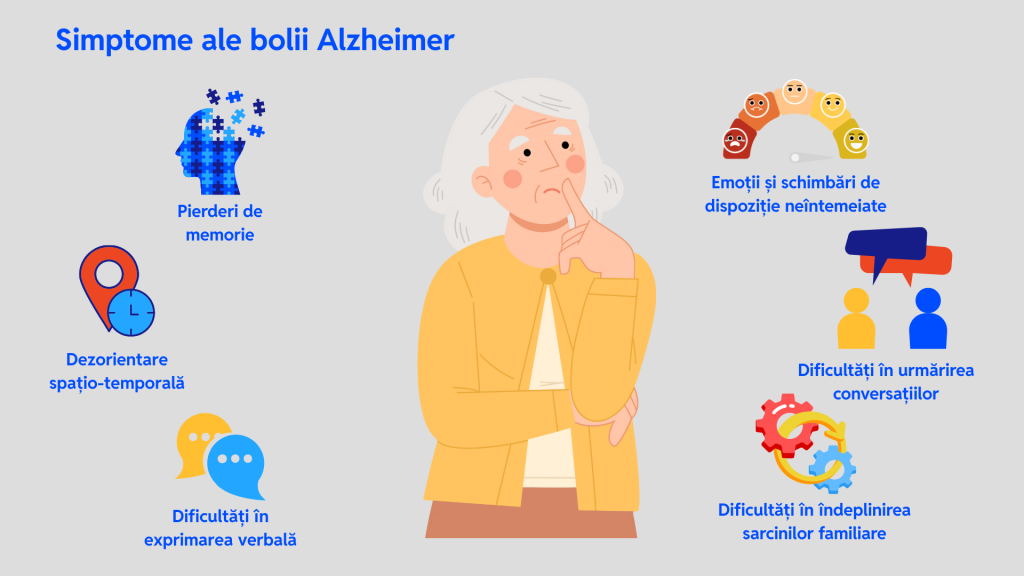
Alzheimer's sets in gradually and affects memory and thinking as well as behavior and personality. Recognizing the symptoms early is important both for the diagnosis and for managing the disease.
Cognitive symptoms
- Loss of recent memory - frequently forgetting conversations, repeating questions, losing objects.
- Difficulty planning and solving problems - simple tasks such as cooking or paying the bills become complicated.
- Disorientation in time and space - confusion about the day, the month or the place where the person is.
- Communication problems - difficulty finding the right words or repeating the same sentences.
- Reduced judgment - making inappropriate or risky decisions.
Physical and functional symptoms
- Difficulty carrying out daily activities (dressing, personal hygiene, cooking).
- Reduced coordination and spatial orientation.
- Sleep problems.
Personality and behavior changes
One of the most painful manifestations of Alzheimer's disease is the change in the personality of the loved one. As the disease advances, the affected brain can no longer regulate emotions and reactions normally.
The following may be noticed:
- Irritability and anger with no apparent reason.
- Suspicion and paranoia (for example, they believe their belongings are being stolen, even though they have hidden them or forgotten about them).
- Anxiety and restlessness - sometimes shown through repeated pacing or the inability to sit still.
- Apathy and social withdrawal - losing interest in activities that used to be enjoyable.
- Unusual behaviors - from repeating words and gestures to aggressive behavior or behavior that does not fit the context.
Alzheimer's disease affects far more than memory - it transforms the way a person thinks, feels and relates to those around them. Understanding these symptoms, especially those related to personality and behavior, is essential in order to offer patience, support and a suitable environment to those living with this disease.
The diagnosis of Alzheimer's disease
How the diagnosis of Alzheimer's is made
The diagnosis of Alzheimer's disease is not based on a single test, but on a complex assessment carried out by a neurologist or a geriatrician. The process usually starts with a detailed discussion about the patient's medical history, the symptoms observed and the behavior changes reported by the family. It is essential to analyze how memory, language and orientation have been affected over time.
Cognitive and psychological assessment
The patient goes through standardized cognitive tests designed to assess memory, attention, problem-solving ability and language skills. Examples of such instruments are the Mini-Mental State Examination (MMSE) or the Montreal Cognitive Assessment (MoCA). On their own they do not establish the diagnosis, but they help outline the level of cognitive impairment and differentiate it from other disorders.
Medical and imaging investigations
In order to rule out other possible causes of the symptoms (for example vitamin deficiencies, hormonal imbalances, thyroid conditions or neurological disorders), the doctor may recommend blood tests. Imaging methods such as the qEEG BrainMap, brain MRI or CT scan can also reveal structural changes in the brain, and in some cases PET scans can be used to observe metabolic activity or the deposition of abnormal proteins associated with Alzheimer's disease.
The conclusion of the diagnosis
The diagnosis of Alzheimer's is based on a combination of clinical observations, cognitive test results and data from medical investigations. It is important to know that the disease can only be confirmed with absolute certainty post-mortem, by examining brain tissue. Even so, with modern methods specialists can establish the diagnosis with a high degree of accuracy and can recommend treatments and interventions that slow the progression of the disease and improve the patient's quality of life.
Treatment options for Alzheimer's
Drug treatment
Drug treatment for Alzheimer's aims to slow the progression of the disease and to temporarily ease cognitive symptoms such as memory loss and orientation difficulties. These medicines act on chemical processes in the brain, helping neurons communicate with each other more efficiently. Although they do not provide a cure, they can bring significant improvements to the patient's daily life and can support independence for a longer period.
Psychosocial interventions
Occupational therapy, cognitive activities and psychological support play an important role in managing the disease. Memory exercises, music therapy, art and other stimulating activities can reduce anxiety, improve mood and help maintain essential skills. In addition, the involvement of the family and of caregivers is essential, both for emotional support and for creating a safe and stable environment.
Lifestyle and secondary prevention
Adopting a balanced lifestyle can have a positive influence on the course of the disease. A brain-healthy diet, regular movement, keeping up social ties and activities that challenge the mind (reading, puzzles, conversations) all help delay cognitive decline. These simple habits can bring major benefits when they are combined with other forms of treatment.
Neurofeedback therapy
Neurofeedback is a modern, non-invasive treatment option based on training the brain through real-time feedback on its electrical activity. Through monitoring and regulation, the patient learns to stabilize their cognitive and emotional functions, which can reduce symptoms such as anxiety, confusion or the sleep disturbances associated with Alzheimer's disease.
A major advantage of neurofeedback is that it involves no medication and produces no pharmacological side effects, making it a safe method that is tailored to each individual. By stimulating the affected brain areas, the therapy supports neuronal plasticity and can bring a better quality of life, reducing the risk of overload and helping the patient cope better with the challenges of the disease.
Complications associated with Alzheimer's disease
1. Cognitive loss and marked confusion
As the disease progresses, people with Alzheimer's experience increasingly severe memory loss, difficulty concentrating and confusion about time and space. These symptoms affect not only personal life, but professional life as well, making it difficult to keep a job or to take part in everyday activities. Average life expectancy after diagnosis is around 8-10 years, but it varies with age and coexisting conditions, so cognitive loss has a long-term impact.
2. Behavior disturbances and personality changes
Patients may show irritability, anxiety, depression or apathy, as well as personality changes. These manifestations affect relationships with family and friends and can generate considerable emotional stress for those close to them. Behavior disturbances can make an independent lifestyle impossible, and the constant support of caregivers becomes essential throughout the disease.
3. Mobility problems and accidents
As Alzheimer's advances, motor difficulties, loss of balance and loss of coordination appear. This increases the risk of falls and accidents, affecting daily safety both at home and in social settings. Physical complications can lead to frequent hospital admissions and a lower quality of life, contributing to a general frailty over the years of illness.
4. Sleep disturbances and chronic fatigue
Alzheimer's can cause insomnia, frequent awakenings and poor quality sleep. The lack of restful sleep increases tiredness, confusion and irritability, affecting both mental functioning and the ability to manage daily activities. These difficulties are felt both by the patient and by their family throughout the disease.
5. Loss of independence and social impact
As the symptoms progress, patients become increasingly dependent on caregivers for basic activities such as eating, hygiene or taking medication. This loss of autonomy affects social and professional life, limiting participation in the community or the ability to keep a job. The social impact is felt over the long term, as the disease advances towards its final stages.
6. Nutrition and physical health problems
Coordination difficulties, loss of appetite or inattention can lead to malnutrition, dehydration or weight loss. These physical complications increase the risk of associated illnesses and affect the patient's quality of life, reducing the length and the stability of their general state of health.
Tips for preventing Alzheimer's
1. Keep up regular physical activity
Regular physical exercise increases blood flow to the brain and stimulates the formation of new neuronal connections, thereby protecting memory and cognitive functions. Even a daily 30-minute walk can help reduce the risk of cognitive decline.
Physical activity also helps control weight, lower blood pressure and improve cardiovascular health, factors that are linked to a lower risk of Alzheimer's. Keeping an active lifestyle brings both short-term and long-term benefits for brain health.
2. Adopt a healthy, low-sugar diet
Excessive consumption of sugar and processed foods can cause chronic inflammation and impairs cognitive function. Cutting sugar from the diet and choosing foods rich in antioxidants, fiber and healthy fats supports brain health.
A balanced diet with fruit, vegetables, fish and nuts helps maintain a healthy weight and protects neurons from damage. Avoiding excess sugar helps regulate blood sugar, thereby reducing the risk of long-term cognitive impairment.
3. Stimulate your brain with intellectual activities
Logic games, reading, learning a foreign language or taking up new hobbies stimulate neuronal connections and can delay cognitive decline. The brain, just like muscles, becomes more resilient if it is trained constantly.
Intellectual activities reduce the risk of Alzheimer's by building a cognitive reserve, which helps the brain compensate for neuronal losses. Constantly taking on mental challenges keeps the mind active and adaptable.
4. Keep your social ties active
Frequent social interaction and keeping close relationships reduce stress and improve emotional health. Socially involved people have a lower risk of cognitive decline and Alzheimer's.
Taking part in groups, volunteering or meeting friends stimulates the brain through communication, empathy and solving social problems. Healthy relationships contribute to general wellbeing and so protect cognitive functions.
5. Get enough sleep
Restful sleep is essential for consolidating memory and for clearing toxins from the brain, including the proteins associated with Alzheimer's. Lack of sleep has a negative effect on cognitive processes and increases the risk of the disease.
A regular sleep schedule and healthy bedtime habits (no screens before sleep, meditation or relaxation) help maintain brain health. Quality rest supports the regeneration of neurons and the optimal functioning of memory.
Find out how neurofeedback can support brain health and memory in Alzheimer's. Book a free phone call with a specialist and find out how non-invasive treatment can make a difference for you or your loved ones.
🧠 How does your brain work?
Download the guide for FREE and find out what your brain map shows.
📖 Our books - Real case studies with brain maps
📖 Vindecarea Depresiei (Healing Depression, in Romanian) - 29.00 RON
📖 Vindecarea Anxietatii (Healing Anxiety, in Romanian) - 29.00 RON
📖 Eliminarea Atacurilor de Panica (Ending Panic Attacks, in Romanian) - 29.00 RON
Do you want to understand what is happening in your brain?
Book a call with the BrainMap Institute's specialists and find out how a BrainMap and brain training can help you.