
Quitting smoking: How Neurofeedback therapy can help you beat nicotine addiction
Smoking is not just a simple habit, as it is often seen, but it can develop into a complex addiction. A habit means a repeated action.

Smoking - more than a habit: understanding nicotine addiction
Smoking is not just a simple habit, as it is often seen, but it can develop into a complex addiction. A habit means a repeated action, usually associated with a context or a routine, such as lighting a cigarette with your morning coffee. Addiction, however, appears when the brain comes to constantly demand nicotine in order to function “normally”, and quitting smoking causes withdrawal symptoms such as irritability, anxiety or difficulty concentrating.
Nicotine plays the main role in this addiction. Once inhaled, it quickly reaches the brain and stimulates the release of dopamine, the neurotransmitter associated with pleasure and reward. This artificial “burst” of dopamine reinforces the behaviour of smoking and makes it hard to stop. In time, the brain changes its natural chemical balance and comes to associate relaxation or satisfaction with nicotine, which is why smoking addiction is not just a vice or a matter of willpower, but a neurobiological condition.
The effects of smoking on the body and the brain
1. It increases the risk of cardiovascular disease
Smoking affects the blood vessels by narrowing them and raising blood pressure. The toxic substances in cigarettes damage the arterial walls, which favours the formation of atheroma plaques and increases the risk of myocardial infarction and stroke.
2. It affects the health of the lungs
The substances inhaled with cigarette smoke inflame and gradually destroy the pulmonary alveoli, which leads to a drop in breathing capacity. Smoking is the main cause of chronic obstructive pulmonary disease (COPD) and a major factor in the appearance of lung cancer.
3. It weakens the immune system
Cigarette smoke reduces the efficiency of the immune cells, making the body more vulnerable to infections, including flu, pneumonia and other respiratory conditions. In the long term, this imbalance can also slow down the healing of wounds.
4. It changes the way the brain works
Nicotine plays the role of “tricking” the brain’s reward system, generating an artificial release of dopamine. This mechanism leads to addiction and to a vicious circle in which the brain constantly demands nicotine in order to feel pleasure or calm, and the lack of it causes irritability and anxiety.
5. It increases the risk of cognitive decline
In the long term, smoking is associated with an increased risk of cognitive deterioration and even of Alzheimer’s disease. The reduced blood flow to the brain and the oxidative stress produced by the toxins accelerate neuronal ageing.
6. It affects reproductive health
In women, smoking can reduce fertility and increase the risk of complications in pregnancy, including miscarriage or premature birth. In men, it lowers sperm quality and can contribute to erectile dysfunction by affecting the blood vessels.
7. It ages the skin and the body
Smoking reduces blood circulation in the skin and affects the production of collagen, which leads to early wrinkles and dull skin. In addition, it accelerates the general process of cellular ageing, affecting the vitality of the whole body.
Why it is hard to quit smoking: the truth about addiction
Quitting smoking is not just a matter of willpower, but a direct confrontation with one of the most powerful forms of addiction, both physical and psychological. Nicotine changes the chemistry of the brain, and smoking often becomes a routine associated with emotions, social situations and mechanisms of stress management. In order to understand why it is not enough to tell ourselves “I will quit tomorrow”, it is important to look in depth at the way nicotine and the associated behaviours change the functioning of the brain and of the mind.
The physiological mechanisms of addiction
The activation of the brain’s reward system
When nicotine enters the body, it quickly reaches the brain and stimulates the release of dopamine, the neurotransmitter responsible for pleasure, motivation and reward. This intense release means that smoking is associated with immediate satisfaction, which “teaches” the brain to repeat the behaviour. Lighting a cigarette thus becomes not just a gesture, but a powerful conditioning mechanism that reinforces the addiction.
Tolerance and the need to increase the dose
As someone smokes regularly, the brain adapts to constant levels of nicotine. The nerve receptors become less sensitive, which forces the smoker to increase the number of cigarettes in order to obtain the same initial effect. Instead of producing pleasure, smoking ends up being a way for the body to merely avoid the discomfort of the lack of nicotine. It is a physiological vicious circle that maintains the addiction even when the wish to quit exists.
Nicotine withdrawal
When the smoker tries to cut down or to quit cigarettes, the body feels the lack of nicotine through a series of unpleasant symptoms: irritability, restlessness, sleep disturbances, headaches and difficulty concentrating. These physical and psychological manifestations can be intense and discouraging, which explains why many people go back to smoking after only a few days of abstinence. The brain, used to receiving its “dose” of nicotine, sends alarm signals until it adapts again to natural functioning.
The psycho-emotional mechanisms of addiction
The association with routines and everyday contexts
Smoking is not only about nicotine, but also about context. Many smokers link the cigarette to certain moments of the day: the morning coffee, the break at work or conversations with friends. These routines become powerful psychological triggers that reactivate the wish to smoke even when there is no acute biological need. Smoking thus works its way into everyday life, turning into a habit that is hard to dislodge.
Managing emotions through smoking
The cigarette often becomes a mechanism of emotional regulation: people light one when they are stressed, sad, bored or tense. Nicotine creates a temporary feeling of calm and relaxation, but the effect is deceptive, and in the long term smoking increases the general level of anxiety and vulnerability to stress. Even so, for many people the cigarette remains a solution “at hand”, which reinforces the addiction at an emotional level.
Social pressure and personal identity
For some people, smoking is more than an individual act. It becomes part of their identity or of belonging to a group. Going out for a cigarette with colleagues, socialising around this habit or the image of the “smoker” become powerful psychological components, which make quitting even more difficult. Saying “I do not smoke any more” can mean giving up not only nicotine, but also a social setting and a part of how the person sees themselves.
Smoking addiction is a complex phenomenon, which combines biological and psychological mechanisms. This is why quitting often involves understanding, specialised support and strategies adapted to each person.
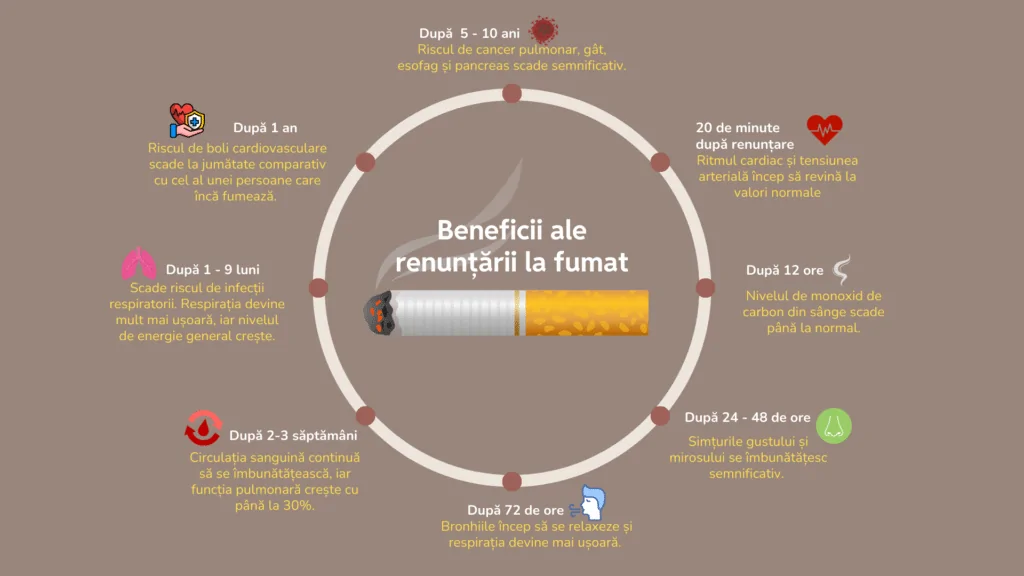
What happens in your body when you quit smoking
Quitting smoking is one of the best decisions for your health, and the body starts to recover surprisingly quickly. Here is what the process looks like, step by step:
1. After 20 minutes
Heart rate and blood pressure start to return to normal values. Blood circulation improves, and the extremities of the body (hands, feet) receive more oxygen.
2. After 12 hours
The level of carbon monoxide in the blood drops to normal. This allows oxygen to circulate more efficiently and reduces the risk of damage to the internal organs.
3. After 24-48 hours
The senses of taste and smell improve noticeably. At the same time, the nerve endings affected by smoking start to regenerate, which makes food seem more flavourful and smells more intense.
4. After 72 hours
The bronchi start to relax and breathing becomes easier. Energy levels increase, and many former smokers notice that they are no longer short of breath during physical effort. This is also, however, the moment when withdrawal symptoms can be more intense.
5. After 2-3 weeks
Blood circulation continues to improve, and lung function increases by up to 30%. The lungs become more efficient, and the cough caused by smoking starts to gradually subside.
6. After 1-9 months
The cilia, tiny structures in the lungs that help clear mucus and impurities, regenerate. This lowers the risk of respiratory infections and increases the body’s ability to defend itself against pathogens. Breathing becomes much easier and general energy levels increase.
7. After 1 year
The risk of cardiovascular disease (heart attack, stroke) drops by half compared with that of a person who still smokes. The heart and the blood vessels work better, and the body is better protected against serious complications.
8. After 5-10 years
The risk of lung, throat, oesophageal and pancreatic cancer drops significantly. After 10 years it is almost as low as that of a person who has never smoked. At the same time, the risk of cardiovascular disease becomes comparable with that of a non-smoker.
Effective methods and safe strategies for quitting smoking
Quitting smoking is a complex process, because nicotine addiction has both physiological and psychological components. The good news is that there are multiple scientifically validated strategies that can increase the chances of success and can make the transition gentler.
1. Nicotine replacement
Nicotine replacement therapy (patches, gums, sprays, lozenges) helps reduce withdrawal symptoms by offering a controlled dose of nicotine, but without the toxic substances in cigarette smoke. This step supports the body in gradually getting used to the absence of smoking, while reducing intense cravings.
2. Mindfulness and breathing techniques
Stress and negative emotions are frequent triggers of smoking. Mindfulness practices, guided meditation and conscious breathing can reduce anxiety and improve self-control. People who practise these techniques report better management of the wish to smoke and a reduction in relapse episodes.
3. Neurofeedback - an essential complementary therapy
Neurofeedback is a modern method of regulating brain activity, based on training the brain to work within more balanced parameters. In the context of quitting smoking, this therapy helps reduce anxiety, improve self-control and increase resilience in the face of withdrawal. Through continuous monitoring and reporting, the patient sees the concrete progress of their brain, which offers motivation and long-term support.
4. Psychological support and specialised counselling
Cognitive behavioural psychotherapy and individual or group support programmes help identify the patterns that lead to smoking and build healthy alternatives. Talking to a specialist can offer clarity, motivation and solutions adapted to each person.
5. Physical activity and changing the routine
Physical exercise increases the level of endorphins, reduces stress and lowers the wish to smoke. In addition, changing certain daily routines, such as the coffee break associated with the cigarette, reduces temptation and weakens the unconscious links between smoking and everyday activities.
6. Nutrition and hydration
A balanced body has more resources for coping with withdrawal. Constant hydration and foods rich in vitamins and minerals speed up the elimination of toxins and reduce unpleasant sensations. Some studies show that certain foods, such as fruit and vegetables, can lessen the craving for a cigarette.
7. Motivation and self-monitoring strategies
Progress journals, mobile apps and setting clear goals (for example, the number of smoke-free days, the money saved) keep motivation alive. In addition, rewarding every successful step creates a positive spiral of emotional support.
There is no “single recipe” for everyone, but combining these methods, nicotine replacement, mindfulness, neurofeedback, psychological support and lifestyle change, offers the best chances of quitting smoking for good and of regaining your health.
The hidden traps of addiction: you are not weak, you are human
Addiction is not a sign of weakness, but the result of very powerful biological and psychological mechanisms. Our brain is built to seek rewards and pleasure, and the substances or behaviours that intensely activate the “reward system” (such as nicotine, alcohol, high-calorie food or even technology) can become hard to control. When we face addiction, it is not about a lack of willpower, but about a complex interaction between brain chemistry, emotions and environmental factors.
One of the major triggers is stress. When we are under emotional pressure or in difficult situations, the brain looks for a quick way to find relief. Substances such as nicotine or alcohol, but also certain repetitive behaviours (scrolling, gaming, compulsive eating), offer a temporary “calm”. Unfortunately, this short-term soothing reinforces the addiction and makes it increasingly difficult to find healthy ways of managing stress.
Another trigger is the social environment and the associated habits. If a person always smokes during the coffee break, the brain comes to automatically link coffee with the need for a cigarette. Similarly, if friends or colleagues smoke, the pressure and the temptation become even greater. This conditioning is an example of how addiction is not only biological, but also a learned habit, supported by context and by daily rituals.
Also, negative emotions and trauma play a central role. Many people resort to addictive substances or behaviours in order to numb emotional pain, reduce anxiety or cope with depression. In the short term these strategies seem to help, but they reinforce the addiction and create a vicious circle in which the underlying problem remains unresolved, and the brain demands more and more stimulation in order to feel the same relief.
Finally, the most insidious trap is that addiction hides in habit. The brain adapts to constant consumption and normalises this behaviour, making it seem natural, even necessary. This is why quitting is not just a rational decision, but a process of “re-educating” the brain and the emotions. Understanding that addiction is a human condition, not a personal weakness, is the first step towards freedom and towards building healthy mechanisms of inner balance.
The benefits of quitting smoking - health, energy and freedom
Quitting smoking brings significant benefits for physical health, both immediately and in the long term. In the first days and weeks, the lungs start to clear the accumulated mucus and toxins, and blood circulation improves. The risk of myocardial infarction, stroke and lung disease gradually drops, and the immune system is reactivated, increasing the body’s ability to fight infections. Even breathing function and the level of oxygen in the blood improve, which gives a real feeling of vitality and physical resilience.
Another major benefit is linked to energy and vitality. Smoking affects the level of oxygen in the blood and cellular metabolism, which can cause chronic tiredness, difficulty concentrating and a drop in physical performance. After you quit smoking, the body starts to work more efficiently, energy increases and tiredness gradually disappears. Many former smokers notice that they feel more like exercising, concentrate better and feel more motivated in their daily activities, which contributes to a significantly improved quality of life.
Quitting smoking also brings emotional and psychological freedom. Smoking creates an addiction that can generate anxiety and frustration when there are no cigarettes at hand. When this habit disappears, a sense of control and autonomy over your own life appears. Quitting removes the stress associated with the addiction, and former smokers often feel a reduction in anxiety and greater mental clarity, because they are no longer caught in a constant circle of physiological and emotional needs dictated by nicotine.
An often underestimated benefit is linked to physical appearance and aesthetic health. Smoking accelerates the ageing of the skin, causes wrinkles and spots, yellows the teeth and affects the breath. After quitting, the skin starts to regenerate, the breath becomes fresher, and the general appearance becomes healthier and more youthful. These visible changes strengthen self-confidence and personal satisfaction, contributing to a holistic sense of wellbeing, not only on a physical level.
Not least, quitting smoking has a social and financial impact. The financial savings from giving up cigarettes can be significant in the long term, allowing investments in health, hobbies or quality free time. In addition, social relationships improve, because smoking is no longer a barrier or a source of stress for those around you. The freedom of no longer depending on nicotine, combined with the physical, emotional and financial benefits, creates a feeling of complete liberation, strengthening the motivation to stay a non-smoker in the long term.
What do you do if you have relapsed?
- Do not blame yourself - a relapse is part of the process, not a personal failure.
- Analyse the triggers - identify which situations, emotions or habits led to the relapse.
- Restart the plan immediately - go back to the strategies that worked before, without delay.
- Look for support - talk to a specialist, a support group or people you trust.
- Learn from the experience - write down the lessons and adjust your approach for next time.
- Use relaxation techniques - mindfulness, conscious breathing or other methods that help you manage stress.
- Set small goals - focus on concrete and realistic steps, not on perfection.
Neurofeedback therapy - modern support for quitting smoking
Neurofeedback therapy is a modern and scientifically validated approach that can significantly support the process of quitting smoking. By monitoring the electrical activity of the brain and offering feedback in real time, Neurofeedback helps regulate the brain functions involved in impulse control, stress regulation and the management of emotions. In practice, the brain learns to self-regulate, reducing the intensity of the craving for nicotine and increasing the ability to cope with the situations that previously triggered smoking. This technique does not completely replace classic strategies, such as nicotine replacement or psychological counselling, but complements them, offering a real chance of higher and longer-lasting success.
Besides regulating impulses and reducing stress, Neurofeedback contributes to lessening the anxiety and the irritability that often appear during the period of quitting smoking. By optimising brain activity, patients develop greater resilience in the face of triggers and old habits, which increases the likelihood of maintaining abstinence in the long term. In addition, progress can be measured objectively through progress reports, which gives both the patient and the specialist a clear picture of the way the brain adapts and reorganises itself in order to support the end of the addiction. This method combines modern technology with a deep understanding of neuroscience, offering a safe and effective strategy for those who want to regain their freedom from nicotine.
Case study: A Neurofeedback programme for quitting smoking
The initial context
- Patient: A man, 38 years old, a chronic smoker for 15 years, with an average daily consumption of 20 cigarettes and multiple unsuccessful attempts to quit.
- Associated problems: Severe anxiety, difficulty concentrating and sleep disturbances during periods of withdrawal.
- Aim: Quitting smoking for good, relieving the withdrawal symptoms and restoring the affected cognitive and emotional functions.
The initial assessment (Sessions 1-3)
- Session 1: A detailed interview, medical history, the assessment of the mental state, the identification of the triggers and of the patient’s level of motivation.
- Session 2: A baseline EEG (BrainMap) for analysing the brainwave profile; hyperactivity was observed in the theta and beta waves in the prefrontal cortex and dysfunctions in the impulse control networks.
- Session 3: Explaining the Neurofeedback method, establishing the personalised protocol and defining the goals for the course of the programme.
Stage I - The regeneration and stabilisation of the nervous system (Sessions 4-20)
- Aims: Reducing hyperexcitability and acute anxiety, balancing the theta and beta waves, preparing the brain for more specific training.
- Description: The Neurofeedback sessions aimed to increase the alpha waves and reduce the theta waves in the prefrontal cortex, which induced a general state of calm and relaxation. The patient reported a progressive drop in anxiety and a better tolerance of the withdrawal symptoms, as well as an improvement in sleep quality.
Stage II - Increasing impulse control and reducing cravings (Sessions 21-50)
- Aims: Improving self-control, reducing intense nicotine cravings, strengthening the neural connections in the dorsolateral prefrontal cortex.
- Description: The protocol was adjusted in order to stimulate the mid-beta waves (15-18 Hz), associated with focused attention and executive control, while reducing the high beta waves linked to anxiety. The patient reported fewer relapse episodes and better management of stressful situations.
Stage III - Restoring cognitive and emotional functions (Sessions 51-75)
- Aims: Improving mental clarity and working memory, regulating mood, increasing emotional resilience.
- Description: The sessions included training for increasing the gamma and alpha waves, supporting higher cognitive processes and emotional regulation. The patient took part in combined exercises of mindfulness and self-regulation assisted by Neurofeedback, monitoring progress through standardised questionnaires. The results included a significant drop in depressive symptoms and an increase in the capacity for concentration and mental organisation.
The final stage - Consolidating abstinence and preventing relapse (Sessions 76-90)
- Aims: Stabilising the neurophysiological balance, preventing relapses, autonomy in managing withdrawal and stress.
- Description: The protocol was personalised in order to maintain optimal EEG parameters and to increase cognitive flexibility. The patient received tools for independent self-regulation and complementary relaxation techniques. At the end, the patient had been completely smoke-free for over six months, with a stable emotional state, recovered cognitive functions and a significantly improved quality of life.
Conclusions:
The programme of 90 Neurofeedback sessions allowed a gradual and integrated approach, adapted to the specific needs of the patient. Through brain training, he gained increased control over his impulses, reduced the severity of withdrawal and restored his cognitive and emotional functions, essential factors in maintaining abstinence in the long term.
Quit smoking. Our Neurofeedback programmes help you reduce the craving for nicotine, manage stress and restore your emotional balance. Book a personalised assessment and start the road towards the freedom of living without cigarettes: https://institutulbrainmap.ro/brainmap-harta-creierului/!
🧠 How does your brain work?
Download the guide for FREE and find out what your brain map shows.
📖 Our books - Real case studies with brain maps
📖 Vindecarea Depresiei (Healing Depression, in Romanian) - 29.00 RON
📖 Vindecarea Anxietatii (Healing Anxiety, in Romanian) - 29.00 RON
📖 Eliminarea Atacurilor de Panica (Ending Panic Attacks, in Romanian) - 29.00 RON
Do you want to understand what is happening in your brain?
Book a conversation with the specialists of the BrainMap Institute and find out how a BrainMap and brain training can help you.