
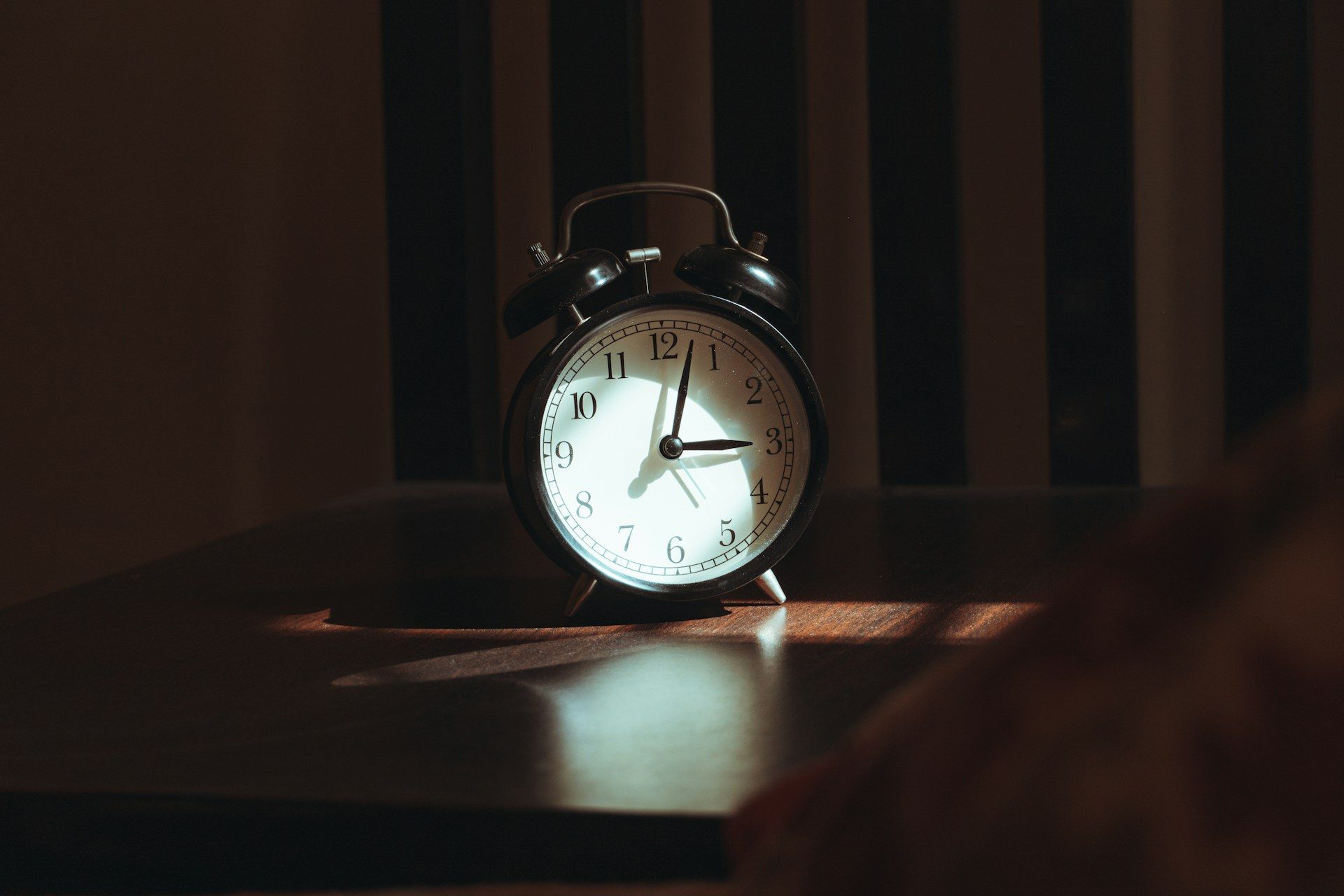
On the night of Saturday 24 to Sunday 25 October, the clocks in Romania and the rest of the European Union go back 1 hour. On paper it is the gentlest change of the whole year, because you get an extra hour of sleep. Even so, many people say that in the week after it they wake up too early, struggle to fall asleep and feel more tired than before, and in the evening it feels as if the day ended before it began.
There is an explanation for this feeling. The hour gained on the clock does not automatically reach your body, and the darkness that suddenly arrives earlier has effects of its own. Below you will find what actually happens, who feels the change more and what you can do so that week passes easily.
When the clocks change in 2026
In 2026, the switch to winter time in Romania happens on the night of 24 to 25 October. At 4:00 Romanian time the clocks go back to 3:00, so that night has 25 hours. The rule is the same across the European Union, where the clocks change on the last Sunday of October, and the switch back to summer time comes on the last Sunday of March, that is, on 28 March 2027.
Phones and computers change by themselves, everything else does not. The clock on the oven, the one in the car, your wristwatch and the one on the kitchen wall stay 1 hour ahead until you set them back, and on Sunday morning it is good to know which of them you are looking at when you leave the house.
Why you don't feel rested after the extra hour
The first reason is simple. Not everyone sleeps through the extra hour, and this shows in the numbers too. In a survey by the American Academy of Sleep Medicine, only 41% of adults said they would use it to sleep, while the rest planned to spend it with family, relax or finish chores. And for someone who has been sleeping too little for weeks on end, a single hour does not wipe out the sleep debt that has built up.
The second reason has to do with the clock you have in your brain, which goes by light and has no idea what your phone shows. On Sunday morning your body is still living by the old time, so when the clock shows 7:00, for your body it is already 8:00 and it wakes you earlier than you would like. In the evening sleepiness catches you 1 hour earlier than you were used to. It needs a few days to fall in line with the clock on the wall, and until then you may sleep badly even if you stay in bed just as long as before.
The third reason is the darkness. Overnight, sunset moves 1 hour earlier, so by the time you leave work it is already dark outside. A Danish study gathered 185,419 hospital admissions and outpatient visits for depression over 18 years and found that after the switch to winter time the number of new depressive episodes rose by 11%, and the effect faded only after about 10 weeks. The spring switch to summer time brought nothing similar. The authors believe that what matters here is not the hour lost or gained, but the sudden sense that the long stretch of short days has begun.
Who feels the change more
The change does not hit everyone the same way. People who fall asleep late and wake up with difficulty, the "night owls", already start with a gap between their internal clock and the office schedule, and models published in 2025 show that it is precisely chronotype and where you live that change how heavily moving the clocks twice a year weighs on people.
Young children feel it first. They wake up by their internal clock, not by the one on the wall. A child who used to wake up at 7:00 will wake up at 6:00 for a while. And the whole house wakes up with them.
People who have already been through episodes of depression or through hard autumns, as well as those who have been sleeping badly for a long time, need to pay more attention. For them, the weeks after the change are exactly the period when it is worth keeping an eye on sleep and mood, without panic, but with open eyes.
What you can do to get through it more easily
The American Academy of Sleep Medicine gives a practical tip for the night of the change. Leave the clocks as they are until bedtime, go to bed at your usual time and wake up at your usual time on the new clock. That way the extra hour actually goes into your sleep, not into your Saturday evening.
- Keep your wake-up time fixed all week, weekend included. Your wake-up time is the anchor. Everything else adjusts around it.
- Get out into the light in the morning for at least 15 or 20 minutes, on the way to work or over a coffee by the window. Morning light matters most. It tells your brain where the day begins.
- Hold out until your usual bedtime, even if it is dark outside from 18:00 and the sofa is calling you from 20:00, because otherwise you will wake up at 4:00.
- Keep afternoon naps under 30 minutes and not after 15:00.
- With young children, in the days before, you can shift mealtimes and bedtime by 10 or 15 minutes a day, so the jump does not come all at once.
And in the evening, turn on the lights at home when it gets dark early and do something you enjoy. A short day does not have to mean a day that is over at 17:00.
Why sleep specialists want winter time to stay
Sleep specialists have a clear position. In 2024, the American Academy of Sleep Medicine called for an end to changing the clocks and for keeping standard time, that is, winter time, all year round. Their argument is that winter time matches natural light best, and every move of the clock puts the internal rhythm out of tune with the social one.
A study published in 2025 in PNAS, by researchers at Stanford, reached the same conclusion by a different route. They modelled the effect on the internal rhythm across the whole United States and found that changing twice a year is the hardest option for the body, harder than either of the two times kept permanently. The study was done on the United States, but the mechanism is the same here in Romania.
When the tiredness is no longer about the clock
The tiredness after the clock change usually passes in a few days, although sometimes it does not. If after 2 weeks you still wake up unrested, even though you sleep at least 7 hours, as specialists recommend for an adult, or if you struggle to fall asleep or wake up during the night several times a week, it is no longer about the clock.
The same goes if the tiredness comes together with a lack of drive, a craving for sweets and withdrawing from everything you used to enjoy. We wrote a separate article on the difference between seasonal tiredness and seasonal depression, about autumn fatigue. If the problem is sleep itself, on the page about sleep disorders you will find what an assessment looks like.
What we do at the BrainMap Institute
We often see people at the institute who have been sleeping badly for years and for whom every clock change, every night shift or every trip is a lost week. For them the clock is only the trigger. The first step is a map of brain activity, read together with their sleep history.
Based on it, we decide what makes sense to work on, and the plan is built alongside what the doctor recommends, not instead of it. If you first want an idea of where you stand, the free sleep test takes a few minutes.
Do you want to find out what exactly is ruining your sleep?
The sleep test takes a few minutes, is free and gives you your profile on the spot.
Take the sleep testReferences
- Hansen, B. T., Sønderskov, K. M., Hageman, I., Dinesen, P. T., Østergaard, S. D. Daylight Savings Time Transitions and the Incidence Rate of Unipolar Depressive Episodes. Epidemiology, 2017, 28(3): 346–353. [online] Available at: pubmed.ncbi.nlm.nih.gov/27775953.
- Rishi, M. A., Cheng, J. Y., Strang, A. R. et al. Permanent standard time is the optimal choice for health and safety: an American Academy of Sleep Medicine position statement. Journal of Clinical Sleep Medicine, 2024, 20(1): 121–125. [online] Available at: pubmed.ncbi.nlm.nih.gov/37904574.
- Weed, L., Zeitzer, J. M. Circadian-informed modeling predicts regional variation in obesity and stroke outcomes under different permanent US time policies. PNAS, 2025, 122(38): e2508293122. [online] Available at: pubmed.ncbi.nlm.nih.gov/40953265.
- Watson, N. F., Badr, M. S., Belenky, G. et al. Recommended Amount of Sleep for a Healthy Adult: A Joint Consensus Statement of the American Academy of Sleep Medicine and Sleep Research Society. Journal of Clinical Sleep Medicine, 2015, 11(6): 591–592. [online] Available at: pubmed.ncbi.nlm.nih.gov/25979105.
- American Academy of Sleep Medicine When daylight saving time ends, people plan to sleep. aasm.org, 2019. [online] Available at: aasm.org/when-daylight-saving-time-ends-people-plan-to-sleep.
- Știrile ProTV Ora de iarnă în 2026. Când se schimbă ora și la ce oră exactă se face trecerea. stirileprotv.ro, 2026. [online] Available at: stirileprotv.ro/ora-de-iarna-in-2026-cand-se-schimba-ora-si-la-ce-ora-exacta-se-face-trecerea-la-o-zi-mai-scurta.html.
What the first step looks like
If the tiredness does not pass even after the clock has settled, the first step is a conversation, not a decision. The first call is free: you tell us how you sleep and for how long this has been going on, and we tell you honestly whether an assessment makes sense or whether you should see a doctor first.
Frequently asked questions about winter time
When do the clocks change to winter time in 2026?
On the night of 24 to 25 October 2026, in Romania and across the EU. At 4:00 Romanian time the clocks go back to 3:00. The next change is on 28 March 2027, when we switch to summer time.
Do we sleep more or less with winter time?
You sleep 1 hour more on the night of the change, if you go to bed at your usual time and wake up at your usual time on the new clock. In the days after, the body needs time to adjust, so many people wake up earlier than they would like.
Why do I wake up earlier after the switch to winter time?
Because your internal clock is still running on the old time. If you used to wake up at 7:00, your body wakes you at what is now 6:00. Morning light and a fixed wake-up time speed up the adjustment.
How long does it take the body to get used to winter time?
For most people, a few days. For young children and for those who have been sleeping badly for a long time it can take longer. If after 2 weeks you still feel unrested, it is worth looking for another cause.
Can winter time affect your mental state?
A Danish study found that after the switch to winter time the number of new depressive episodes rose by 11%, and the effect lasted about 10 weeks. This does not mean that the clock change causes depression in everyone, but it is a reason to pay attention to how you feel if you have been through hard autumns before.