
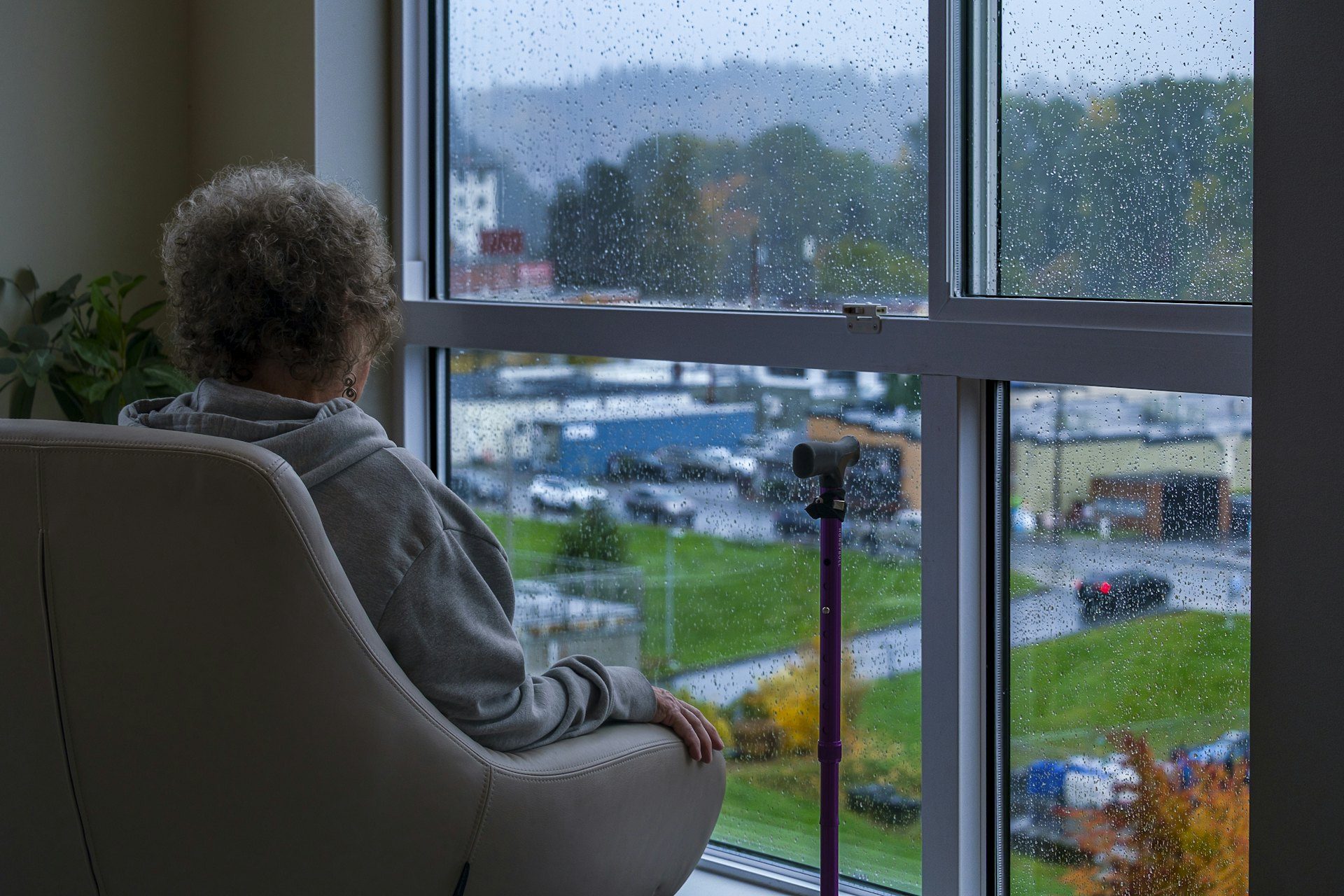
You wake up as tired as you were when you went to bed. You need more sleep than in August and it is still not enough, your craving for sweets has gone up for no clear reason, and the things you enjoyed a month ago now feel tiring. Nothing has happened to you. The days have got shorter.
Up to this point, it is what is popularly called autumn fatigue, and it passes. There is, however, also a form that does not go away on its own and that has a medical name, seasonal affective disorder. The difference between them is not one of intensity but of something else, and that is what this article is about.
What autumn fatigue actually is
Autumn fatigue is not a diagnosis. It is a word we use for a bundle of states that show up in many people at the same time of year: tiredness that sleep does not shift, weaker concentration, getting irritated more easily, a bigger appetite for sleep and food than usual.
It usually appears in the stretch when the days get shorter quickly, which here means from the second half of September until towards the end of November. For most people it lasts 2 or 3 weeks, then the body gets used to the new light schedule and things settle down.
The important part is that, in its usual form, autumn fatigue does not stop you from functioning. You go to work and get on with things, it is just that everything takes more effort than usual.
What happens in the brain when the light drops
It all starts with the eyes, not with the weather. Light coming in through the retina reaches an internal clock in the hypothalamus, and that clock uses it to decide when melatonin is released and when the biological day begins. It is not temperature that gives the signal, but the amount of light and the time of day you get it.
In autumn both change at once. The light becomes less intense, and in the morning you leave home in the dark and come back in the dark too, so the clock receives mixed signals. Melatonin starts being released earlier in the evening and stops later in the morning, which translates into exactly that feeling of “I'm awake, but still asleep”.
On top of this comes serotonin, which also follows the rhythm of light and is linked to mood and appetite. When it drops, the craving for carbohydrates goes up. That is why the pull towards sweets and pasta in October is not a lack of willpower, it is chemistry.
The review on circadian rhythms published in The Lancet in 2022 describes the mechanism clearly: a disrupted internal clock does not only cause poor sleep, it affects mood, attention and metabolism, all at the same time.
How to tell autumn fatigue from seasonal depression
This is what you will not find in the articles that sell you a supplement. The two differ in 4 things, and the fourth outweighs all the others.
- Duration. Autumn fatigue lasts 2 or 3 weeks and lifts. Seasonal affective disorder lasts months, usually from October to March, and comes back every year at the same time.
- Repetition. The diagnosis requires the pattern to have repeated for at least 2 years in a row, in the same season, with full remission between episodes.
- Depth. With autumn fatigue you are tired. In seasonal depression there is sadness with no reason behind it, loss of pleasure in things you definitely used to enjoy, guilt, the feeling that you are not worth much.
- Functioning. This is the threshold. With autumn fatigue you go to work and do what you have to do, only with more difficulty. With seasonal depression you start not being able to: you are late, you put things off, you avoid people, your performance drops, and others notice before you do.
There is one more sign worth knowing, because it sounds counterintuitive. Winter seasonal depression often comes with more sleep, not less, and with a bigger appetite, not a smaller one, exactly the opposite of classic depression. If you sleep 10 hours and wake up exhausted, it is not a sign that you are resting too much.
And one thing that is not up for negotiation: if thoughts come up that it is no longer worth it, or thoughts of harming yourself, you do not wait for spring. Those call for help in the next few days, not next season.
What really helps
Light comes first, and it has the most evidence behind it. Light therapy, meaning morning exposure to a special 10,000 lux lamp for 20 to 30 minutes, is the first-line treatment for seasonal affective disorder, and a meta-analysis published in 2020 confirms the effect across controlled studies.
If you do not have a lamp, you still have the morning. 20 minutes outside in the first hour after waking do more than the same walk at lunchtime, because the internal clock sets itself by morning light. This is also where the tiredness in the week after the clocks go back for winter comes from. Even a cloudy day has several times more light outside than a well-lit office.
Your sleep schedule comes right after. Keeping the same wake-up time every day, Saturdays included, does more than adding hours of sleep. The clock sets itself by the time you wake up, not by the time you go to bed.Movement helps too, and here the dose matters less than regularity. What works is moderate movement done often, ideally outdoors and ideally in the morning, so that it catches the light as well.
As for supplements, the honest answer is shorter than the people selling them would like. Vitamin D is corrected if tests show a real deficiency, not preventively and not by guesswork. The rest have no evidence, in autumn fatigue, to justify what is written on the packaging.
What we train at the BrainMap Institute
Our part has to do with regulation, not with the season. Brain training works on the way the brain regulates sleep, attention and mood, and in seasonal affective disorder it is done alongside light therapy and the treatment recommended by your doctor.
Where it makes sense is somewhere else. In people who come to us with sleep that has been disrupted for years, with background anxiety or with tiredness that has nothing to do with the season, autumn only brings to the surface something that was already there. The brain map shows whether that is the case, and then it makes sense for us to work.
The order stays the same as for anything else. First the map, because without it there is no protocol, only guesswork, and based on it we decide what makes sense to work on.
When you need specialist help
10 October is World Mental Health Day, and the 2026 theme is about experiences being heard, which is exactly about people saying what they feel while nobody stops to listen. This article was written in the week before, for a simple reason: autumn is the time when most of these states get blamed on the weather and left at that.
Ask for help if the state has lasted more than 4 weeks without shifting, if it affects your work or your relationships, if it happened at the same time last year too, or if thoughts of harming yourself come up. That last point has no threshold and no patience.
The first step can be your GP, a psychiatrist or a psychologist. What matters is that it is a step, not a supplement bought at the pharmacy on the strength of an article that was selling it.
References
- Galima, S. V., Vogel, S. R., Kowalski, A. W. Seasonal Affective Disorder: Common Questions and Answers. American Family Physician, 2020. [online] Available at: pubmed.ncbi.nlm.nih.gov/33252911.
- Pjrek, E., Friedrich, M. E., Cambioli, L. et al. The efficacy of light therapy in the treatment of seasonal affective disorder: a meta-analysis of randomized controlled trials. Psychotherapy and Psychosomatics, 2020. [online] Available at: pubmed.ncbi.nlm.nih.gov/31574513.
- Wan, Y., Ding, J., Fan, M. et al. Effectiveness of visible light for seasonal affective disorder: a systematic review and network meta-analysis. Medicine, 2025. [online] Available at: pubmed.ncbi.nlm.nih.gov/40629637.
- Meyer, N., Harvey, A. G., Lockley, S. W. et al. Circadian rhythms and disorders of the timing of sleep. The Lancet, 2022. [online] Available at: pubmed.ncbi.nlm.nih.gov/36115370.
What the first step looks like
If you recognised yourself in the lines above, the first step with us is a conversation, not a decision. The first call is free and takes about 20 minutes: you tell us what brings you to us and since when, and we tell you honestly whether an assessment makes sense in your case.
When the answer is that you should see a doctor first, you get it just as directly. It happens often in autumn, and it is fine for it to be that way.
Frequently asked questions about autumn fatigue
How long does autumn fatigue last?
For most people, between 2 and 3 weeks, which is the time it takes the body to get used to the new light schedule. If it lasts more than 4 weeks without anything shifting, it is no longer just seasonal adjustment and is worth discussing with a specialist.
What is the difference between autumn fatigue and seasonal depression?
Duration, repetition and, most importantly, functioning. With autumn fatigue you go to work and do what you have to do, only with more difficulty. In seasonal depression you start not being able to, and the pattern repeats at the same time of year, usually for at least 2 years in a row.
Why am I sleepy all the time in autumn?
Because morning light decreases, and the internal clock in the hypothalamus sets itself by it. Melatonin starts being released earlier in the evening and stops later in the morning, which is where the feeling of being awake but still asleep comes from.
Does a bright light lamp help?
For seasonal affective disorder it is the first-line treatment, with evidence from controlled studies: 10,000 lux, in the morning, for 20 to 30 minutes. For ordinary autumn fatigue, 20 minutes outside in the first hour after waking already do a lot.
Which supplements help with autumn fatigue?
The honest answer is that none has evidence to match the promises on the packaging. Vitamin D is corrected if tests show a real deficiency. Morning light, a fixed wake-up time and regular movement all three have more evidence behind them than any bottle.
When does brain training make sense in autumn?
When, behind the autumn slump, there is something that was already there, for example sleep that has been disrupted for a long time or background anxiety. The brain map shows whether that is the case, and the training is done alongside light therapy or the treatment recommended by your doctor.