
How an ADHD assessment works in adults and children, which tests are used and what it costs

An ADHD assessment is a thorough clinical conversation, supported by standardised questionnaires and by information from the people who know you well. In Romania, the diagnosis is made by a psychiatrist in adults and by a specialist in paediatric psychiatry in children, often working together with a clinical psychologist who administers the tests. No blood test or scan can give a yes or no answer on its own.
Some people get here after an online test gave them a high score. Others come after a difficult conversation with their child's form teacher, or after years of putting everything down to laziness. Below you will find who carries out the assessment, how it works step by step, which tests are used, how it differs in children and adults and how much it costs, including at the BrainMap Institute.
Who diagnoses ADHD in Romania
ADHD is a medical diagnosis. In adults it is made by a psychiatrist, and in children and adolescents by a specialist in paediatric psychiatry, whom everyone simply calls a child psychiatrist. The British NICE guideline says the same thing and requires ADHD to be diagnosed only by a specialist with training and experience in this disorder, based on a full clinical and psychosocial assessment.

How an ADHD assessment works, step by step
An assessment rarely ends after a single appointment. The specialist needs to find out whether the symptoms match the diagnostic criteria, how long they have been there, in how many settings they appear and how much they get in the way of your life.
The order may vary from one specialist to another
- The initial conversation, in which you explain what brings you there, how long you have noticed the difficulties and what you have tried so far.
- The clinical interview, in which the doctor or psychologist goes through the symptoms of inattention, hyperactivity and impulsivity, with examples from your real life.
- The childhood history, meaning the signs that appeared before the age of 12, even if nobody gave them a name at the time.
- The standardised questionnaires, which you, your parents or your teachers fill in, and whose scores are compared with reference values for your age.
- Information from others, because a parent, a partner or a teacher notices things in you that you do not see yourself.
- Ruling out other causes, which means checking sleep, anxiety, depression, learning disorders and medical problems that can resemble ADHD.
- The conclusion, when you receive the diagnosis or the explanation that the difficulties have another source, together with the recommendations to follow.


The criteria used are those of the DSM-5-TR, the diagnostic manual of the American Psychiatric Association. Put briefly, children need at least 6 symptoms from one group, while from the age of 17, 5 are enough.
The symptoms must have lasted for at least 6 months, some of them must have appeared before the age of 12, they must show up in at least 2 settings (at home and at school or at work) and they must clearly interfere with everyday life.
The last condition is also the hardest one to tick off, and it is where most of the time goes. Concentration also drops with depression, with anxiety and after months of poor sleep, so a good part of the assessment means checking that something else does not explain better what is happening.
Which tests are used in an ADHD assessment
When they search for an “ADHD test”, most people have a single questionnaire in mind. Specialists, however, work with several tools, each with its own role.
| Tool | Who it is for | What it does |
|---|---|---|
| ASRS v1.1, the World Health Organization scale | Adults | 18 self-report questions, the first 6 of which are used for screening |
| DIVA-5 | Adults | A semi-structured interview based on the DSM-5 criteria, which covers both adult life and childhood |
| Conners scales (Conners 3, CAARS for adults) | Children, adolescents and adults | Versions for parents, teachers and self-report |
| Vanderbilt scales | School-age children | Separate questionnaires for parents and teachers, which also ask about other common difficulties |
| Attention and executive function tests | All ages | Measure sustained attention, working memory and processing speed |
The NICE guideline is very clear on this point. An ADHD diagnosis is not made on the basis of rating scales or observations alone, although scales such as the Conners are useful tools. A high score tells you that the symptoms are frequent, but it does not tell you where they come from.
Computerised attention tests have the same limitation. They show how you cope with a short task in a quiet room, which has fairly little in common with a busy day at the office or a maths lesson after a sleepless night.
How ADHD assessment differs in children and adults
The criteria are the same, but the route to them looks different. With a child, the information comes mostly from the adults around them, while with an adult a childhood that ended long ago has to be pieced back together.
| Children and adolescents | Adults | |
|---|---|---|
| Who makes the diagnosis | Specialist in paediatric psychiatry | Psychiatrist |
| Where the information comes from | Parents, teachers, carers and direct observation | Your own account, a partner or a parent, old documents |
| Common questionnaires | Vanderbilt, Conners 3 | ASRS v1.1, DIVA-5, CAARS |
| Symptom threshold (DSM-5-TR) | At least 6 from one group | At least 5 from one group, from the age of 17 |
| What the symptoms look like | Visible restlessness, careless mistakes, homework that never gets finished | Inner restlessness, procrastination, missed deadlines, disorder in paperwork and money |
| What is ruled out | Learning and language disorders, autism, anxiety, sleep apnoea | Depression, anxiety, bipolar disorder, substance use, lack of sleep |
For children, the American Academy of Pediatrics guideline recommends assessment from the age of 4 upwards, when behaviour or learning problems come together with inattention, hyperactivity or impulsivity. The same guideline asks for information to come from parents, teachers and the other people involved in the child's life and for the doctor to look for associated disorders as well.
The signs worth watching for before an assessment are gathered in the guide to ADHD in children.

In adults, ADHD is less common than in childhood, but it is far from an exception. A 2021 consensus statement from the World Federation of ADHD shows that the disorder occurs in 5.9% of children and adolescents and in 2.5% of adults.
World Federation of ADHD, 2021 consensus statement
Many of these adults have never been assessed, because for years they compensated with effort, lists and lost nights. Some only recognise themselves when they take their own child for an assessment.
For them, the hardest part is the history. Old school reports, written assessments from teachers and parents' memories can make the difference, and what ADHD looks like in adulthood is described at length in the article on ADHD in adults.
Sounds familiar? Tap what you recognise in yourself or your child
What you tap stays in your browser and is not sent anywhere.
Book a free callHow much an online ADHD test is worth
The best-known online test for adults is the ASRS v1.1, the self-report scale developed together with the World Health Organization, and the validation study published in 2005 showed that the first 6 questions work well as a screening tool, even better than the full list of 18.
Screening has a limited purpose. A high score tells you that an assessment is worthwhile, while a low score only half reassures you if the difficulties have been getting in the way of your life for years. The test cannot check how long you have had the symptoms, what else might explain them or how other people see you.

What an online test does
- Shows whether the symptoms are frequent
- Tells you an assessment is worth it
- Can't tell how long you've had the symptoms or what else might explain them
What a clinical assessment does
- Checks how long the symptoms have been there and whether they started before age 12
- Looks for the symptoms in at least 2 settings, at home and at school or work
- Rules out poor sleep, anxiety, depression and other causes
- Gathers information from parents, teachers or partners
- Ends with a diagnosis or with the explanation that the difficulties come from somewhere else
Used sensibly, a questionnaire like this is still a good starting point. Save the result and take it to your first appointment, where it becomes one piece of a larger file. If you are only just starting to read about the subject, begin with the article on what ADHD is, its symptoms, causes and diagnosis.
What a qEEG assessment adds and what it cannot do
qEEG (quantitative EEG) records the brain's electrical activity and compares it with typical values for your age, and the result is a map that shows patterns of activity, such as slow waves that are stronger than you would expect or an excess of fast rhythms. The method is explained step by step in the article on qEEG (quantitative EEG).
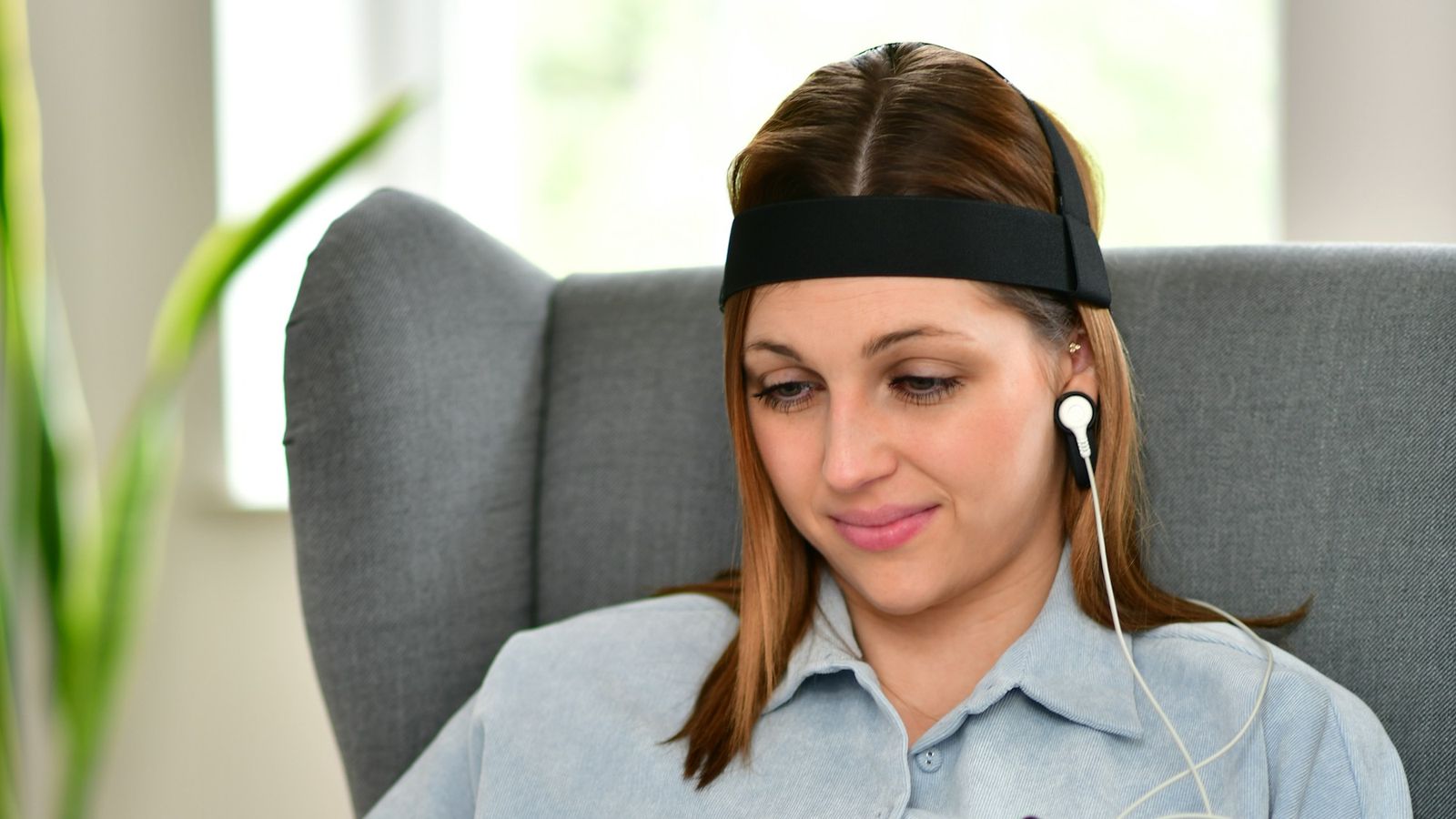
In ADHD, the evidence is more nuanced than the advertising suggests. A 2013 meta-analysis of 9 studies concluded that the ratio between theta and beta waves is not a reliable diagnostic measure, although in a subgroup of children the values are clearly different.
What a qEEG does not do. A brain map does not confirm or rule out ADHD and does not replace a consultation with a psychiatrist or child psychiatrist. The road to a diagnosis goes through the clinical assessment described above.
The map has a different role. What it can add is a measurable picture of how your brain works at rest, which you can set alongside the interview and the questionnaires.
At the BrainMap Institute the map is interpreted by Dr Alina Diana Nemeș and clinical psychologist Alina Robu, and the discussion starts from your specific difficulties and from the assessments you have already had. Based on the map, the specialist can also discuss whether a brain training programme such as neurofeedback makes sense in your case. Everything that concerns adults is described on the page about the BrainMap assessment in adult ADHD.
How much an ADHD assessment costs
The price depends on the route you choose and on exactly what the assessment includes.
How to prepare for an ADHD assessment
A good assessment depends a lot on what you bring with you. A few things prepared at home shorten the process and give the specialist concrete examples instead of vague impressions.

What happens after the assessment
At the end you receive either a diagnosis or an explanation that the difficulties have another cause. Both answers help you. A negative result can bring to light untreated anxiety, poor sleep or a learning disorder, which also deserve to be taken seriously.

If the diagnosis is confirmed, the doctor explains your options and how your progress will be monitored. The plan is made individually and discussed with you or with the parents, and any change in treatment is made only together with the doctor who recommended it.
Do you want to understand what is happening with your attention?
Book a free 15-minute phone call with the BrainMap Institute’s specialists and find out whether a qEEG assessment makes sense in your situation.
The qEEG assessment (brain mapping) for adults with ADHD is carried out at our centers in Bucharest, Cluj-Napoca, Timișoara, Iași, Brașov, Constanța, Târgu Mureș, Bacău and Craiova. Prices are listed on our pricing page.
Frequently asked questions about ADHD assessment
Who diagnoses ADHD?
In Romania, ADHD is diagnosed by a psychiatrist in adults and by a specialist in paediatric psychiatry, that is, a child psychiatrist, in children and adolescents. The clinical psychologist carries out the psychological assessment through structured interviews and questionnaires, and their report helps the doctor decide.
How much does an ADHD assessment for adults cost?
It depends on the route you choose. A consultation with a psychiatrist through the national health insurance is covered for insured patients, usually with a referral, while in the private sector the price varies with the clinic and with what it includes. At the BrainMap Institute the qEEG assessment for adults costs 2,000 lei including VAT, but it is a complementary assessment, not a diagnostic test for ADHD.
How long does an ADHD assessment take?
It rarely ends after a single appointment. The clinical interview, the questionnaires filled in by you and the people close to you, the attention tests and the final report can stretch over several days or weeks, depending on the specialist and on how complicated the picture is.
Is there a valid online ADHD test?
There are validated screening questionnaires, and the best known is the ASRS v1.1 for adults, developed together with the World Health Organization. A test like this shows whether an assessment is worthwhile, but it does not make the diagnosis, because it cannot check your history, your circumstances and other possible causes.
Can ADHD be diagnosed in adults?
Yes, because the DSM-5-TR criteria also apply to adults, with a threshold of 5 symptoms from one group from the age of 17. The condition is that some of the symptoms were already present before the age of 12, which is why an adult assessment looks carefully for information about childhood.
From what age can a child be assessed for ADHD?
The American Academy of Pediatrics guideline recommends assessment from the age of 4, when behaviour or learning problems come together with inattention, hyperactivity or impulsivity. At a young age the diagnosis calls for a lot of caution, because restlessness is part of normal development.
Can an EEG or a qEEG confirm ADHD?
Not on its own, and studies show that the theta/beta ratio measured by EEG is not a reliable diagnostic measure for ADHD. A qEEG can complete the picture with a profile of brain activity, but the diagnosis remains clinical and is made by a doctor.
Sources
- American Psychiatric Association. Diagnostic and Statistical Manual of Mental Disorders, Fifth Edition, Text Revision (DSM-5-TR). American Psychiatric Association Publishing, 2022. [online] Available at: www.psychiatry.org/psychiatrists/practice/dsm.
- National Institute for Health and Care Excellence. Attention deficit hyperactivity disorder: diagnosis and management (NG87). NICE, 2018, updated in 2019. [online] Available at: www.nice.org.uk/guidance/ng87.
- Kessler, R.C., Adler, L., Ames, M., Demler, O., Faraone, S., Hiripi, E., et al. The World Health Organization Adult ADHD Self-Report Scale (ASRS): a short screening scale for use in the general population. Psychological Medicine, 2005. [online] Available at: pubmed.ncbi.nlm.nih.gov/15841682.
- Hong, M., Kooij, J.J.S., Kim, B., Joung, Y.S., Yoo, H.K., Kim, E.J., et al. Validity of the Korean Version of DIVA-5: A Semi-Structured Diagnostic Interview for Adult ADHD. Neuropsychiatric Disease and Treatment, 2020. [online] Available at: pubmed.ncbi.nlm.nih.gov/33116536.
- Wolraich, M.L., Lambert, W., Doffing, M.A., Bickman, L., Simmons, T., Worley, K. Psychometric properties of the Vanderbilt ADHD diagnostic parent rating scale in a referred population. Journal of Pediatric Psychology, 2003. [online] Available at: pubmed.ncbi.nlm.nih.gov/14602846.
- Wolraich, M.L., Hagan, J.F. Jr., Allan, C., Chan, E., Davison, D., Earls, M., et al. Clinical Practice Guideline for the Diagnosis, Evaluation, and Treatment of Attention-Deficit/Hyperactivity Disorder in Children and Adolescents. Pediatrics, 2019. [online] Available at: pubmed.ncbi.nlm.nih.gov/31570648.
- Faraone, S.V., Banaschewski, T., Coghill, D., Zheng, Y., Biederman, J., Bellgrove, M.A., et al. The World Federation of ADHD International Consensus Statement: 208 Evidence-based conclusions about the disorder. Neuroscience and Biobehavioral Reviews, 2021. [online] Available at: pubmed.ncbi.nlm.nih.gov/33549739.
- Arns, M., Conners, C.K., Kraemer, H.C. A decade of EEG Theta/Beta Ratio Research in ADHD: a meta-analysis. Journal of Attention Disorders, 2013. [online] Available at: pubmed.ncbi.nlm.nih.gov/23086616.