
The mind is whole. Only the road to the words has broken.
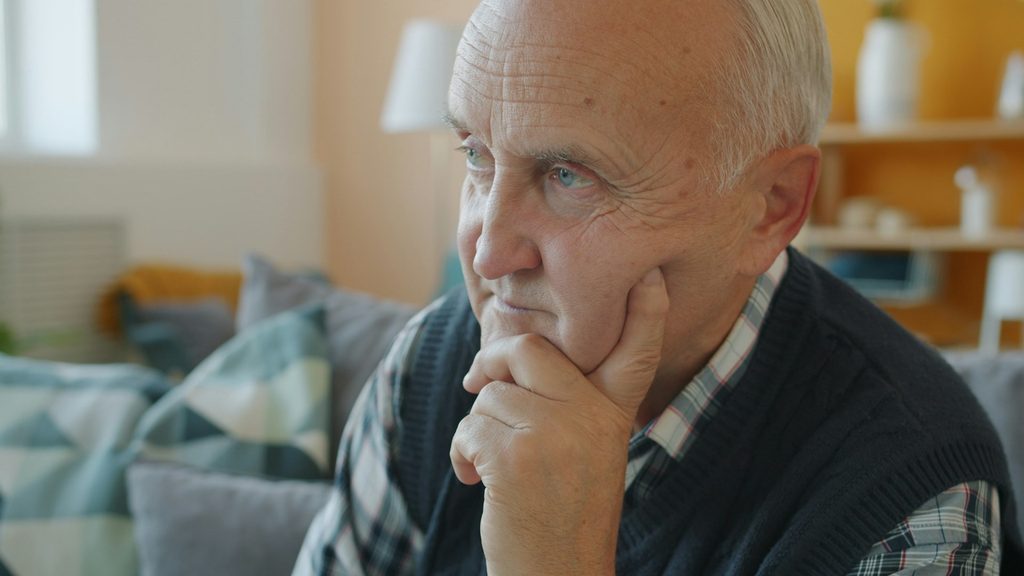
He knows exactly what he wants to say, but the word will not come out
A man sits at the table with his family and wants to ask for the salt. He can see it, he knows what it is for, he knows perfectly well what he wants. He opens his mouth and something else comes out, a word that has nothing to do with it, or nothing comes out at all, and the others look at him and, out of kindness, start guessing for him. He knows they are wrong. He just has no way of telling them.
Aphasia is a language disorder caused by brain damage. It can affect speaking, understanding, reading and writing, in combinations that differ a great deal from one person to the next. Some people lose their words but understand everything. Others speak fluently, but what they say makes no sense and they do not realise it, and there are also cases where language is affected on every front at once.
One thing holds true in almost every case, though, and it is the most important point in this whole article: the intelligence of the person in front of you has not changed. Thinking, emotional memory, personality, humour, preferences, they are all still there. Only the road between thought and word has broken.
If aphasia comes on SUDDENLY, it is an emergency. An unexpected loss of speech or understanding is one of the classic signs of a stroke, especially together with a face drooping on one side or weakness in one arm. Call 112 right away and note the time the symptoms started, because the treatments that can save brain tissue have a short window of time. Do not wait to see whether it passes on its own.
What actually breaks in the brain
Language is not spread evenly across the brain. In the vast majority of people it lives in the left hemisphere, in a network of areas that work together. Two of them carry the names of the doctors who described them in the 19th century, precisely because they observed what happens when those areas are destroyed.
Broca's area, in the frontal lobe, handles the production of speech, that is, turning thought into spoken words. Wernicke's area, in the temporal lobe, handles the understanding of language. Between them runs a bundle of fibres called the arcuate fasciculus, a kind of cable that keeps the two in conversation, and what you lose depends almost entirely on where the blow landed. This explains why two people with the same illness can show it so differently that they seem to be suffering from completely separate things.
The types of aphasia (Broca, Wernicke, global) and how to tell them apart
Medical classifications are more nuanced, and many patients do not fit neatly into a single category, but for a family member trying to understand what is going on, the picture below is still a useful guide.
- Broca's aphasia, also called expressive aphasia: speech is laboured and telegraphic, dragged out with effort, often just key words with nothing linking them. Understanding stays largely good, and this is the painful part. The person knows perfectly well that it is not coming out, and the frustration can be immense.
- Wernicke's aphasia, also called receptive aphasia: speech flows fluently, with normal intonation, but the content is emptied of meaning, with made-up words or words swapped for one another. Understanding is seriously affected, and the person often does not realise they are not being understood, which makes the situation hard to manage for the people around them.
- Conduction aphasia: understanding and spontaneous speech work relatively well, but repeating what was just heard becomes surprisingly hard. Here the connection between the two areas is damaged, not the areas themselves.
- Anomic aphasia: the mildest form and the most common one at the end of recovery. Everything works except finding the names of things. The person describes the object, tells you what it is used for, circles around it, but the word refuses to appear.
- Global aphasia: occurs with extensive damage and severely affects both expression and understanding. It is the most serious form, although even here ground can be gained with sustained therapy.
Where aphasia comes from
By far the most common cause is stroke. Either a vessel that feeds the language areas becomes blocked, or a haemorrhage occurs. That is why aphasia most often appears suddenly, from one hour to the next, in a person who was speaking normally that morning.
There are other roads to it as well. A traumatic brain injury can hit the same regions, as can a tumour growing in the left hemisphere or an infection such as encephalitis. There is also a form that does not appear suddenly but settles in unnoticed over the years, primary progressive aphasia, a neurodegenerative disease related to some forms of dementia. The distinction matters enormously in practice. Aphasia that sets in within a few minutes sends you to the emergency room right then, while one that creeps in month after month calls for a scheduled neurological investigation, just as serious.
What aphasia is not, and why that matters so much
The greatest injustice does not come from the illness. It comes from the way people with aphasia are treated afterwards. Because they cannot find their words, others start speaking to them louder and slower, as if to a child. Or, worse still, they start talking about them in the third person, as if they were not in the room. They hear everything. And, in many forms of aphasia, they understand absolutely everything.
- It is not a loss of intelligence. The ability to think, decide, feel and remember remains. Only the channel through which it is expressed is blocked.
- It is not deafness. Hearing works. The brain has difficulty decoding what it hears, which is something else entirely, so raising your voice does not help.
- Dysarthria is a different story. There, the speech muscles are weakened and words come out unclear, even though language is intact. In aphasia the muscles are fine and it is language that is damaged. The two can also occur together, but they are treated differently.
- It is not a psychological problem. It is damage to a brain network, as concrete as a fracture, only invisible from the outside.
Recognising this changes the course of things in a concrete way. A person treated as a whole adult, given time to finish what they have to say, stays involved in therapy and in family life. One treated as a child withdraws, and withdrawal brings depression, isolation and, in the end, less recovery.
Recovering speech after a stroke: how language is relearned
The first piece of good news is biological. In the weeks and months after a stroke there is a spontaneous recovery, as the inflammation subsides and the areas that were only indirectly affected come back. Everything else is built on top of it.
The second piece of good news has to do with neuroplasticity. The brain cannot rebuild dead tissue, but it can redistribute the work. The areas around the damage gradually take over tasks, and the right hemisphere also gets involved in relearning. It is not a cure in the strict sense but a reorganisation, and that is exactly why it needs training, not rest.
The main tool, the one with the strongest evidence behind it, remains speech and language therapy. Many people think it means pronunciation exercises. It is in fact the systematic retraining of the language network, through naming exercises, sentence building, comprehension work and alternative communication strategies. What research shows fairly clearly is that the dose matters: more frequent and more intensive sessions generally give better results than occasional ones.
There is another mistaken idea that does a lot of harm. People say that after the first year nothing more can be done. The reality is different. Progress is indeed faster at the beginning, but people who are years past their stroke keep gaining ground when they take up therapy seriously again. The window does not close, it only narrows.
What brain training can add
At the BrainMap Institute we start from an assessment that shows us how the brain works now, not how it should work in general. Based on it, we build a personalised protocol. In the case of aphasia our role is clear, and we say so from the start. We work alongside the speech and language therapist, not instead of them.
- Neurofeedback: trains the brain's self-regulation, especially sustained attention and the level of arousal. It may seem like a side detail, but it is not. An exhausted patient with fragmented attention cannot take part in an hour-long speech therapy session, and those sessions are exactly what helps them. We have written about the method at length in the article on neurofeedback plus therapy.
- Supporting cognitive functions: working memory and processing speed directly support the relearning of language. We have explained the link in detail in the article on cognitive functions.
- Regulating emotional state: depression after a stroke is common and underdiagnosed, and a depressed person abandons therapy. Here, training that calms the nervous system can make the difference between carrying on and giving up.
We also owe you the less comfortable part. The evidence for neurofeedback applied specifically to aphasia is still scarce and preliminary. There is far less of it than for speech and language therapy. That is why we present it as what it is. It is complementary support that can create better conditions for language therapy, not a treatment for aphasia and even less a guaranteed cure. We often see this kind of plan for people who come to us with speech disorders, where brain training sits next to conventional therapy.
The person in front of you is still there. Our job is not to teach them to think again, but to reopen their road to words.
BrainMap Institute
How to talk with someone who has aphasia
The family plays a much bigger role than it imagines. The way you carry an ordinary conversation can be, for the person in front of you, the difference between staying present and withdrawing. A few simple things help enormously.
- Give them time. Long silences are uncomfortable for you, not for them. They are searching for the word, and if you say it for them, you have spared them the very effort that helps them recover.
- Speak normally, not as you would to a child. Short, clear sentences, yes. A nursery tone, never.
- One question at a time, preferably with a yes or no answer when things are hard. Two questions asked at once both get lost.
- Use everything you have at hand: gestures, drawings, photos, typing on a phone. Communication does not have to go through spoken words alone.
- Turn off the TV. Background noise makes decoding much harder for a brain that is already struggling with it.
- Confirm that you have understood by repeating it in your own words. If you got it wrong, give them the chance to correct you.
The first step: understanding what works and what does not
Perhaps someone in your family has been left with aphasia after a stroke or a head injury. The most useful thing you can do now is find out exactly where their brain stands, which areas have stayed strong and what can be built on. An initial assessment at the BrainMap Institute does exactly that. It shows you concretely what is happening and where it is possible to intervene.
The conversation is confidential, free of judgement and free of promises we cannot keep, and there we tell you honestly both what belongs to the speech and language therapist and what we can add. Write to us at office@institutulbrainmap.ro or on WhatsApp at 0770 390 190. The words have withdrawn, the person has not.
References
- National Health Service. Aphasia. [online] Available at: nhs.uk/conditions/aphasia.
- National Institute of Neurological Disorders and Stroke. Aphasia. [online] Available at: ninds.nih.gov/health-information/disorders/aphasia.
- American Speech-Language-Hearing Association. Aphasia. [online] Available at: asha.org/public/speech/disorders/aphasia.
Frequently asked questions
Does aphasia mean the person has lost their intelligence?
No. Aphasia affects language, that is, the road between thought and word, not thinking itself. The ability to understand situations, decide, feel and remember stays largely intact. That is exactly why it is important for the person to be treated as a whole adult, with patience and without a nursery tone, because frustration and isolation genuinely slow down recovery.
What is the difference between aphasia and dysarthria?
In dysarthria the problem lies in the speech muscles, which are weak or poorly coordinated, so speech comes out unclear even though language is intact. In aphasia the muscles work, but the brain's language network is damaged, so the difficulty shows up in finding words, building sentences or understanding. The two can coexist after the same stroke, but they are approached differently in therapy.
How long does recovery from aphasia take?
There is no timeline that applies to everyone, because it depends on the size and location of the damage, on age, on general health and on how early therapy begins. The fastest progress usually comes in the first months, when spontaneous recovery also overlaps. After that the pace slows, but the gains continue for as long as the training continues.
Can anything still be done after the first year?
Yes, and the idea that everything is set in stone after a year is one of the mistaken beliefs that do the most harm. People who are several years past their stroke keep gaining ground when they take up speech and language therapy again in a sustained way. Progress is slower than at the beginning, but it remains real, because neuroplasticity has no expiry date.
Does neurofeedback help with aphasia?
We use it as complementary support, alongside speech and language therapy, not instead of it. Its role is to train attention, arousal level and emotional regulation, which are exactly the things that decide whether a patient can get through a speech therapy session and whether they stay in the programme. The evidence for neurofeedback applied specifically to aphasia is still preliminary, which is why we never present it as a treatment for aphasia or as a guaranteed cure.