
The 5 love languages + Neurofeedback: the essential guide
Words, time, gifts, acts of service or touch? Discover your love language, find your partner's and see how it transforms your relationship.

A quick guide to the 5 love languages
Each of us feels and gives love in different ways. The theory of the 5 love languages, formulated by Dr. Gary Chapman, helps us understand how we can communicate with the people we love and why we sometimes feel misunderstood even in a relationship full of good intentions. Neurofeedback, a method for regulating brain activity, can support the emotional balance we need in order to recognise our partner's love language and respond to it properly. When the mind is calm and connected, it becomes easier to love and to feel genuinely loved.
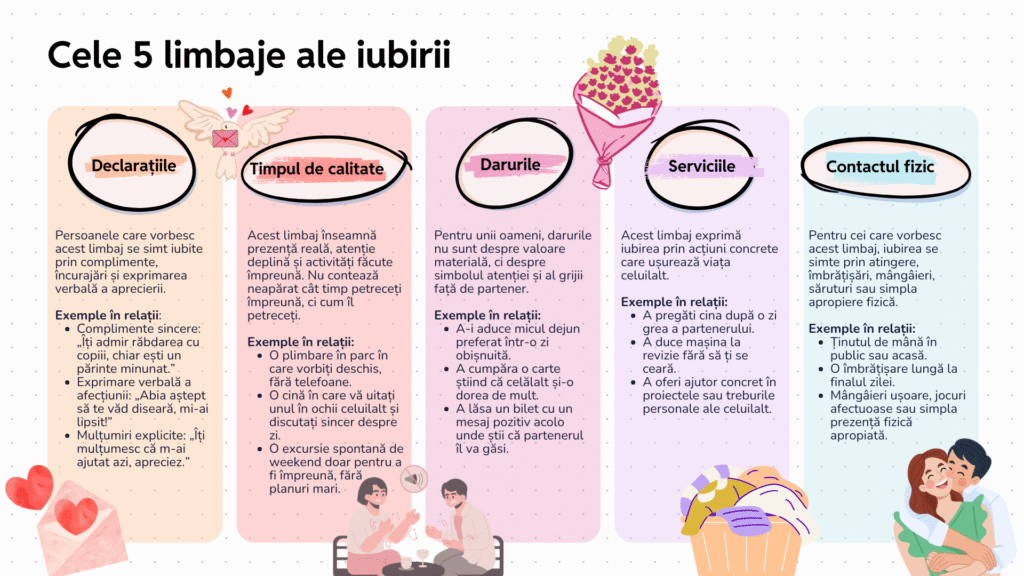
1. Words of encouragement and appreciation (words of affirmation)
People who speak this language feel loved through compliments, encouragement and appreciation expressed out loud. It is not only about saying "I love you", but about all those words that offer validation, support and emotional recognition. Their absence can be perceived as rejection or indifference, even when that is not the intention.
📌 Examples in relationships:
- Sincere compliments: "I admire your patience with the children, you really are a wonderful parent."
- Affection expressed out loud: "I can't wait to see you tonight, I've missed you!"
- Explicit thanks: "Thank you for helping me today, I appreciate it."
2. Time spent together (quality time)
This language means real presence, full attention and activities done together. What matters is not necessarily how much time you spend together, but how you spend it. No distractions, no screens. For these people, the lack of sustained attention can feel like a lack of love.
📌 Examples in relationships:
- A walk in the park where you talk openly, with no phones.
- A dinner where you look each other in the eye and talk honestly about your day.
- A spontaneous weekend trip just to be together, with no grand plans.
3. Gifts received
For some people, gifts are not about material value, but about the symbol of attention and care shown towards a partner. They stand for "I had you in mind and I wanted to bring you joy". A flower, a book, even a handwritten note - they can all convey deep love for someone whose dominant language this is.
📌 Examples in relationships:
- Bringing them their favourite breakfast on an ordinary day.
- Buying a book knowing the other person had wanted it for a long time.
- Leaving a note with a positive message where you know your partner will find it.
4. Acts of service
This language expresses love through concrete actions that make the other person's life easier. Here, "I love you" is said through "I fixed the car", "I did the shopping" or "I looked after the child so you could rest". The effort invested is perceived as clear proof of love.
📌 Examples in relationships:
- Cooking dinner after your partner has had a hard day.
- Taking the car in for a service without being asked.
- Offering concrete help with the other person's projects or personal errands.
5. Physical touch
For those who speak this language, love is felt through touch, hugs, caresses, kisses or simple physical closeness. Their absence can lead to a feeling of emotional disconnection, even when all the other needs are met.
📌 Examples in relationships:
- Holding hands in public or at home.
- A long hug at the end of the day.
- Light caresses, affectionate play or simply being physically close.
Why it is essential to understand the way you love and the way your partner understands and receives love
Understanding your own love language is the key to a balanced, authentic relationship. Many people give love the way they would like to receive it, without taking into account that their partner may feel affection in completely different ways. This often leads to frustration and to the feeling of being "misunderstood" as a couple, even when both partners have good intentions. When we learn to identify and respect the unique way in which we love and are loved, a deep and real connection is created.
Each of us has different emotional needs, shaped by our personal history, by trauma or by the way we were taught to relate to others. When partners learn to communicate in each other's "language", the relationship becomes smoother and conflicts decrease. Instead of misunderstandings, empathy appears; instead of reproaches, gratitude. It is like learning to speak the mother tongue of the other person's soul.
What is more, recognising and respecting the differences in how we love not only strengthens the relationship, it also helps us know ourselves better. When you know what makes you feel safe, valued and loved, you can consciously ask for it. Equally, you become more open to giving what truly matters to the other person, and not only what seems "right" from your own perspective.
The role of Neurofeedback in emotional and relational regulation
Neurofeedback is a modern and deeply effective tool that helps regulate brain activity, reduce stress and increase emotional clarity. When the nervous system is out of balance, whether because of anxiety, mental hyperactivity or emotional exhaustion, it becomes difficult to connect with others in a healthy way. We overreact, misinterpret or withdraw, even though rationally we want connection. Neurofeedback restores the balance we need in order to be present, empathetic and stable in our relationships.
In the context of the 5 love languages, neurofeedback can help a person become more aware of their real needs and of the way they perceive love. At the same time, it supports a growing ability to notice and understand the other person's emotions, without reactivity or inner blockages. The more mentally and emotionally centred we are, the healthier and more harmonious our relationships become.
If you feel that your relationships are tense or that you lose yourself in them, neurofeedback may be exactly the support you need. Book a BrainMap assessment and discover how you can regulate your brain activity in order to connect more authentically with yourself and with the people you love.
📞 037 171 0020
We are here to guide you towards clarity and balance.
🧠 How does your brain work?
Download the guide for FREE and find out what your brain map shows.
📖 Our books - Real case studies with brain maps
📖 Vindecarea Depresiei (Healing Depression, in Romanian) - 29.00 RON
📖 Vindecarea Anxietatii (Healing Anxiety, in Romanian) - 29.00 RON
📖 Eliminarea Atacurilor de Panica (Ending Panic Attacks, in Romanian) - 29.00 RON
Do you want to understand what is happening in your brain?
Book a call with the BrainMap Institute's specialists and find out how a BrainMap and brain training can help you.