
Are you living with it and do not even know? The type of depression that can go unnoticed for years
Imagine a person who starts their day at 7:00. They drink their coffee, answer the urgent emails, take the children to school and joke with colleagues at the office. In the evening they do the shopping, cook, plan the next day and get ready for bed.
From the outside, their life is a success story. A perfectly normal life, admirable even.
Inside, however, every step feels like walking through fresh cement. Every smile is a massive act of will and every conversation is a text memorised in advance.

This is the quietest and most dangerous form of depression. It gives no obvious sign that it is part of your life. It lets you carry on, but it empties you inside until you become a ghost of yourself.
Even you could be living with it right now, mistaking it for “adult life”.
What functional depression actually is
Unlike major depression, the one that keeps you shut in the house and completely cuts off your ability to carry out everyday activities, functional depression behaves like a perfect mask.
It combines the ability to function day by day with a chronic feeling of inner emptiness, background sadness and deep exhaustion. In time, these states can become routine. They come to seem so ordinary that you no longer even name them for what they really are.

You get used to functioning on autopilot. You get used to the tiredness that does not go away even after 10 hours of sleep. You get used to no longer feeling any real joy for the things that used to give you pleasure.
Conversations with friends start to bore or tire you, so you begin to avoid them, hiding everything behind excuses that sound logical to you: you have work, you are tired, you have projects, you have responsibilities towards your family.
This is where the extreme trap sets in: you come to believe that this is simply who you are. You take the state on as part of your personality.
You tell yourself that you have become more cynical, more withdrawn, more realistic or simply more mature. In reality, you are just a person burning through your last biological resources in order to maintain the illusion that you are “fine”.
Why this depression goes unnoticed, even when you are in therapy or seeing a psychiatrist
One of the reasons functional depression ends up being identified late is that, on the surface, it can look like a life lived “the right way”.
The person keeps their job, answers messages, takes care of the house, goes to meetings, makes plans and seems present. From the outside, the picture is coherent.
After months or years at this pace, you start to get used to the state. That is how you come to describe the symptoms in a way that makes them seem smaller than they are.
When you go to a therapist, the assessment is built through dialogue: emotions, thoughts, relationships, your history, the way you function day by day. With a psychiatrist, the assessment is clinical, through questions, an interview and questionnaires that measure the severity of the symptoms.
But in functional depression a very fine trap appears: you talk about your suffering as a routine, because you have learned to live with it.
Instead of saying that your life has changed profoundly, you end up saying that you are a bit tired. That it takes you a little longer to fall asleep. That you have a busy period at work. That you have withdrawn a little, but you need some quiet. That you feel less like doing things, but it is probably stress. That you are still managing and you are sure you will bounce back, because you have been through this before.
And specialists work with the information they receive. If you present the picture as tiredness, insomnia, momentary anxiety or professional pressure, the first explanations can naturally go in those directions. Especially when you seem coherent, functional and able to carry your responsibilities.
So how can you prove a suffering that even you no longer know how to put into words?
The 14-minute test that shows you exactly whether you have depression or not
If the mind can lie or get used to inner pain, the biology of the brain cannot. There is a brain analysis through which you can take depression out of the area of assumptions and turn it into clear, visible and undeniable data.
It is called Brain Mapping and it is a qEEG scan (quantitative and qualitative electroencephalogram) that measures the electrical activity of the brain in real time.
It is the most accurate way of seeing depression in the brain as something tangible, mapped in concrete data.
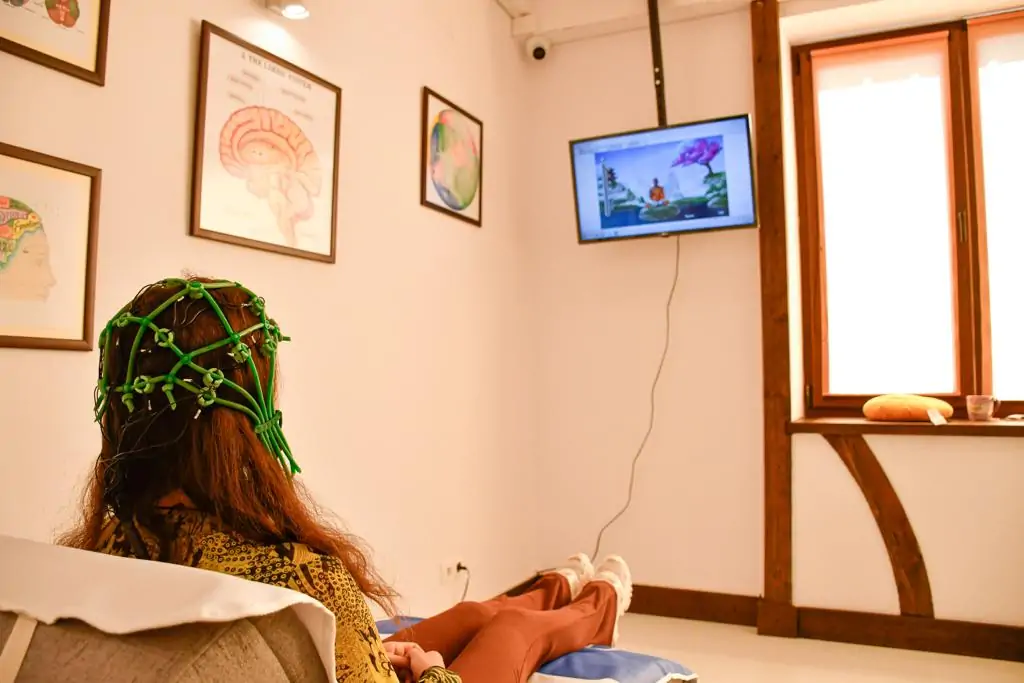
Unlike conversations in psychotherapy or clinical tests based on an interview, Brain Mapping does not make assumptions.
In only 14 minutes, this non-invasive scan shows you exactly which brain networks are working out of balance (whether we are talking about areas that are too slow, responsible for the lack of motivation, or hyperactive areas, responsible for anxiety and rumination).
It reveals the cause behind your states and tells you precisely how and where to intervene in order to treat depression at its source.
In Romania you can have this scan at our institute, where we use the most advanced Brain Mapping system in Europe, which analyses 47 areas of the brain from 80,000 points.
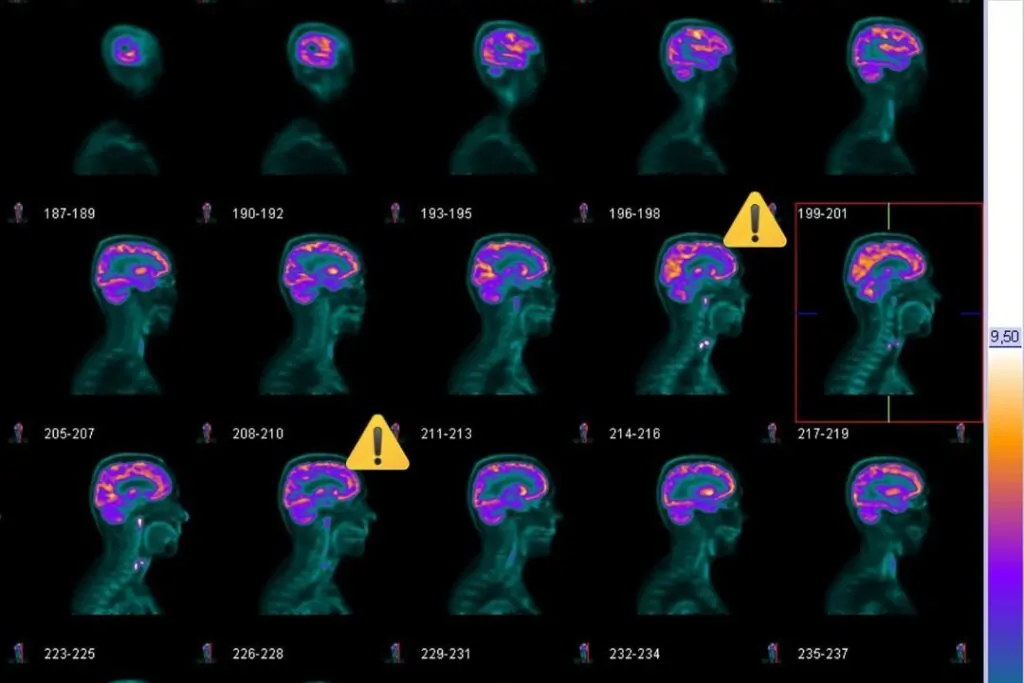
The team of specialists here has worked so far with over 20,000 patients who have faced depression, anxiety, ADHD, autism, insomnia, burnout and other neuropsychological difficulties.
Among them were people who came to the institute convinced that they were suffering only from tiredness or everyday stress, only to find out, with clear data in front of them, that they were in fact struggling with masked functional depression or with other conditions about which they had never received clarity.
For many of them, this step literally saved the course of their life, giving them the chance to understand what was really happening and to take correct, targeted measures in order to become the best version of themselves.
Do you already know that you have depression, but you have not managed to treat it?
Perhaps you have already been diagnosed and you know for sure that you are struggling with a form of depression, whether minor, functional or major. You have probably tried therapy, changed treatment plans, had short periods of calm, but you feel that you are going round in circles. The symptoms always come back, like an invisible elastic band pulling you into the same state.
Why does this happen? Because, most likely, you are treating the general symptoms without knowing the exact cause in your brain. A classic diagnosis gives you a label, a category you fall into, but it does not give you the unique coordinates of your brain.
Without a precise map, you are condemned to treat at random or to blindly try medicines and therapies until you find, through trial and error, a combination of methods that merely keeps you afloat.
This is where the undeniable value of a Brain Mapping comes in again. Many of the patients who come through the door of our institute have this scan precisely in order to confirm a diagnosis they have already received, wanting to see with their own eyes, expressed in concrete data and visual maps, the exact imbalances in their brain.
The method that targets depression directly at its source
After identifying the neural networks stuck in this depressive pattern, our specialists do not leave you with just an observation, but offer you real solutions. More precisely, you receive a plan of brain training (Brain training) personalised 100% for you.
Through this training, your brain is guided by exercise and repetition to regulate its own electrical activity, to come out of the harmful “routine” of depression and to regain its natural flexibility.
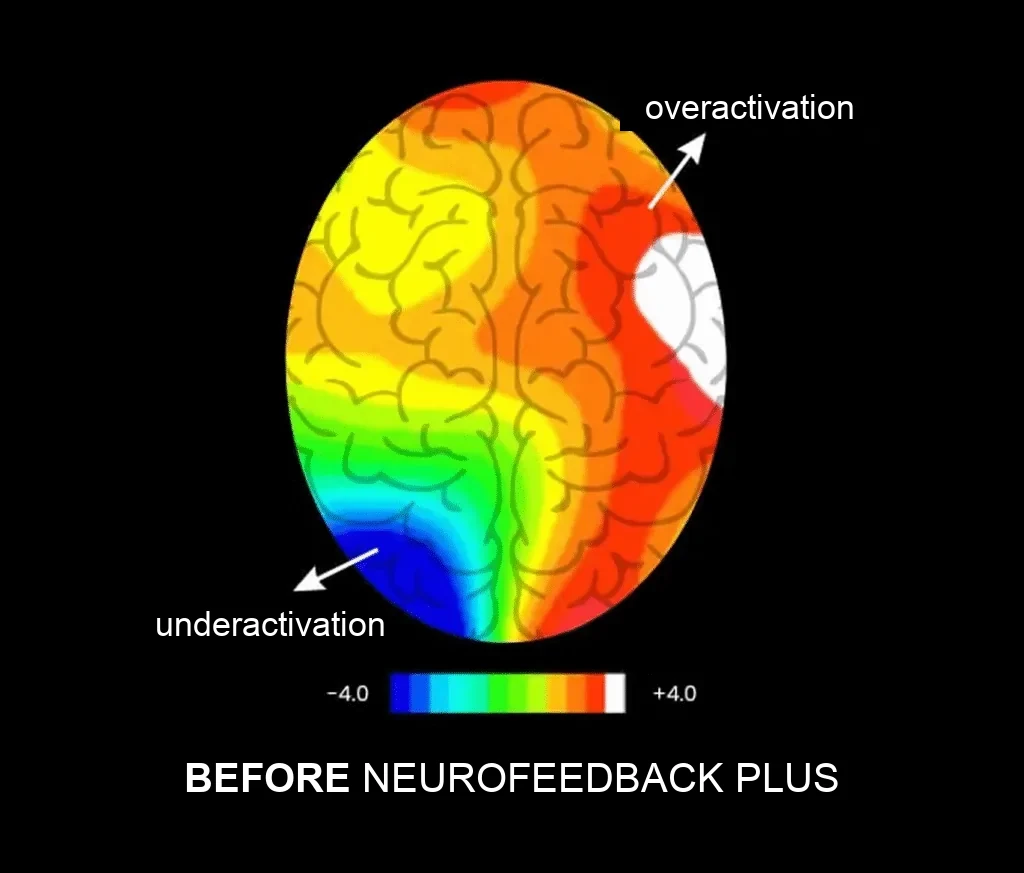
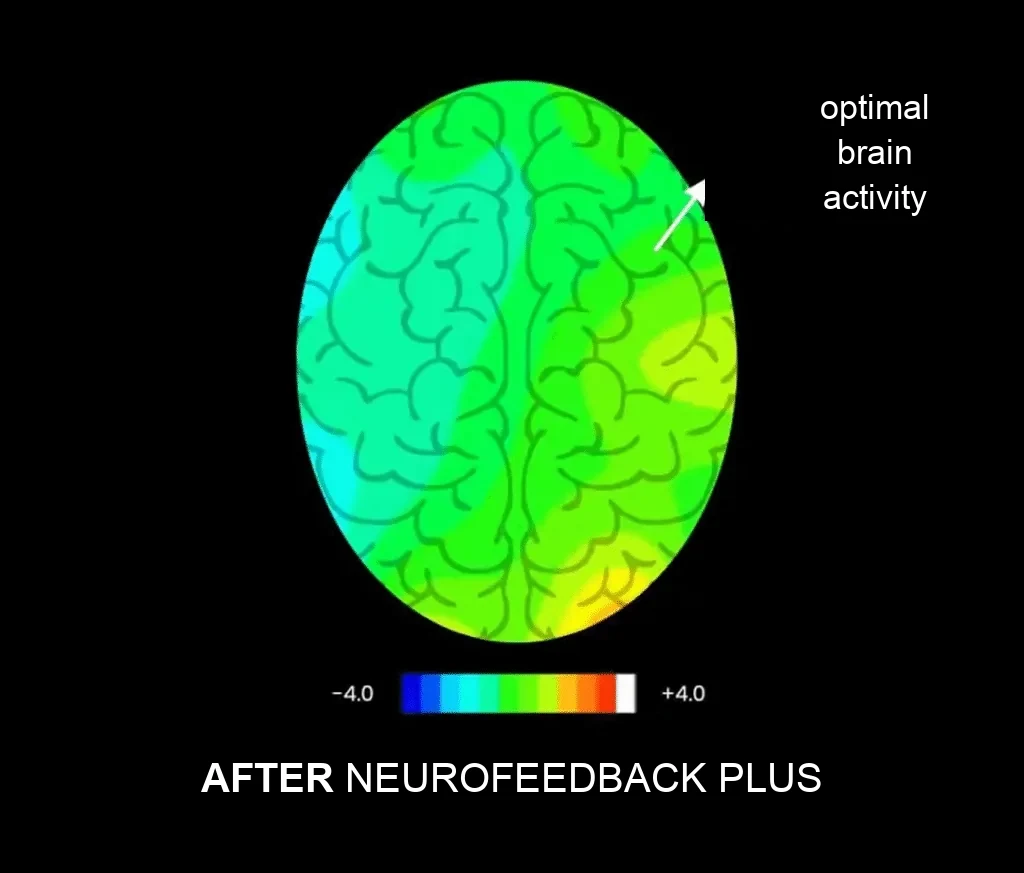
The method is completely non-invasive, requires no medication and, most importantly, treats the cause of depression directly at its source, not only its effects.
If you feel that the moment has come to break the circle of depression and you decide to follow brain training at our institute, you have one more reason to do so: the first two sessions are completely free, so that you can experience the method with maximum confidence.
Want to find out more?
Book now a free 15-minute phone conversation with one of our specialists to see which assessment or therapy suits your situation.
The call comes with no obligations and is purely informative, so we can help you make the best decision for your physical and mental health.