
Blue Monday, the most depressing day of the year - 12 remedies to shake off sadness
Blue Monday, the saddest day of the year: what it is, why it falls on the third Monday of January and 12 remedies that help you get through it.
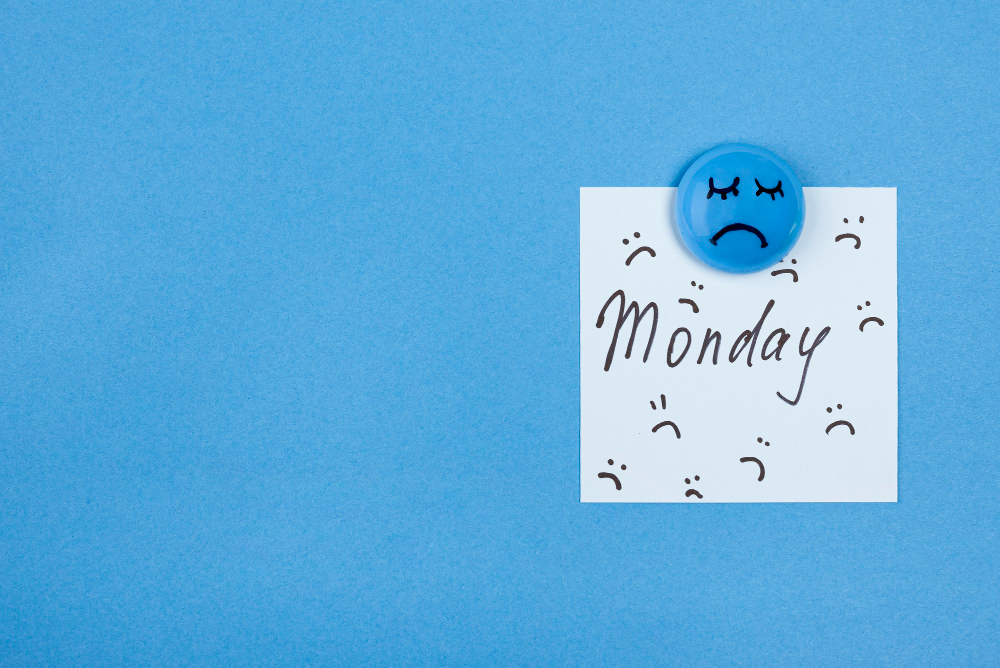
What is Blue Monday and where does this concept come from?
Blue Monday or Sad Monday is a term used to describe the third Monday in January, considered by many to be the most depressing day of the year. In 2025, the “bluest” Monday falls on 20 January.
This concept was initially created and promoted for marketing purposes, but the idea caught the public's attention and sparked interest in how a variety of factors influence mental health.
Arnall's formula
In 2005, British psychologist Cliff Arnall developed a mathematical formula to determine the exact day of the year when people feel least happy and least motivated. His formula took into account several factors, among them the weather conditions, the level of debt accumulated over the winter holidays, the time elapsed since Christmas, the time elapsed since New Year's resolutions failed, as well as low motivation and a general feeling of helplessness and passivity.
However, when psychology tries to reduce and simplify human experiences, such as emotions and mental health, to easily digestible formulas like this one, the integrity of the field suffers.
Many experts from both psychology and mathematics have challenged the validity of the formula, arguing that it actually makes no sense and also that official statistics show no rise in mortality or morbidity rates on Blue Monday.
Another factor that undermines the credibility of the Blue Monday concept is that it was originally developed together with a public relations agency and the holiday company “Sky Travel”, in order to encourage Britons fed up with bad weather to book their summer holidays earlier and escape the low moods associated with gloomy weather, which makes the ethical principles behind the Blue Monday concept doubtful at best.
Similar psychological formulas that try to identify “key dates” have also been used by ice cream producers, car dealers or websites selling weight loss products, with the sole purpose of attracting more customers.
Although this formula has been challenged and criticized for lacking a solid scientific basis, the marketing campaign built around Blue Monday did succeed in drawing the attention of the media and of the public. Over time, Blue Monday has become widely known as a day on which many people feel less inspired and less happy.
Sadness versus depression - similarities and differences
Depression and sadness are two distinct emotional states that are often confused. In a medical context, it is essential to understand and to point out the differences between them, given the significant impact they can have on mental health.
What sadness is
Sadness is a natural emotional experience that appears in response to difficult events or losses. It is a temporary emotion and, in most cases, a normal reaction to situations such as the death of a loved one, a deep disappointment or a major change in personal life. Sadness is usually a passing emotion that fades as the person adapts to the circumstances or finds ways to cope with them.
What depression is
Depression is a complex medical disorder. It is characterized by a state of deep sadness, loss of pleasure or interest in everyday or recreational activities, sleep disturbances, changes in appetite and an overall decline in daily functioning. Depression is not necessarily linked to a specific event and can persist over the long term, severely affecting the person's quality of life.
The duration and intensity of the symptoms
The feeling of sadness is generally short lived and can be managed with emotional support, time and adaptation to difficult situations.
Depression, on the other hand, is characterized by persistent symptoms that significantly affect daily functioning and can last for weeks, months or even years. The intensity of depressive symptoms can range from mild to severe, and their presence may require medical intervention and treatment.
Causes and risk factors
Sadness often has an obvious cause, such as a stressful event or a loss, and its impact and intensity fade over time.
Depression, on the other hand, can be influenced by genetic factors, chemical imbalances in the brain, hormonal imbalances and traumatic events. Risk factors for depression include family history, chronic stress, physical health problems and traumatic experiences in childhood.
Emotional and cognitive manifestations
Sadness is a natural emotion that appears in response to unpleasant events or losses and that usually leaves room for other emotional states as well, such as joy or hope. A sad person can find relief through pleasant activities, support from loved ones or simply as time passes. Depression, by contrast, is a mental health condition that deeply affects thinking and emotions, leading to a persistent feeling of worthlessness, guilt or inner emptiness. In depression, even experiences that once brought pleasure become meaningless, and the person may feel emotionally disconnected from themselves and from others.
The impact on daily functioning
While sadness can temporarily influence a person's activities, it does not usually prevent them from meeting their daily responsibilities. Sadness is like a passing shadow, and the person keeps the ability to concentrate and to make plans for the future. Depression, on the other hand, can lead to a significant drop in energy, motivation and productivity, affecting every aspect of life - from personal relationships to work. People with depression may feel that any effort is overwhelming, and daily functioning becomes an immense strain or even impossible to sustain.
Given the clear differences between the emotional state of sadness and the medical diagnosis of depression, it is important to stay anchored in reality and to be able to identify and manage our emotional states properly, so that we can live a fulfilled life. Consulting mental health professionals is an essential step for those whose symptoms of sadness or depression persist or grow stronger.
Tips for managing sadness in a healthy way
In order to healthily manage the sadness associated with Blue Monday, with January or with any other difficult moment, it is essential to take proactive steps to protect your mental health. Here are a few useful tips:
- Setting up and keeping a regular routine: stability in your daily schedule can help reduce anxiety and stress.
- Exploring creativity: Creative activities such as drawing, painting, writing or music can offer a healthy way of expressing emotions. These forms of expression help process feelings of sadness and can bring a sense of achievement and emotional release.
- Making physical activity part of everyday life: regular physical exercise releases endorphins, chemicals that improve your mood.
- Spending time in nature: Walks outdoors, especially in green spaces or near water, can reduce feelings of being overwhelmed and sad. Contact with nature boosts wellbeing by lowering stress hormones and increasing the sense of connection and calm.
- Limiting your exposure to technology: Cutting down the time spent on social media or in front of screens can prevent emotional overload and unhealthy comparisons with others. That time can be used for more meaningful activities and for reconnecting with yourself.
- Social connection: keeping in touch with friends and family can provide emotional support in difficult moments.
- Practicing gratitude: Writing down three things you are grateful for every day can change your perspective on life and reduce negative feelings. This practice builds a positive mindset and helps you focus less on the negative side of things.
- A balanced diet: a sufficient intake of nutrients together with proper hydration is a necessity for both physical and mental health.
- Proper rest: enough sleep of a satisfactory quality has a positive impact in reducing states of sadness and apathy.
- Stress management: relaxation techniques such as meditation and deep breathing can help manage stress and anxiety.
- Setting small, achievable goals: when sadness makes everything seem overwhelming, breaking tasks down into small steps can help. Every achievement, however small, gives a sense of control and satisfaction, which contributes to a better mood.
- Personalized therapies: Biofeedback therapies such as Brain training aim to change brain activity with visual and auditory stimuli, so that brain activity returns to optimal parameters, for an overall state of wellbeing. Neurofeedback can help manage sadness by regulating brain activity, using technology to identify and adjust the neural patterns associated with negative states. Through visual and auditory stimuli, this technique trains the brain to work in a more balanced way, improving emotional regulation and general wellbeing. In this way, neurofeedback can offer concrete support for reducing frequent states of sadness and for promoting a more stable emotional state.
It is crucial to acknowledge that “blue” states are not an aspect of life that should be ignored or played down. On the contrary, it is important to encourage openness and awareness around mental health, so that we take an active part in building a happier and healthier community.
🧠 How does your brain work?
Download the guide for FREE and find out what your brain map shows.
📖 Our books - Real case studies with brain maps
📖 Vindecarea Depresiei (Healing Depression, in Romanian) - 29.00 RON
📖 Vindecarea Anxietatii (Healing Anxiety, in Romanian) - 29.00 RON
📖 Eliminarea Atacurilor de Panica (Ending Panic Attacks, in Romanian) - 29.00 RON
Do you want to understand what is happening in your brain?
Book a call with the BrainMap Institute's specialists and find out how a BrainMap and brain training can help you.