
How you can stop the progression of Multiple Sclerosis with brain training therapy, unique in Europe
The therapy clinically proven to relieve the symptoms of Multiple Sclerosis and improve quality of life

Multiple sclerosis, in short
Over 2,500,000 people live with multiple sclerosis worldwide, and around 200 new cases appear every week.
It is one of the most common neurological conditions among young adults. And it does not appear only in adults - around 10,000 children live with MS (according to the National MS Society).
If you have been diagnosed recently, an effective treatment plan can help you keep your symptoms under control and stop the disease from progressing.
What is multiple sclerosis?

Multiple sclerosis is a progressive disease that affects the central nervous system. It is usually diagnosed in young adults aged between 20 and 40, but it can appear at any time between 15 and 60 - more often in women.
The exact causes are not known; MS is considered an autoimmune condition. Those affected do not fully recover, but they can keep their symptoms under control with the right therapy.
Genetics influences the onset of the disease, although MS is not a hereditary disease: the risk is higher for those who have relatives with this condition.
The symptoms of multiple sclerosis
They can be grouped according to when and why they appear.
Primary symptoms
They appear as a result of demyelination - the myelin sheath covering the neurons' axons is damaged, and the transmission of nerve impulses is disrupted.
- a feeling of weakness throughout the body
- sensory loss
- inability to control muscle movements (ataxia)
Secondary symptoms
Urinary tract infections caused by urinary retention - the patient cannot empty their bladder completely or voluntarily.
Tertiary symptoms
As the disease progresses and its manifestations become harder to control, the risk of reactive depression and the tendency toward social isolation increase.
By how often they appear
- Common: weakness, fatigue, walking problems, increased muscle tone, balance problems, depression, sensory loss.
- Less common: speech problems.
- Rare: seizures, paralysis, hearing loss.
Types of Multiple Sclerosis:
- Relapsing-remitting multiple sclerosis (RRMS) is the most common form of multiple sclerosis and mainly affects people over the age of 40.
- Primary progressive multiple sclerosis (PPMS) starts around the age of 40 and mainly affects the spinal cord from the very first stage.
- Secondary progressive multiple sclerosis (SPMS) develops from relapsing-remitting multiple sclerosis after around 10 years. And it progresses quickly, leading to disability.
- Progressive-relapsing multiple sclerosis (PRMS) is the most aggressive form of multiple sclerosis, characterized by severe symptomatic episodes.
How does brain training therapy help in Multiple Sclerosis?
With neurofeedback therapy, we can relieve all the symptoms present in every type of sclerosis. The earlier therapy begins, the faster we can reduce the impact of the condition's symptoms
Using auditory and visual feedback to reward brain waves when they perform the desired action, the patient specifically trains the areas of the brain affected by Multiple Sclerosis.
Thanks to the brain's ability to adapt, we can form new neural pathways that take over the control of muscle movements. By training neuroplasticity, we improve motor function in everyday life and reduce depressive states.
What does the procedure consist of?
In neurofeedback therapy for Multiple Sclerosis, we will go through 4 simple steps together:
1️⃣ You do a BrainMap investigation, in which we discover exactly which areas are affected by Multiple Sclerosis. This way, we understand what needs to be treated and how we will run the therapy sessions.
2️⃣ Based on the results, you receive a personalized neurofeedback treatment plan, suited to the uniqueness of your brain.
3️⃣ You follow the established plan and attend the regular sessions of brain training.
4️⃣ You notice in everyday life that your senses are just as alert as before, and depressive symptoms gradually disappear.
Results
From our activity and our work with thousands of patients, we have seen that, through brain training with Neurofeedback, we can considerably reduce the impact of Multiple Sclerosis symptoms if we intervene early.
After specifically training the affected areas, the patient can lead a much calmer, higher-quality life, managing to reduce the anxiety and depression triggered by the condition. Meanwhile, the senses and muscle control are improved (effects also demonstrated by international studies*).
Intervene as early as possible and reduce the symptoms of Multiple Sclerosis
If you follow the therapy plan, we can help you stop the worsening of Multiple Sclerosis. This way you will be able to improve your quality of life and feel the same as before the condition appeared.
If you have other questions about the procedure or want to find out whether it is suitable for your situation, book a 15-minute phone consultation now with one of our specialists.
Brain training unique in the world
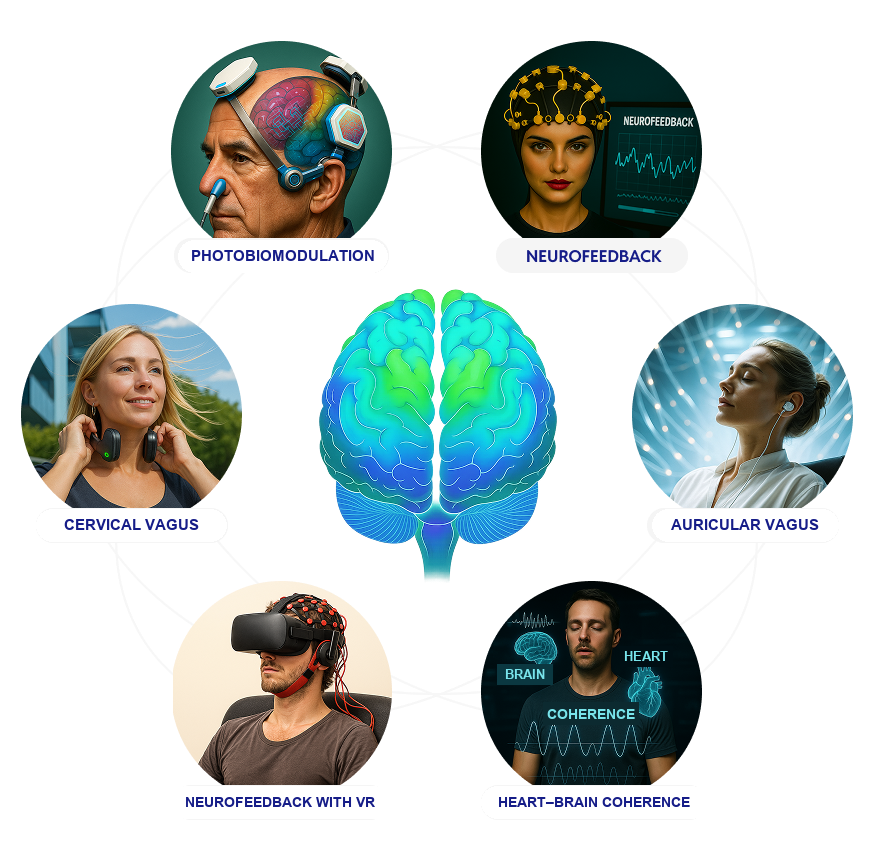
Brain training unique in the world, combining neurofeedback with other complementary neurotechnologies such as photobiomodulation, heart–brain coherence and vagus nerve stimulation, to help you reach your full potential and live the best life possible.
- Results up to 50% faster than classic neurofeedback
- Treats neuropsychiatric and pathological conditions
- Works directly on the cause, not the symptoms
- Restores emotional balance, sleep and mental clarity
- Increases focus, resistance to stress and cognitive performance
- A protocol 100% personalized to the uniqueness of your brain
- Validated by 65+ years of research in neuroscience
Book a free phone consultation with one of the BrainMap Institute's specialists
- You get answers to any questions you have about BrainMap and brain training
- You find out how brain training is applied to the uniqueness of your brain and your situation
- You will know the exact steps to follow to live the best life possible
Effectiveness proven in international scientific studies
What our patients say
Read the experiences of those who have overcome their condition.
See testimonialsDo you want to understand what is happening in your brain?
Book a call with the BrainMap Institute's specialists and find out how a BrainMap and brain training can help you.
Book a free call