
Does your child seem anxious, restless or hard to soothe?
- Frequent crying, selective mutism, refusing to go to school, intense fears, temper meltdowns or the constant need for reassurance can be signals that anxiety is starting to affect their life.
Anxiety in children can look different from anxiety in adults
Sometimes it shows through fear and withdrawal. Other times it appears through restlessness, meltdowns, stomach aches, irritability or school refusal.
For a parent, these reactions can seem separate at first. A hard morning. A stomach ache before school. An episode of crying. An intense reaction to a small change. A child who asks again and again for reassurance.
Still, when these signs appear frequently, repeat in similar contexts or start to affect the child's routine, they can indicate emotional overload and can be associated with anxiety in children.
Your child may:
- Cry before school, especially in the morning, before leaving
- Show signs of selective mutism: talks at home, yet in social contexts such as school stays silent
- Refuse to go to school or make up reasons to stay home
- Often say their tummy hurts, their head hurts or they feel unwell
- Have meltdowns in the morning, when they have to get dressed, leave or enter the classroom
- Get scared easily by situations that seem ordinary to other children
- Have intense fears related to school, separation, mistakes, tests or new people
- Seem tense, strained or always on alert
- Get angry very quickly, even over small things
- Cry often or react intensely to seemingly minor changes
- Constantly ask for reassurance: "Is it okay?", "Are you sure you'll come?", "Are you sure I can?", "Are you sure it will be ok?"
- Fall asleep with difficulty, especially before a school day, a test or a new activity
- Have restless sleep, frequent awakenings, nightmares or the need for the parent's presence
- Avoid other children, parties, group activities or new social contexts
- Withdraw in unfamiliar situations or when feeling pressure
- Freeze during tests, when being questioned or when having to answer in front of others
If you recognise several of these signs, it is worth seeking clarity. They can be the way the child shows they feel overwhelmed, even if they still have difficulty explaining exactly what they are experiencing.
Why it is important to understand the signs early

When the child feels overwhelmed, behaviour becomes the language through which they try to show what is happening inside. A child may say "my tummy hurts", "I'm scared", "I want to go home" or may react through crying, anger, avoidance or withdrawal.
Behind these reactions there can be fear, pressure, emotional overload, separation anxiety, school anxiety or difficulties with emotional regulation.
In the long run, repeated signs can start to affect several areas of the child's life: going to school, sleep, relationships with other children, self-confidence, the ability to concentrate and the way they respond to new situations.
Why clarity matters
When the parent understands better what may lie behind the child's reactions, they can respond with more calm, ask for the right support and avoid whole months of separate interpretations: "he's spoiled", "he's sensitive", "he's going through a phase", "he'll get used to it".
A suitable evaluation can help the parent see the picture more clearly: what pattern appears, when the reactions are triggered, what overwhelms the child and what steps can support their emotional balance.
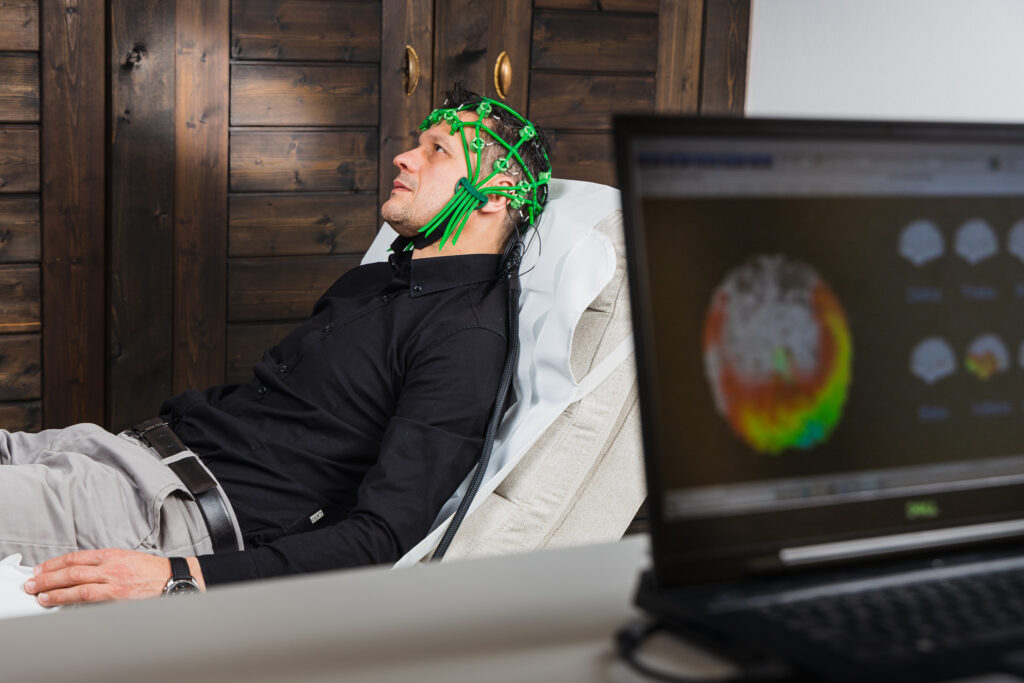
The BrainMap assessment helps parents see the complete picture
BrainMap is an advanced EEG assessment, which collects and processes data from over 80,000 points of the brain, to offer a clearer perspective on the child's brain activity and to identify with precision the areas where imbalances exist.
This scan gives parents a clearer direction, based on observations from everyday life and on the specialists' interpretation. Instead of looking at each reaction separately, you start to see the connections between them.
It can help parents better understand what lies behind anxiety, restlessness, intense fears, concentration difficulties or reactions that are hard to explain, while also providing a personalized brain training plan to support the child's emotional balance.
What a BrainMap evaluation can show
Together with specialists experienced in working with children facing emotional, cognitive and behavioural difficulties, the evaluation can help parents understand:
- What can trigger the child's reactions
- How anxiety, emotional stress or overload can manifest
- What patterns appear between school, sleep, body and behaviour
- What type of support may be right for the child
- How you can respond more calmly and more effectively as a parent
- What steps can support the child's emotional regulation and adaptation
5 reasons to book a BrainMap for your child
The most advanced BrainMapping in Europe
The qEEG scan analyses brain activity from over 80,000 points and 47 areas of the brain, providing information that is hard to observe through behaviour, especially in childhood.
The brain can offer essential clues
Children find it hard to express what they feel. Anxiety, fears, restlessness, school refusal or meltdowns can have causes that are hard for the child to explain in words. BrainMap helps parents see more clearly what may lie behind these reactions.
Non-invasive and takes only 14 minutes
BrainMap can be performed on children starting from the age of 3 and provides relevant data about brain activity in a short time, through an evaluation adapted to the child's age.
Interpretation and recommendations from specialists
The results are analysed by the founders of the BrainMap Institute, Dr. Alina Diana Nemes and Clin. Psych. Alina Robu, the specialists who pioneered neurofeedback in Romania.
You find out whether the signs may be associated with anxiety
Sometimes, the symptoms may indicate anxiety. Other times, they may be related to ADHD, autism, difficulties with emotional regulation or other neurofunctional patterns.
The sooner you understand the possible cause, the more clearly you can intervene before the symptoms further affect the child's school, sleep, confidence and everyday life.
The specialists who interpret your results

Dr. Alina Diana Nemes
Neurofeedback Therapist, General Practitioner, PhD Candidate in Psychology, Bowen Therapist, Integrative Psychotherapist, Qualifications in Homeopathy and Medical Ethics
With over 20 years of experience working with brain and energy imbalances, Dr. Alina Diana Nemes combines medicine, neuroscience and therapy with a deeply personalized approach. She has interpreted thousands of BrainMaps and created effective protocols for patients with anxiety, ADHD, autism, depression, chronic pain or exhaustion. She works with rigour, but also with genuine attention to the details of each case.
Clin. Psych. Alina Robu
Neurofeedback Therapist, Clinical Psychologist, PhD Candidate in Psychology, Integrative Psychotherapist, Hypnotherapist, Sexologist
Alina Robu is a neurofeedback therapist with international training and an interdisciplinary approach that combines neuroscience with psychotherapy, hypnotherapy and behavioural analysis. She has worked with over 20,000 patients from across the country and is responsible for constantly adapting the protocols to new research in the field of brain regulation. She is passionate about real results and about reconnecting each person with their own capacity for healing.
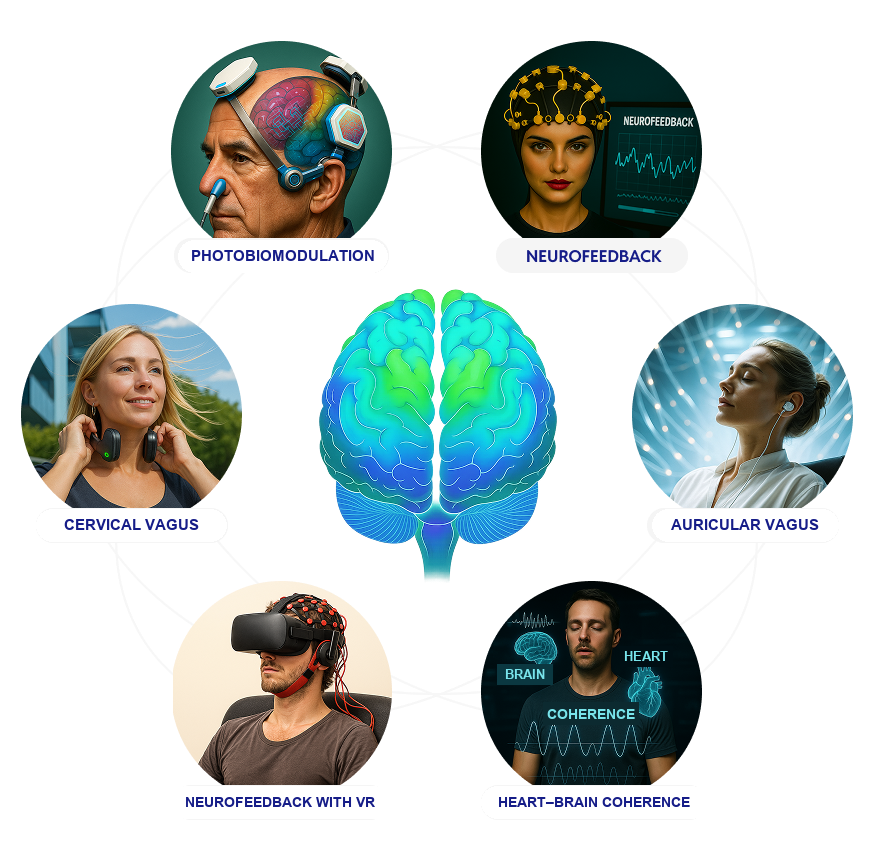
Brain training unique in the world
Brain training unique in the world, combining neurofeedback with other complementary neurotechnologies such as photobiomodulation, heart–brain coherence and vagus nerve stimulation, to help you reach your full potential and live the best life possible.
- Results up to 50% faster than classic neurofeedback
- Treats conditions both neuropsychiatric and pathological
- Works directly on the cause, not the symptoms
- Restores emotional balance, sleep and mental clarity
- Boosts focus, resistance to stress and performance on a cognitive level
- A protocol 100% personalized to your brain's uniqueness
- Validated by 65+ years of research in neuroscience
Book a free phone consultation with one of the BrainMap Institute's specialists
- You get answers to any questions you have about BrainMap and brain training
- You find out how brain training is applied to the uniqueness of your brain and your situation
- You will know the exact steps to follow to live the best life possible
Effectiveness proven in international scientific studies
What our patients say
Read the experiences of those who have overcome their condition.
See testimonialsDo you want to understand what is happening in your brain?
Book a consultation with the BrainMap Institute's specialists and find out how a BrainMap and brain training can help you.
Book a free consultation