
Act early! Discover how you can stop the progression of Alzheimer's disease using Brain Training Therapy, based on brain science

Alzheimer's disease, in short
Over 55,000,000 people suffer from dementia worldwide, and nearly 10,000 new cases appear every year (according to the W.H.O.).
Alzheimer's disease is the most common form of dementia - present in 60–70% of cases - and the seventh leading cause of death, one of the major causes of disability among the elderly. Its impact is physical, psychological, social and economic, on both the patient and the family.
If someone dear to you has recently been diagnosed, it is important to stay close with support and care - and you can help them follow therapeutic methods that stop the disease from progressing, such as Neurofeedback therapy.
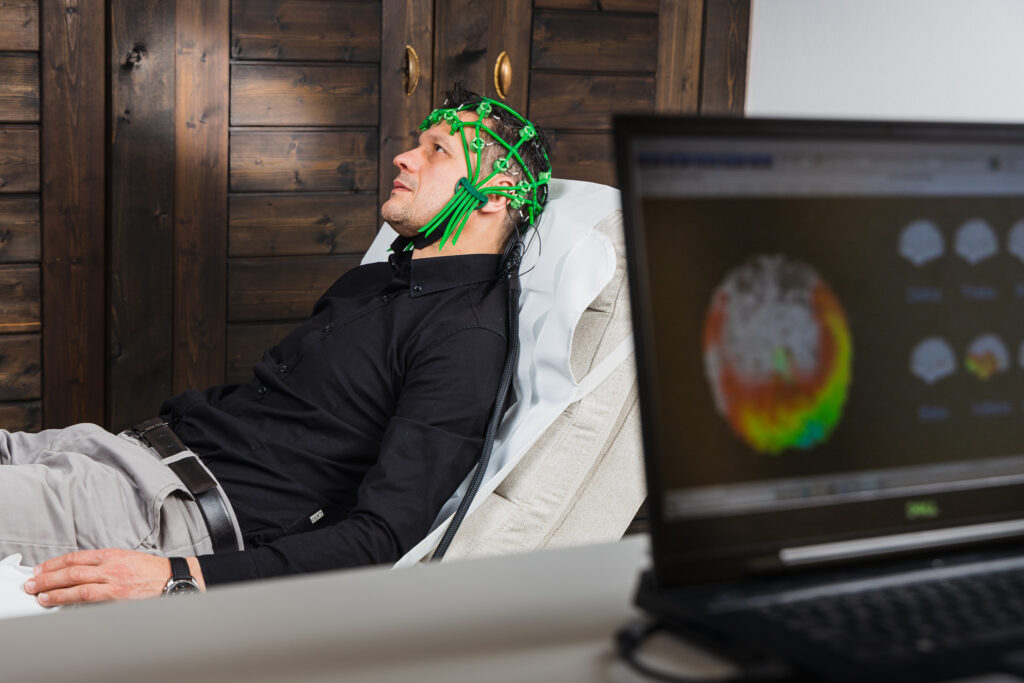
A therapy based on brain science
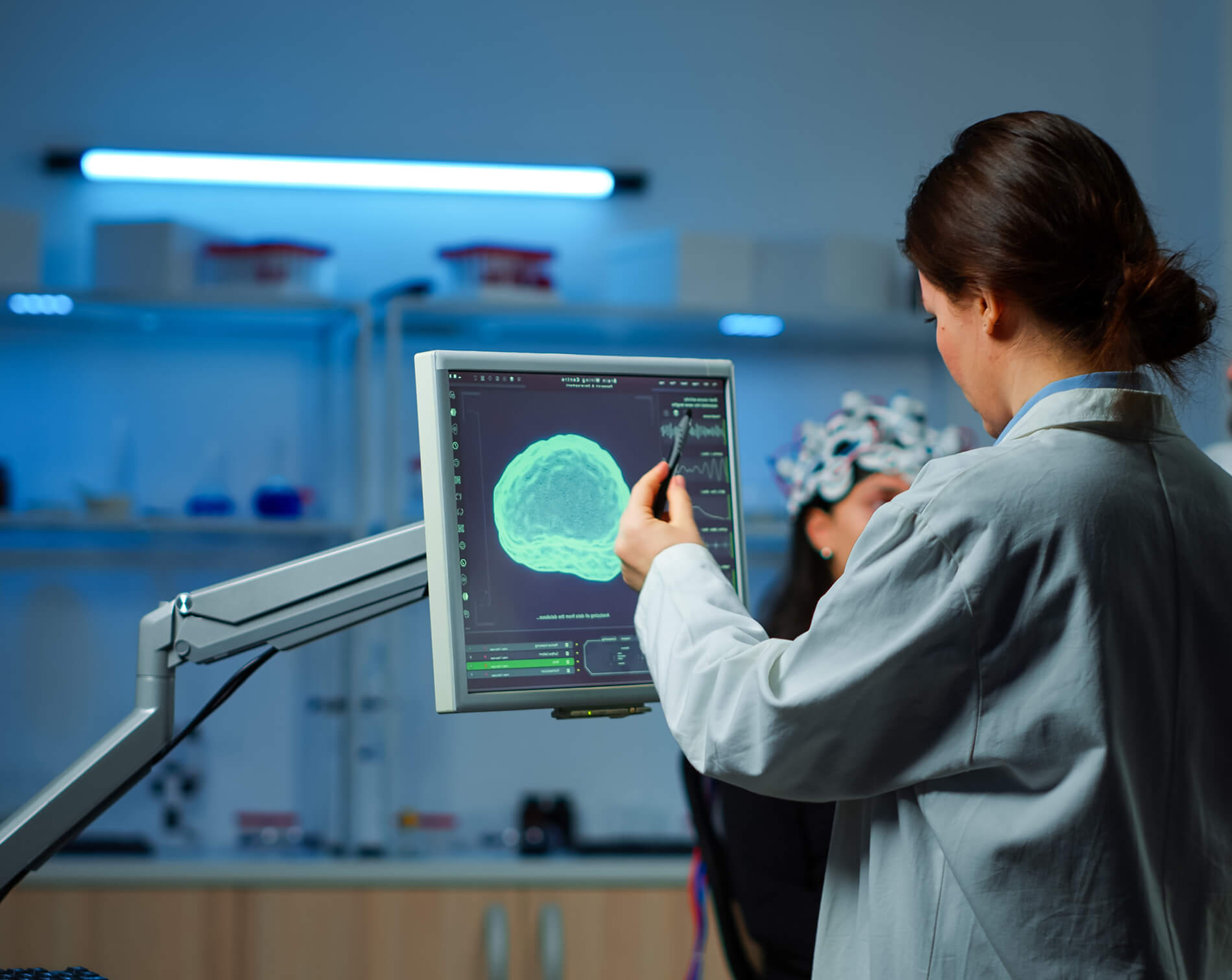
At the BrainMap Institute we use a Neurofeedback technology based on brain science, which maintains brain health and prevents the advanced stages of dementia from setting in.
The therapy is based on training the brain's neuroplasticity, using exclusive medical equipment, manufactured and certified in the U.S.A. It slows the progression of Alzheimer's disease and helps keep the brain healthy for a longer period of time.
The procedure is painless, involves no medication and no electrical stimuli. The same equipment was used for the training of NASA astronauts - and now you can benefit from the effects of Neurofeedback therapy right here in Romania.
What is Alzheimer's disease?
Alzheimer's disease is a progressive neurodegenerative pathology, which affects coherent thinking, memory and behaviour, in time making it impossible to carry out daily activities. It is the most common form of dementia in people over 65.
The condition is triggered by the brain changes that accompany the ageing of the central nervous system, but which in these patients occur in considerably higher numbers. The presence of plaques and neurofibrillary tangles disrupts communication between neurons and the processes nerve cells need to survive.
The first symptom, in the early stages, is difficulty remembering recent conversations, events and actions, and memorising new information becomes increasingly difficult.
The symptoms of Alzheimer's disease
As the disease progresses, other symptoms appear as well:
- Difficulty orienting in time and space;
- Mood disturbances (depression, apathy) and behavioural changes (aggressiveness);
- Unjustified panic attacks;
- Unfounded suspicions towards the people around them (family, caregivers);
- Difficulty speaking, swallowing and maintaining a seated posture.
- Impairment of skills acquired over a lifetime, such as reading, singing, dancing or drawing.
- Continuously recounting events from the distant past. This symptom persists until the final phases of the disease, because these memories are controlled by areas of the brain that are affected later in the course of Alzheimer's dementia.
The 7 stages of Alzheimer's disease
Depending on its progression and the age at which it begins, Alzheimer's disease has 7 stages.
❎ Stage I, preclinical Alzheimer's: the characteristic symptoms are not present, but the disease can be diagnosed through specific tests that identify amyloid deposits and genetic predisposition;
❎ Stage II, or very mild cognitive decline: it shows up as misjudging time, losses of recent memory and impaired quick decision-making;
❎ Stage III, or mild cognitive decline: it involves the patient repeating the same questions, the onset of behavioural changes, difficulty expressing thoughts, and the loss of the ability to manage finances and plan events;
❎ Stage IV, or moderate cognitive decline: it brings confusion about time and place, the patient no longer recognises family members and finds it very difficult to carry out various everyday activities (washing, dressing, cooking);
❎ Stage V, or moderately severe cognitive decline: it is marked by the loss of the ability to speak, eat and swallow, along with the loss of mobility and of the function of the muscles involved in maintaining posture (the patient cannot move and cannot stay seated without support).
❎ Stage VI, or severe cognitive decline: the patient remembers only very few events from the distant past. They may face urinary or bowel incontinence, and the ability to speak is greatly diminished. Significant personality changes also occur, with the patient suffering from hallucinations, anxiety and agitation.
❎ Stage VII, or extremely severe cognitive decline: the affected person can no longer communicate at all and permanently needs someone to take them to the toilet, wash them, dress them and feed them.
How does Brain Training Therapy help in Alzheimer's?

With neurofeedback therapy, we can treat the stages of Alzheimer's and stop the disease from progressing. The earlier the therapy begins, the more we reduce the chances of the disease advancing ❗
Using auditory and visual feedback to reward the brainwaves when they perform the desired action, the patient learns to control their own brain activity.
Thanks to neuroplasticity (the brain's ability to adapt), we can form new neural pathways that slow the progression of Alzheimer's disease. By training neuroplasticity, we can keep the unaffected areas healthy, so that the symptoms no longer affect the patient's life and the disease stays at its current stage, without progressing.
What does the procedure consist of?
Within neurofeedback therapy for Alzheimer's disease, we will go through 4 simple steps together:
1️⃣ The patient undergoes a BrainMap investigation in which we discover exactly which areas are affected by Alzheimer's. This shows us what needs to be treated and how we will conduct the therapy sessions
2️⃣ Based on the results, they receive a personalized neurofeedback treatment plan, suited to the uniqueness of their brain
3️⃣ They follow the agreed plan and attend the regular brain training sessions
4️⃣ The patient no longer advances to the next stages, and their brain keeps its health and essential functions. The condition no longer makes its presence felt, and the patient can enjoy a normal life alongside their loved ones.
Results
From our work with thousands of patients, we have seen that through Neurofeedback brain training we can stop Alzheimer's disease from progressing if we intervene early.
Moreover, the symptoms already present decrease in intensity, and the patient can go on living a healthy, peaceful life (effects also demonstrated by international studies).
Through the therapy sessions, the symptoms are significantly reduced, and the healthy parts of the brain continue to function normally. This way, the patient will NOT have to endure the agonising effects characteristic of Alzheimer's disease.
Help your loved one take action early and stop Alzheimer's disease from progressing
If the patient follows the therapy plan, we can help them keep their memories, prevent psychomotor impairments and NOT reach the advanced stages of the disease.
If you have other questions about the procedure or want to find out whether it is suitable for your situation or that of someone close to you, book a free phone consultation now with one of our specialists.
Brain training unique in the world
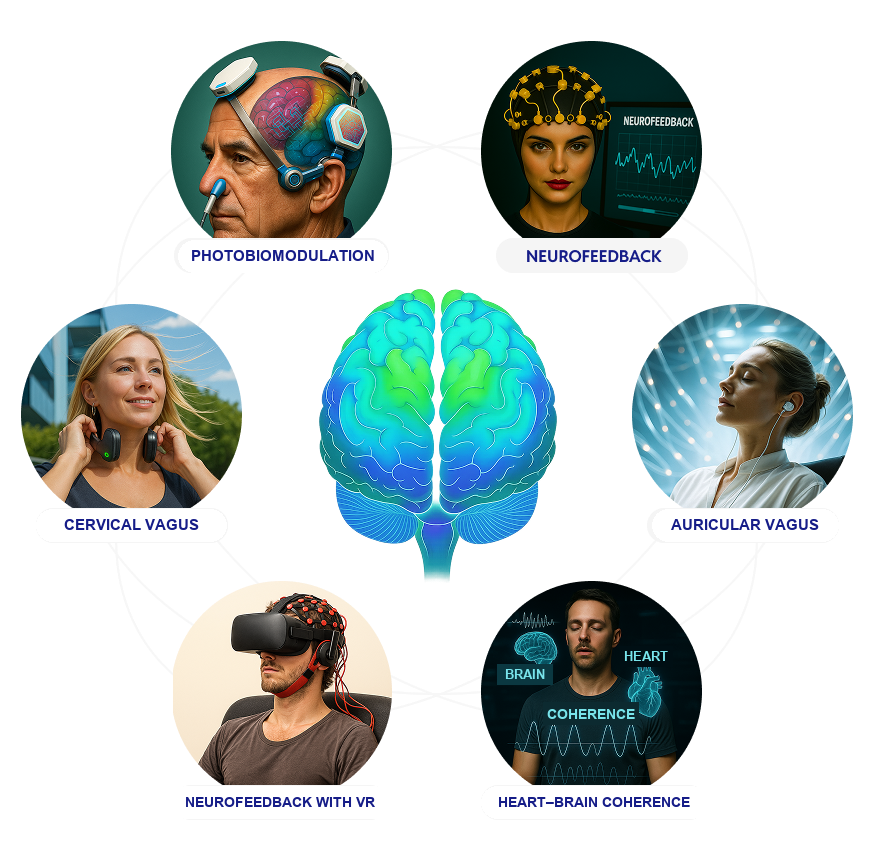
Brain training unique in the world, combining neurofeedback with other complementary neurotechnologies such as photobiomodulation, heart–brain coherence and vagus nerve stimulation, to help you reach your full potential and live the best life possible.
- Results up to 50% faster than classic neurofeedback
- Treats neuropsychiatric and pathological conditions
- Works directly on the cause, not the symptoms
- Restores emotional balance, sleep and mental clarity
- Increases focus, resistance to stress and cognitive performance
- A protocol 100% personalized to the uniqueness of your brain
- Validated by 65+ years of research in neuroscience
Book a free phone consultation with one of the BrainMap Institute's specialists
- You get answers to any questions you have about BrainMap and brain training
- You find out how brain training is applied to the uniqueness of your brain and your situation
- You will know the exact steps to follow to live the best life possible
Effectiveness proven in international scientific studies
What our patients say
Read the experiences of those who overcame their condition.
See testimonialsDo you want to understand what is happening in your brain?
Book a call with the BrainMap Institute's specialists and find out how a BrainMap and brain training can help you.
Book a free call