

0371 710 020
Mon-Fri 08:00-21:00 · Sat 08:00-14:00 Locations
BrainMap Protocol for migraines and headaches

Therapy for migraines and headachesWhen pain puts your life on pause.

You close the laptop. You draw the curtains. You cancel another plan. Migraine does not take only a few hours from you. It takes from the life you want to live.

The pain throbs, light bothers you, and an ordinary sound becomes too much. Sometimes an episode lasts for days. And once it passes, the tiredness remains.

At the BrainMap Institute, brain training and neurofeedback can help reduce the frequency and intensity of migraines, as part of a personalised plan that complements medical care.

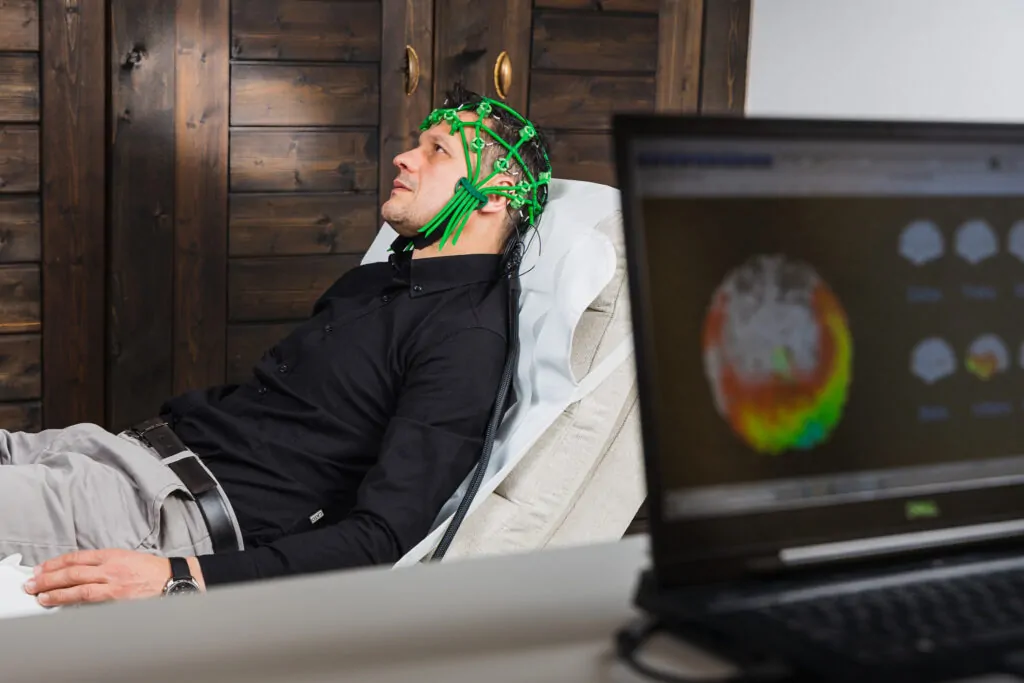
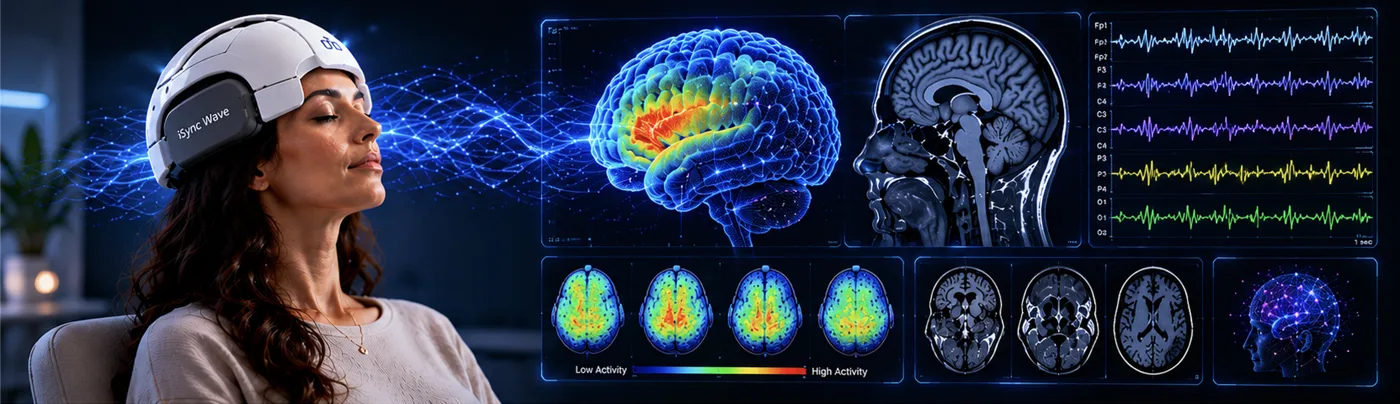
Patient wearing an EEG cap, alongside qEEG maps of brain activity and EEG traces
47 Brodmannareas analysed
80.000data points
19 electrodesthey only read, they do not stimulate
25.000+ patients of the Institute
13+ open locations
Interpretation by doctor + psychologist
20+ years of experience in healing
The most advanced BrainMapping in Europe

A migraine episode can last from 4 to 72 hours. It is not “just a headache”.

When episodes keep recurring, you need a plan, not just waiting for them to pass. Start with the BrainMap evaluation, the specialist’s interpretation and the first two neurofeedback sessions included in the 2.000 lei protocol. Educational reference on attack duration, according to Regina Maria; it is not a promised result of the therapy.

BrainMap Protocol - the best BrainMap offer in Romania

  • BrainMap qEEG scan with the most advanced headset in Romania
  • Interpretation by a doctor and a psychologist
  • 30-60 minute consultation
  • 2 neurofeedback sessions for migraines and headaches
  • Personalised treatment plan with 6 types of brain training - the most advanced neuroscientific protocol for treating migraines and headaches in Romania
2.000 leitotal price

What are migraines and how do you recognise them?

The people around you see an ordinary day. You look for quiet, darkness and a break from the pain.

Migraine is a neurological condition. The pain is often throbbing, moderate or severe, frequently on one side of the head.

Not every headache is a migraine. Nausea, sensitivity to light and sound, and worsening with movement can accompany a migraine episode. The diagnosis is made through medical assessment, not through a list of symptoms.

With or without aura. Some people notice visual phenomena before the pain, such as lights or zigzags, or tingling. Aura usually lasts 5–60 minutes. Aura can also occur without a headache; new or sudden neurological symptoms need medical evaluation.

Why do they happen? The causes are not fully understood. Genetic predisposition, pain mechanisms and the reactivity of the nervous system may play a role. Migraine does not mean you are imagining the pain or that you are not strong enough.

What can trigger an episode? Stress, insufficient sleep, tiredness, skipped meals, dehydration or hormonal fluctuations. Triggers differ from person to person. An episode diary helps you notice patterns and discuss them with your doctor.

Woman resting her forehead during a headache, illustrative image from the BrainMap website
The pain is real. So is its impact on your day.

Does this sound familiar? Tap what you recognise.

A self-observation exercise, not a diagnostic test. We do not save or send your selections.

You recognised 0 out of 8 situations. The number of ticks does not establish a diagnosis. If the pain recurs or affects your life, talk to your doctor. The BrainMap team can explain separately the role of the evaluation and of brain training.

Book the BrainMap ProtocolBook the Protocol2.000 lei

Migraine can mean more than pain

Not everyone has all of these manifestations. Some appear before the attack, others during it or after the pain has eased:

Throbbing pain, often on one side
Sensitivity to light
Sensitivity to sounds
Nausea and sometimes vomiting
Visual aura in some people
Pain made worse by movement
Difficulty concentrating
Fatigue after an episode

What happens when a new episode begins?

The day goes on. You need to stop.

You put work on pause. The screen bothers you, your concentration drops, and the things you wanted to finish are left for later.

You give up time with your people. An outing, a weekend or an evening with family ends up on the list of cancelled plans again.

The pain passes, but your energy does not return right away. You need time to recover before you can resume your usual rhythm.

Notice the pattern

Write down when the pain appears, how long it lasts, the associated symptoms, your sleep and the medication you used. A diary can make the conversation with your doctor clearer.

When it is worth asking for help

Seek medical evaluation if the headaches are frequent, severe or change in character. Frequent use of pain medication can sustain the headache; talk to your doctor and do not change your treatment on your own.

You turned off the light. You tried to sleep. You followed the treatment. But the migraine keeps coming back. Your pain deserves to be taken seriously.

Maybe you have heard “it's just a headache”. But you know what it means to lose a whole day and not know when the next episode will come.

You don't need to grit your teeth. You need a plan.

Migraine involves complex neurological mechanisms, including the way the nervous system processes stimuli and pain. Symptoms alone do not point to a single cause and do not replace a neurological consultation.

The BrainMap assessment provides information about the brain's electrical activity. The specialist puts it in the context of your situation and discusses whether brain training, including neurofeedback, can complement your care plan. The qEEG map does not establish on its own the diagnosis or the cause of the migraine.

OverstimulatedBalanced

Indicative illustration, not a medical result. Move the slider.

We created the most advanced and complete BrainMap protocol for migraines and headaches. Understand your brain activity, through electrical waves...

...and discuss the steps of a personalised plan.

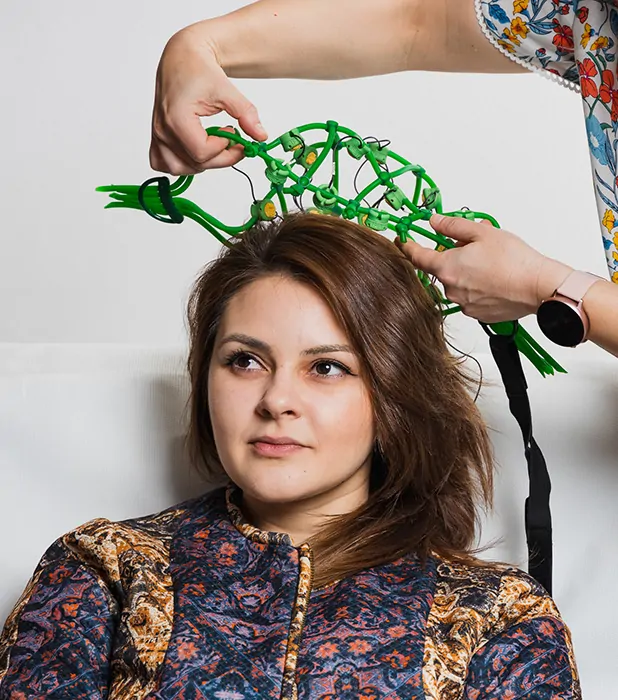
Preparing the EEG sensor cap for a person seated in the clinic room
A cap with 19 soft electrodes, moistened with saline water, is placed on your head. It doesn't hurt, doesn't pulse, doesn't emit anything. It only reads.
50 minutesscan visit, including preparation
30-60 minutesseparate consultation, after the results
2 sessionsinitial, included in the protocol
7 working daysmaximum time for results

What does the BrainMap Protocol involve for migraines and headaches?

The brain produces electrical activity. Here is what happens, step by step.

  1. 0-5 min

    You settle comfortably

    A cap with 19 soft electrodes, moistened with saline water, is placed on your head. It doesn't hurt, doesn't pulse, doesn't emit anything. It only reads.

  2. 5-15 min

    Your brain activity is recorded

    • 7 minutes with eyes closed
    • 7 minutes with eyes open

    The sensor headset records the electrical activity of the brain. The software picks up the electrical impulses emitted by your brain and begins to process them.

  3. qEEG analysis

    The signal becomes a map

    qEEG analysis turns it into a map that offers clues and activation patterns. The map is interpreted in the context of your symptoms and history; it does not on its own identify the cause of the migraine. A visit of about 50 minutes, with preparation and recording included.

  4. Interpretation

    General practitioner and clinical psychologist

    Based on the scan results, you receive the BrainMap interpretation from the institute's founders. The map can highlight patterns associated with overstimulation, tension and difficulty relaxing.

    The specialist looks for the connections relevant to your situation and uses them in the recommendations of your brain training plan.

  5. 30-60 min

    Separate consultation, after the results

    For explanations and questions.

  6. Plan

    Protocol 100% adapted to your brain pattern

    Based on the results, we draw up a treatment protocol with brain training. The therapy is non-invasive, with no electrical stimuli, pain or side effects.

  7. Training

    You start the neurofeedback sessions

    You take part in guided brain training sessions in which your nervous system is retrained to function in balance. The aim is to support self-regulation and to track whether the frequency and intensity of episodes decrease in your case.

  8. Day 30

    Progress check at 30 days

The only BrainMap clinic in Romania where interpretation is done by a doctor and a clinical psychologist.

The map matters. The specialists who interpret it matter just as much. Two professional perspectives. Attention for the same person.

A report becomes useful when someone explains the link between the indicators, your history and the questions you came with. At the BrainMap Institute, every interpretation goes through the two founders. This role is a concrete part of the protocol.

Dr. Alina Diana Nemeș, co-founder of the BrainMap Institute

Dr. Alina Diana Nemeș

General practitioner · Co-founder

Has over 20 years of professional experience. A general practitioner and neurofeedback therapist. The medical perspective helps place the information from the evaluation in the context of your history and situation.

Learn about their professional background

Alina Robu, clinical psychologist, co-founder of the BrainMap Institute

Alina Robu

Clinical psychologist · Co-founder

Brings the perspective of clinical psychology into the BrainMap interpretation. Your everyday experiences, your goals and the way you describe your difficulties complement the data analysed.

Learn about their professional background
Both founders hold an IFEN neurofeedback therapist certification, dated 22 June 2020.

At the BrainMap Institute, the interpretation of results is not done with AI alone.

The only centre in Romania where the map is interpreted by a doctor and a clinical psychologist.

The questions do not end when the software generates the report. In the post-BrainMap consultation, the results are turned into explanations and recommendations discussed with you. You do not have to learn to read the report on your own.

0patients of the Institute
0published books
0centres in Romania

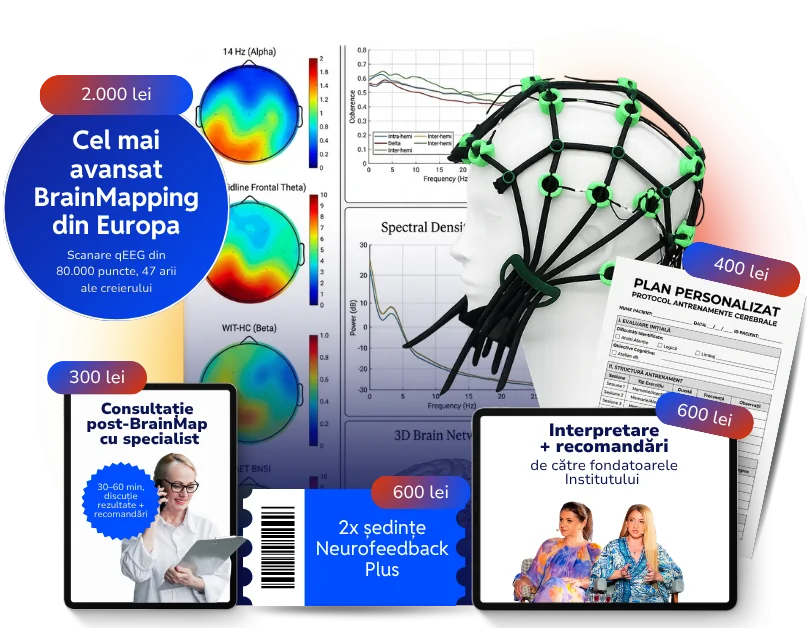
What the BrainMap Migraines and Headaches Protocol includes - the most advanced neuroscience-based protocol for migraines and headaches in Romania!

Day1

The most advanced BrainMapping in Europe

qEEG scan of 80,000 points, 47 areas of the brain.

2.000 lei
Day4

Interpretation by a doctor and a psychologist

Interpretation, explanations and recommendations from Dr. Alina Diana Nemeș and Clinical Psychologist Alina Robu, who pioneered neurofeedback in Romania.

600 lei
Day5

Post-BrainMap consultation with a specialist

30-60 minutes: discussion of the results + recommendations.

300 lei
Day6

Personalised plan of 6 brain training sessions

The BrainMap Institute is the only centre in Romania that, following 20 years of studies, has developed a combination unique in the world of 6 brain trainings that blend neurofeedback with photobiomodulation, BrainTune, heart-brain coherence, vagal stimulation and VR neurofeedback.

400 lei
Day7

2 brain training sessions

Your first two training sessions, included in the protocol.

600 lei
  • You receive your results within 7 working days at most
  • Progress check-in and brain optimisation report at 30 days, included
Real value: 3.900 lei
2,000 RON

How does the “scientific” headset work for the BrainMap scan and neurofeedback sessions?

Electrical activity, organised into information that can be interpreted. qEEG scan from 80.000 points, 47 areas of the brain.

Electrodes placed on the scalp record EEG signals. Quantitative analysis, called qEEG, processes these signals and represents them through indicators and maps.

The specialist explains what they mean in the context of your assessment. The first step in the protocol is collecting objective data.

We use a specialised variant of electroencephalogram (EEG) that processes data from 47 critical areas of the brain. This way, we identify the real mechanisms behind neuropsychiatric conditions or performance limitations. The data do not lie: they show exactly where your brain is overactive or where it lacks the energy needed to function optimally.

Alpha 8-12 Hz

Educational illustration of the frequency bands analysed in qEEG.

Brain rhythms

The analysis looks at activity in frequency bands, such as delta, theta, alpha and beta, and their contribution to the recorded signal. In the interpretation you learn what these indicators describe and why they are relevant to the discussion with the specialist.

Distribution of activity

The maps show how indicators are distributed across the recorded areas and allow differences or asymmetries to be observed. You receive explanations about your map and about the findings worth discussing.

Relationships between signals

Coherence and connectivity indicators describe relationships between signals recorded in different areas. The specialist looks at them together with the rest of the data, for an overall interpretation.

Comparison with age norms

The data are put in context by comparison with a normative database for the age group, according to the protocol used. You understand what a difference from the reference means and how it is interpreted in your situation.

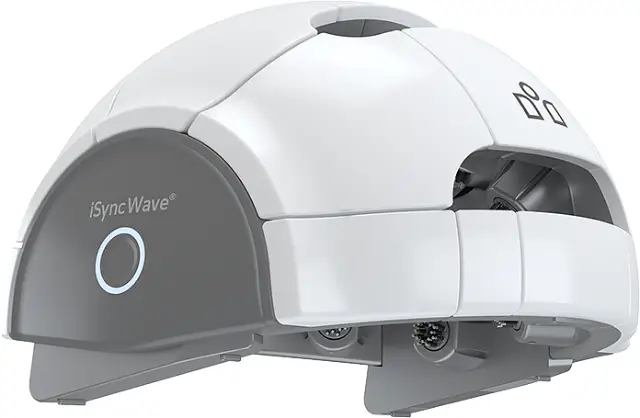
Protocol technology for migraines and headaches: 2 types of BrainMap headsets

We use the most advanced equipment for the BrainMap investigation.

The headset measures dry EEG, without gel, and the platform processes the signals in the cloud with AI analysis (on a database of over 100 million people) and provides a complex, detailed qEEG analysis from over 80.000 points of the brain, on brain activity in the 47 Brodmann areas, giving information about their specific functions.

The result is a visual map that helps the specialist discuss your brain activity in concrete terms.

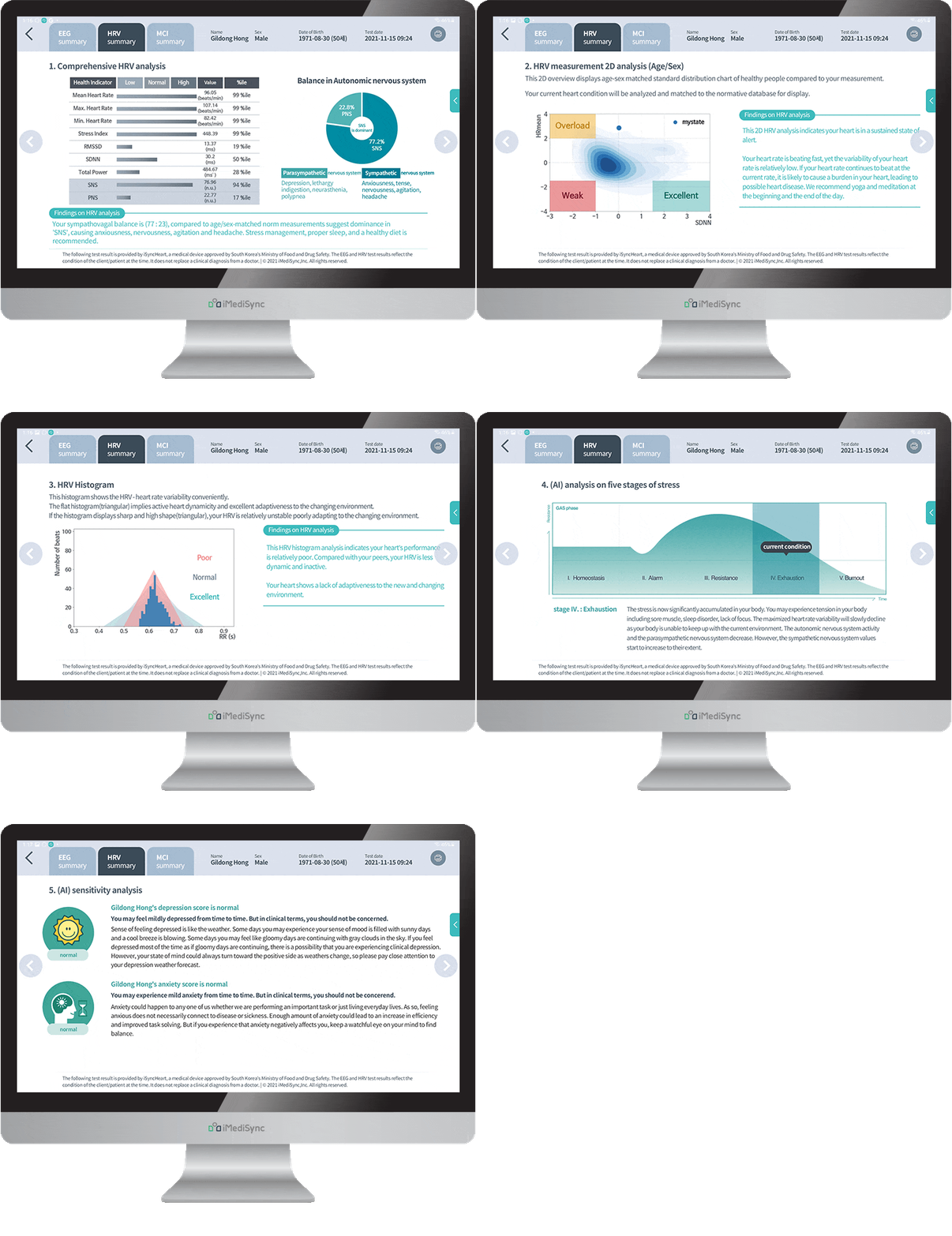
The iMediSync report displayed on a computer, with the stress analysis

You can choose iMediSync for a quick check-up or Discovery 24 for a detailed investigation that also identifies predispositions and hidden anomalies.

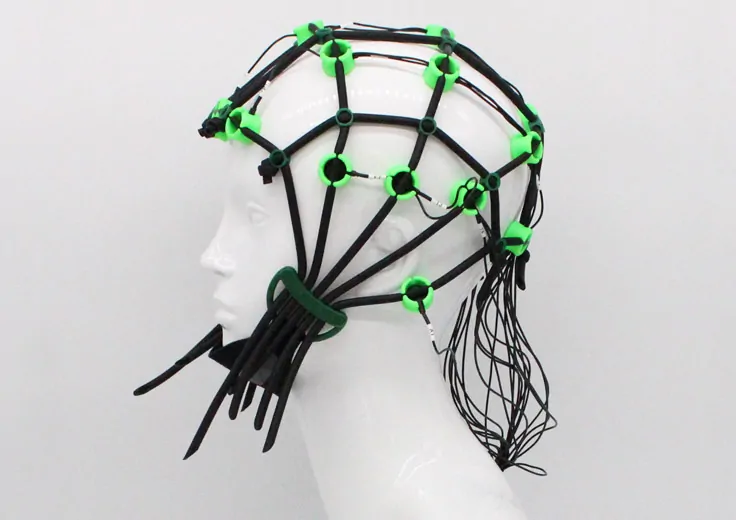
The sensor headset used with the BrainMaster Discovery 24E
Detailed investigation

BrainMaster Discovery 24E

Clinical 24-channel EEG amplifier, analysis with software of your choice, clinically oriented or neurofeedback reports.

Scan duration
14 min (7 eyes closed + 7 eyes open)
Results
By e-mail within 3 days, interpreted by experts
Type of analysis
Detailed report: neuronal connectivity, brain network activity, in-depth analysis of each Brodmann area
Method
24-channel qEEG, silver electrodes with sponges moistened with saline solution
Price
2.000 RON
Sampling rate1024 Hz internal; sent to the PC at 256 samples/s; DC-100 Hz band (EEG 0.43-80 Hz)
AI data analysisBrainAvatar AI (database of over 100 million people)
Brain coverageDetailed qEEG analysis from over 80.000 points of the brain
Therapeutic functionsAdvanced neurofeedback, multimodal biofeedback (heart rate, breathing, muscle tension), evoked potentials (ERP), EEG stimulation. Support for clinical protocols and research.
Signal qualityHigh-quality, stable signal with no loss, thanks to the moistened electrodes
Analysis resultsBy e-mail within 3 days, interpreted by experts in BrainMapping and Neurofeedback: Dr. Alina Diana Nemeș and Psych. Alina Robu + personalised recommendations
StrengthsHigh-fidelity signal, extended channel count, DC/SCP; high sampling; mature software ecosystem (incl. sLORETA)
Country of originUSA
CertificationsFDA 510(k) K150498 (clinical EEG); FDA 510(k) K990538 (biofeedback training); ISO 13485; CE Class I Biofeedback Device; IEC-60601; AAMI
Weight20 g
Minimum age2 years

At the BrainMap Institute we use both technologies, depending on the patient's needs.

What happens after the scan, the map, the interpretation and the consultation?

You start the neurofeedback and brain training sessions.

You actually start working and training your brain. Neurofeedback works through real-time feedback and repetition.

Neurofeedback trains the self-regulation of brain activity through visual and auditory feedback. In migraine, this approach is being studied for reducing episodes and can be considered as a complement to medical treatment.

You cannot stop a migraine just by wanting to. But you can discuss training for the way your brain self-regulates.

Real-time feedback. Repeated practice. A plan adapted to you.

The sensors read EEG activity, and the software turns it into feedback on screen and in sound. Through repetition, the brain practises self-regulation patterns. For migraines, we aim for concrete goals: fewer days with pain, less intense episodes and a smaller impact on your life. Results differ and are not guaranteed.

You are not buying a universal number of sessions up front. You start with the two included in the protocol and discuss continuing after the assessment.

Assessment, interpretation, consultation, plan and two initial sessions included.

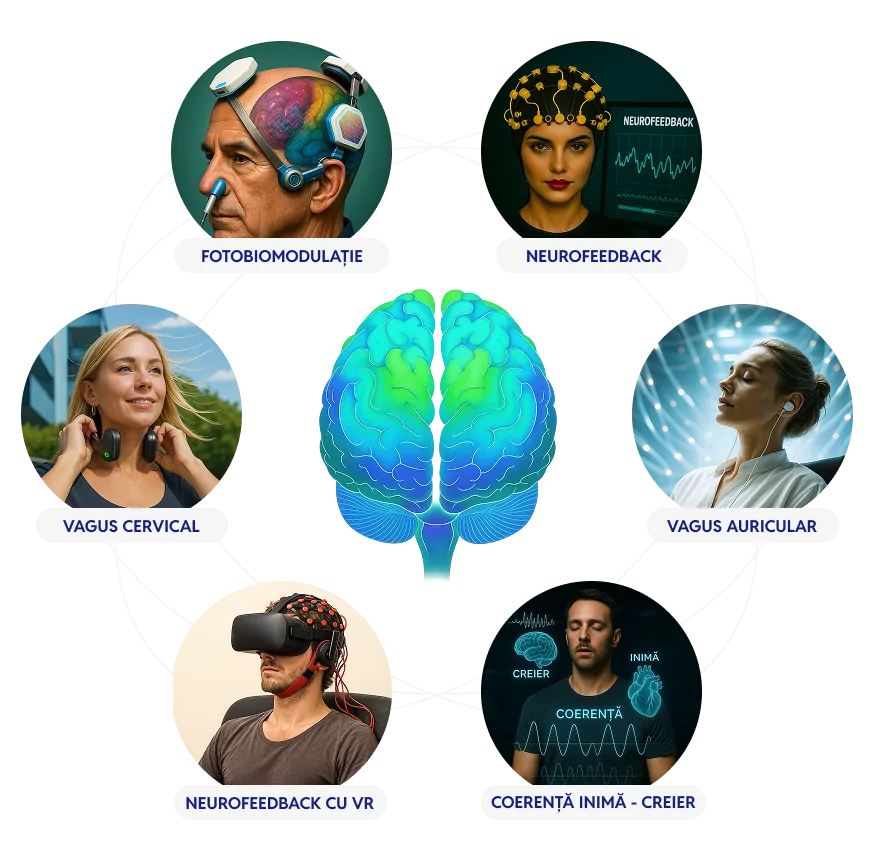
6 brain training methods: neurofeedback + 5 other neurotechnologies. A personalised plan for migraines and headaches.

The BrainMap Institute blends neurofeedback with complementary neurotechnologies in a plan adapted to your assessment. Not all methods are suitable for every person or have the same level of evidence in migraine. The specialist explains what they recommend, why, and how progress is monitored, without replacing the treatment prescribed by your doctor.

While classic neurofeedback uses visual and auditory stimuli, brain training combines the classic version with 5 other neurotechnologies. This way, we can offer brain training that is 100% personalised to the uniqueness of your brain.

Validated by 65+ years of neuroscientific research
Diagram: BrainMap technologies, photobiomodulation, neurofeedback, cervical vagus, auricular vagus, VR neurofeedback and heart-brain coherence
Neurofeedback and migraine

Why consider brain training?

Because the goal is not just to get through today's episode. It is to reduce the impact of the ones that follow.

You train self-regulation

Through visual and auditory feedback, you practise responses of brain activity. Neurofeedback is non-invasive and does not administer medication.

You look for concrete changes

You note the days with pain, the intensity of the episodes and the impact on your activities. Progress is discussed with the specialist, not assumed.

You complement medical care

The plan is discussed in the context of your diagnosis and treatment. Neurofeedback does not replace the neurologist or prescribed medication.

What does the research tell us?

A clinical study published in 2010, with 37 people with migraine, reported a reduction in headache frequency after a programme that combined neurofeedback with other forms of biofeedback, while participants were using medication.

This is a promising result, not a guarantee. The study had no control group and cannot separate the effect of neurofeedback from that of the other interventions. It did not test the 6-in-1 BrainMap protocol. Stronger controlled studies are needed.

Read the Stokes & Lappin study

Start the BrainMap Protocol for migraines and headaches

  • The most advanced BrainMapping in Europe (qEEG scan of 80.000 points, 47 brain areas)
  • Interpretation, explanations and recommendations from the founders of the Institute, who pioneered neurofeedback in Romania (Dr. Alina Diana Nemeș and Clin. Psych. Alina Robu)
  • Post-BrainMap consultation with a specialist (30-60 min, discussion of results + recommendations)
  • Personalised brain training plan
  • 2 brain training sessions included
  • Progress check-in and brain optimisation report at 30 days, included
  • You receive your results within 7 working days at most
The BrainMap Protocol for migraines and headaches: what is included
Real value: 3.900 lei
2,000 RON
Book the BrainMap ProtocolBook the Protocol

Do you have questions about booking or costs? Request the free phone discussion before you decide.

Real people with real results

Individual experiences, in different contexts. Pamela describes migraines; the other testimonials are about other reasons for coming in. Results and the number of sessions differ.

★★★★★
Migraines · experience published by the BrainMap Institute
“I struggled for almost two decades with various therapies without success, even abroad. After the 30-session course I am very satisfied - in this period I had only two days with mild migraines, whereas before I had them almost daily.”
P
Pamela, 42 years old
Anxiety and depression after childbirth
“When the therapies began, I had given birth 3 months earlier, and depression and anxiety were a heavy burden for me. I am deeply grateful to the Brainmap Neuroscience team for their involvement and warmth. It took a while until I started to be functional again and to be a present mother in my child's life. That is because I understood and accepted this responsibility, which frightened me terribly.”
A
Andreea M.BrainMap patient
Tension, agitation and irritability · 88 sessions
“For many years I felt a constant mental tension that caused me discomfort, restlessness and irritability. I had the inspiration to go to the institute, and following the assessment I learned that I had overactivation in certain areas of the brain. I did 88 training sessions and now I am a different person: calm, peaceful, optimistic, and sometimes I wonder whether my state is not happiness itself. Thank you to Mrs Alina Robu for the patience and attention given, hello to Mia, hello to all the highly qualified staff I worked with!”
I
Ion T.BrainMap patient
Sleep, concentration, inner calm
“Neurofeedback improved my life: sleep quality, concentration, inner calm. I warmly recommend it!”
S
Simona D.BrainMap patient
Stress and other aspects of functioning
“Noticeable effects appeared already after the first two sessions, and then came many pleasant surprises related to a better ability to manage stress, boosted empathy, improved communication, memory, concentration... All of this, projected towards those around me too... led to the creation of a circle of good consequences, also improving other people's attitude towards me. In other words... total success!”
P
Petrica S.BrainMap patient
Another experience from the Institute · ADHD in a child
“As the parent of a child with ADHD, I am extremely grateful to the Brainmap Neuroscience team for their patience and dedication. I have noticed remarkable improvements in my child's behaviour and ability to concentrate. At school he is more attentive, he can sit at his desk without disturbing the class, we managed to build a homework routine, we can now take him to basketball too, and he has time to play.”
I
Ioana I.Parent

“But what about my case?” Start with the concrete answers.

You don't have to come with everything figured out. But you should know what the assessment is and what you are buying.

Does BrainMap establish a diagnosis of migraine?

No. The diagnosis of migraine is clinical and is made by a doctor based on history and symptoms, with further investigations when indicated. qEEG describes the brain's electrical activity and can inform the training plan; it does not prove the cause of the pain on its own and does not replace a neurological consultation.

When should I not wait for a BrainMap appointment?

Call 112 for a sudden, extremely intense headache, or if weakness on one side, difficulty speaking, confusion or seizures appear suddenly. Pain accompanied by fever and a stiff neck, or occurring after an injury, needs urgent assessment. A new pain after the age of 50 or a changing pattern should be discussed promptly with your doctor. Do not assume that new neurological symptoms are “just aura”.

Do I get electric shocks during the assessment?

In the EEG assessment, the sensors record. No current is sent through these sensors. The assessment and any training methods are different stages; the team explains what each one involves.

How long does the first visit last and when do I get the results?

Set aside about 50 minutes for preparation and recording. The interpretation and consultation are not squeezed into the same visit. The report is ready within seven working days at most; the separate consultation of 30-60 minutes follows.

Are the two sessions the whole treatment?

The two sessions are the start of the training. This does not mean migraines are resolved in two meetings. The specialist discusses the goals, the response to the sessions and whether continuing is appropriate.

Do I have to buy a big package from the start?

You don't have to choose a whole programme now. The entry offer has explicit inclusions and a clear price: 2.000 lei. If continuing is recommended, you learn the number, frequency and costs before you decide. The listed rate for an additional individual session is 300 lei.

I am on treatment for migraine. Do I continue it?

Bring up what you are already doing and what has helped you. Do not stop your treatment for this evaluation and do not change your medication on your own. BrainMap recommendations are placed in the context of your care; treatment decisions are discussed with the clinician who looks after you.

How many sessions will I need and when will I feel changes?

It would be simple to give you a fixed number. But the plan has to take you into account: evaluation, goals and response to the sessions. Discuss with the specialist how progress is tracked and what continuing would mean. We do not promise one timeframe that is the same for everyone.

I am not ready to book. Can I ask questions first?

You can start with a free informational call. You ask about the process, what is included, the location and the booking steps. The call does not oblige you to buy the protocol, and it is not a free investigation or diagnosis.

Choose the centre you want to visit.

Tell us where you want to come. The team checks availability and explains the booking. Tap a city to see the address, opening hours and phone number.

You don't have to decide the logistical details on your own. The team will tell you the address and how to prepare for your first visit.

Choose your city and see the addresses

Have questions before you book?

Request an informational phone call, free and with no obligation.

Leave us your name, your number and the city you would like to come to. The phone conversation is informative, free of charge and with no obligation to buy the protocol.

Enter your name, so we know how to address you.
Check the number: it needs at least 10 digits.
Choose the city.

Brain training and investigations are NOT free. The phone discussion is for information only.

We have received your request.

We have received your request for an information call. This is the first step for questions, not a confirmed evaluation appointment.

Make room for your days. Not just for the pain.

Start with the BrainMap assessment, the specialist's interpretation and the first included training sessions.

If migraines and headaches take over your days, it is worth discussing a plan adapted to you. The BrainMap Protocol includes evaluation, interpretation, consultation, a personalised plan and two initial neurofeedback sessions. 2.000 lei in total.

Book · 2.000 lei