

0371 710 020
Mon-Fri 08:00-21:00 · Sat 08:00-14:00 Locations
BrainMap · motivation, attention, self-regulation

Lack of motivation, laziness, tiredness, and procrastination problems? Don't blame yourself, your brain needs "tuning"

The list is still there. The day is almost over. You care about what you have to do, but it is hard for you to start. And in the evening you judge yourself for yet another postponed day.

You open the laptop, check your phone, make another coffee. The important task stays untouched. You rush when the deadline is close, then have no energy left for yourself or the people at home.

Lack of motivation, tiredness and procrastination do not mean the same thing. It is worth understanding what is holding you back before asking even more willpower of yourself.

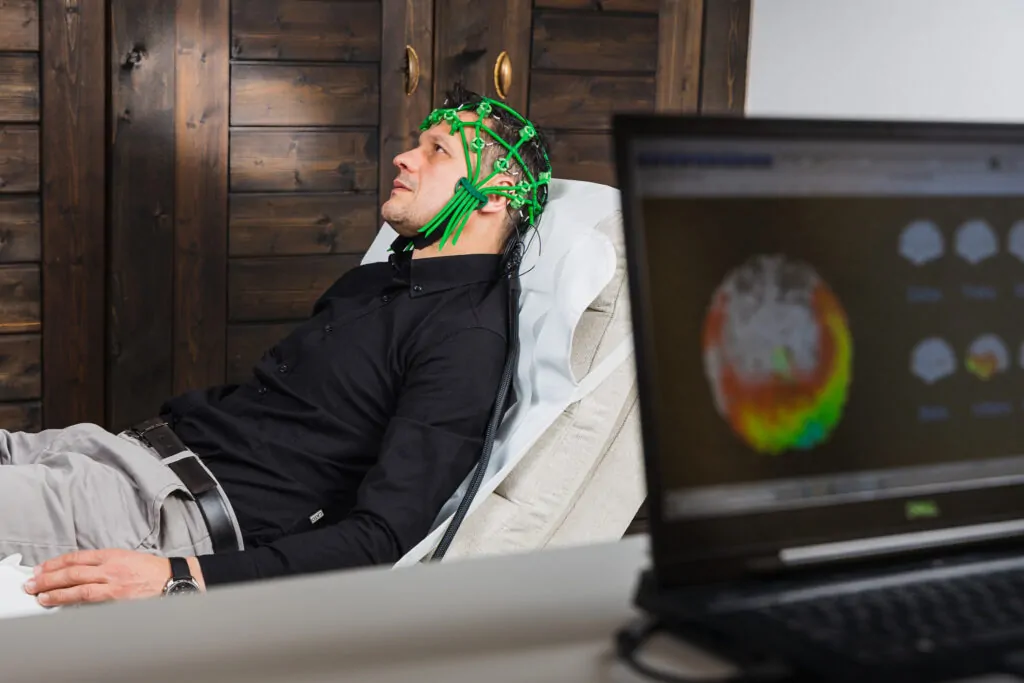
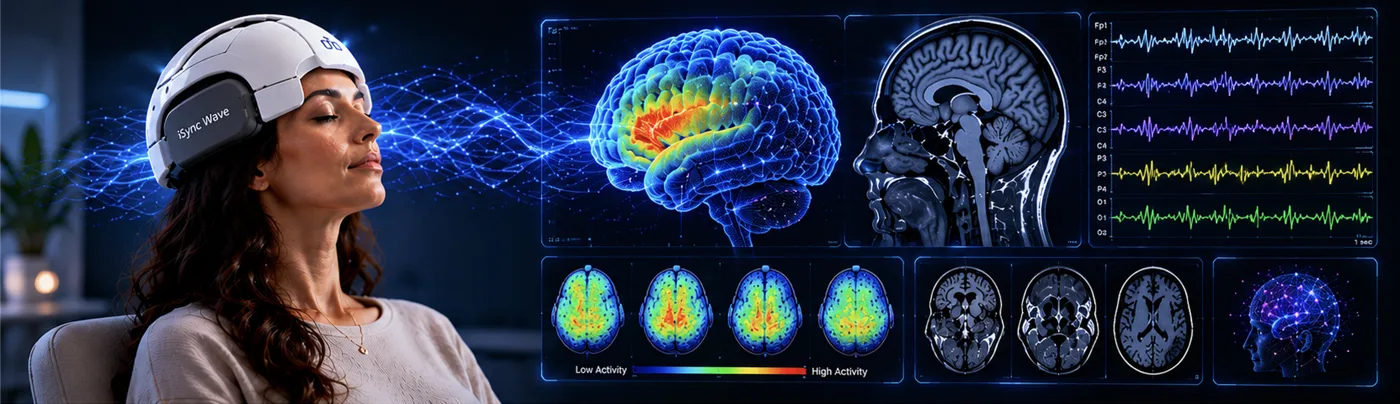
Patient wearing an EEG cap, alongside qEEG maps of brain activity and EEG traces
47 Brodmannareas analysed
80.000data points
19 electrodesthey only read, they do not stimulate
25.000+ patients of the Institute
13+ open locations
Interpretation by doctor + psychologist
20+ years of experience in healing
The most advanced BrainMapping in Europe

You don't need yet another perfect list. You need to understand why the first step has become so hard.

Start by talking about sleep, energy, attention and what happens when you put things off. The BrainMap Protocol includes a qEEG assessment, interpretation, consultation and two initial sessions, for 2.000 lei. It does not replace the medical assessment of fatigue.

BrainMap Protocol - the best BrainMap offer in Romania

  • BrainMap qEEG scan with the most advanced headset in Romania
  • Interpretation by a doctor and a psychologist
  • 30-60 minute consultation
  • 2 initial neurofeedback sessions
  • Personalised treatment plan with 6 types of brain training - options discussed individually, depending on goals and indications
2.000 leitotal price

Lack of motivation, tiredness or procrastination? They are not the same thing.

From the outside, it looks like you don't want to. From the inside, it may be exhaustion, lack of clarity or fear of starting.

You know what you have to do. You want to finish. Yet you find something else to do exactly when you need to start.

Procrastination means putting off a task even though you know the delay may cost you. Sometimes you choose an easy activity to avoid the discomfort of the important one. The relief lasts a short while; then come the rush and the guilt.

Lack of motivation relates to the drive and meaning you find in an activity. Tiredness relates to resources: you may want to, but no longer have the energy. They can overlap, without having a single cause.

Perfectionism, fear of failure, prolonged stress, insufficient sleep or attention difficulties can make starting harder. You cannot find out the cause from a label or from a list of symptoms.

Persistent tiredness is worth discussing with your doctor. Anaemia, thyroid disorders, sleep problems and depression are among the causes that may need evaluation. BrainMap does not rule them out and does not diagnose them through qEEG.

Illustrative photograph: man with his head resting on his arms, next to a window
Illustrative photograph. Sometimes what looks like a lack of interest is exhaustion.

Does this sound familiar? Tap what you recognise.

Just for you. We do not save or send anything.

You recognised 0 out of 8 situations. This is an exercise in reflection, not a test and not a diagnosis. The number of selections does not show severity or cause. If feeling stuck or tired affects your life, talk to a doctor or a psychologist about suitable steps.

Book the BrainMap ProtocolBook the Protocol2.000 lei

How it can feel in everyday life

These experiences do not automatically point to a condition. What matters is since when they occur, in what contexts and how much they affect your activities:

Low energy even before you start
Attention that shifts from one task to another
Important things put off until the last moment
Hard to choose what to start with
Checking and preparing, without the first step
Sleep after which you do not feel rested
Replies and conversations left for later
Guilt when you try to rest

What does one more day of putting things off actually cost you?

It's not only tasks that pile up. The time meant for your life gets taken up.

At work, you make up in the evening for what you couldn't start in the morning. You send things in a rush and have less time left to check.

At home, you say “later” to a conversation or an outing. The people close to you see absence, even if what you feel is exhaustion.

For you, the break fills up with “I should”. You neither work calmly nor rest without thinking about what is left undone.

Normal, sometimes

A low-energy day or a postponed task does not mean you have a disorder. Rest, a clear priority and one small step can be enough of a start.

When it is worth asking for help

If tiredness persists, if you lose interest in things you used to enjoy, or if procrastination affects your work and relationships, talk to a doctor or a psychologist. Do not wait until you cannot cope at all.

You tried planners, alarms and “I’ll start on Monday”. But starting keeps getting put off. More pressure is not always the answer.

You promised yourself that tomorrow you would be more disciplined. You made a new list, then avoided it. That does not automatically mean you do not care.

Self-criticism does not tell you why you got stuck.

Sometimes it helps to reduce a task to five minutes, put your phone away and plan a real break. At other times, fatigue or emotional discomfort ask for more than organisation. Psychotherapy and medical assessment have different roles, which can complement each other.

BrainMap records the electrical activity of the brain, not motivation and not dopamine levels. The specialist discusses the data together with your history and may propose an individualised self-regulation training. qEEG does not establish the cause of procrastination.

Too much at onceOne clear step

Educational metaphor, not an EEG trace, a measurement of motivation or a simulation of the effect of a therapy. Move the slider.

We created the most advanced and complete BrainMap protocol for lack of motivation, tiredness, laziness and procrastination.Find out the steps to address them.

Understand what the assessment can show and what it cannot say.

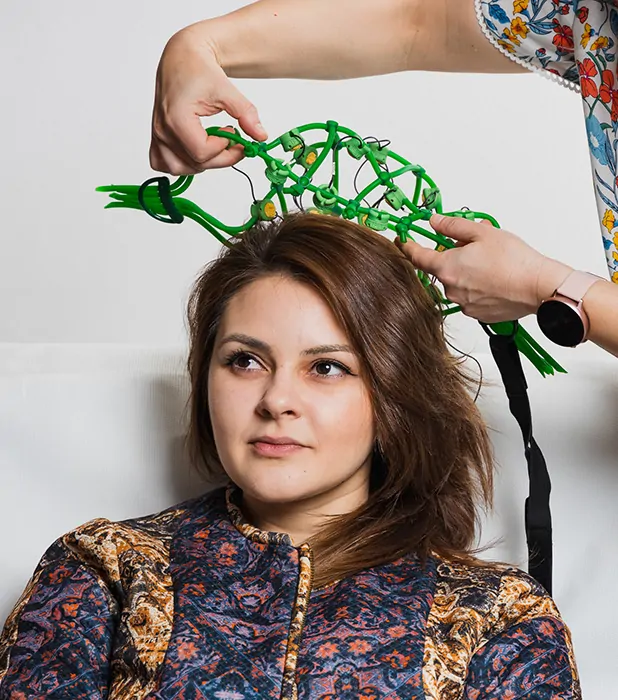
Preparing the EEG sensor cap for a person seated in the clinic room
A cap with 19 soft electrodes, moistened with saline water, is placed on your head. It doesn't hurt, doesn't pulse, doesn't emit anything. It only reads.
50 minutesscan visit, including preparation
30-60 minutesseparate consultation, after the results
2 sessionsinitial, included in the protocol
7 working daysmaximum time for results

What does the BrainMap Protocol involve, step by step?

The brain produces electrical activity. Here is what happens, step by step.

  1. 0-5 min

    You settle comfortably

    A cap with 19 soft electrodes, moistened with saline water, is placed on your head. It doesn't hurt, doesn't pulse, doesn't emit anything. It only reads.

  2. 5-15 min

    Your brain activity is recorded

    • 7 minutes with eyes closed
    • 7 minutes with eyes open

    The sensor headset records the electrical activity of the brain. The software picks up the electrical impulses emitted by your brain and begins to process them.

  3. qEEG analysis

    The signal becomes a map

    qEEG analysis turns it into a map that offers clues and activation patterns. The map does not locate “laziness” and does not on its own establish the cause of tiredness or procrastination. A visit of about 50 minutes, with preparation and recording included.

  4. Interpretation

    General practitioner and clinical psychologist

    Based on the scan results, you receive the BrainMap interpretation from the institute's founders. The recorded patterns are discussed in the context of your sleep, attention, history and the difficulties you describe.

    The specialist looks for the connections relevant to your situation and uses them in the recommendations of your brain training plan.

  5. 30-60 min

    Separate consultation, after the results

    For explanations and questions.

  6. Plan

    Protocol 100% adapted to your brain pattern

    Based on the results, we draw up a treatment protocol with brain training. The methods are chosen individually; the specialist explains the indications, limits, contraindications and possible unpleasant reactions.

  7. Training

    You start the neurofeedback sessions

    You take part in guided sessions of feedback and repetition, with individual goals for self-regulation or attention. Response differs, and improvement in procrastination or tiredness cannot be guaranteed.

  8. Day 30

    Progress check at 30 days

The only BrainMap clinic in Romania where interpretation is done by a doctor and a clinical psychologist.

The map matters. The specialists who interpret it matter just as much. Two professional perspectives. Attention for the same person.

A report becomes useful when someone explains the link between the indicators, your history and the questions you came with. At the BrainMap Institute, every interpretation goes through the two founders. This role is a concrete part of the protocol.

Dr. Alina Diana Nemeș, co-founder of the BrainMap Institute

Dr. Alina Diana Nemeș

General practitioner · Co-founder

Has over 20 years of professional experience. A general practitioner and neurofeedback therapist. The medical perspective helps place the information from the evaluation in the context of your history and situation.

Learn about their professional background

Alina Robu, clinical psychologist, co-founder of the BrainMap Institute

Alina Robu

Clinical psychologist · Co-founder

Brings the perspective of clinical psychology into the BrainMap interpretation. Your everyday experiences, your goals and the way you describe your difficulties complement the data analysed.

Learn about their professional background
Both founders hold an IFEN neurofeedback therapist certification, dated 22 June 2020.

At the BrainMap Institute, the interpretation of results is not done with AI alone.

The only centre in Romania where the map is interpreted by a doctor and a clinical psychologist.

The questions do not end when the software generates the report. In the post-BrainMap consultation, the results are turned into explanations and recommendations discussed with you. You do not have to learn to read the report on your own.

0patients of the Institute
0published books
0centres in Romania

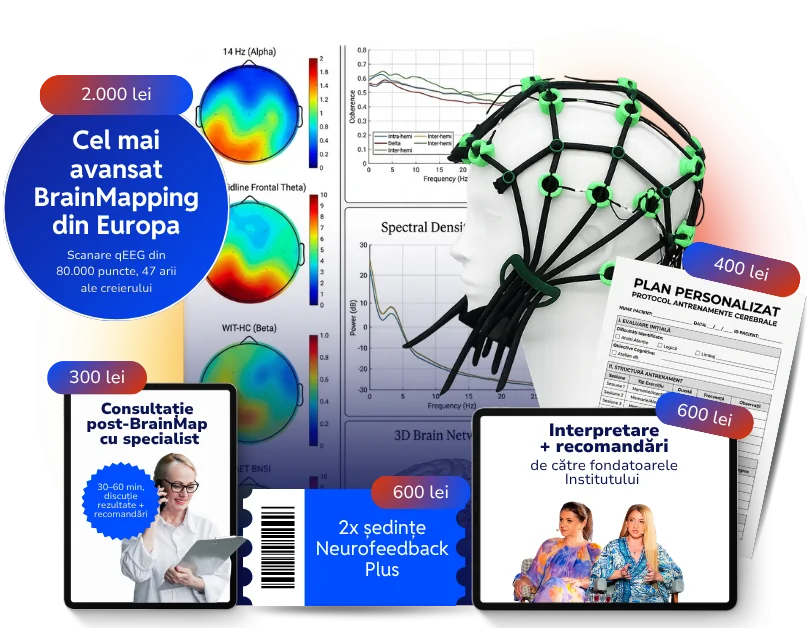
What the BrainMap Protocol includes: from recording to the first two sessions.

Day1

The most advanced BrainMapping in Europe

qEEG scan of 80,000 points, 47 areas of the brain.

2.000 lei
Day4

Interpretation by a doctor and a psychologist

Interpretation, explanations and recommendations from Dr. Alina Diana Nemeș and Clinical Psychologist Alina Robu, who pioneered neurofeedback in Romania.

600 lei
Day5

Post-BrainMap consultation with a specialist

30-60 minutes: discussion of the results + recommendations.

300 lei
Day6

Personalised plan of 6 brain training sessions

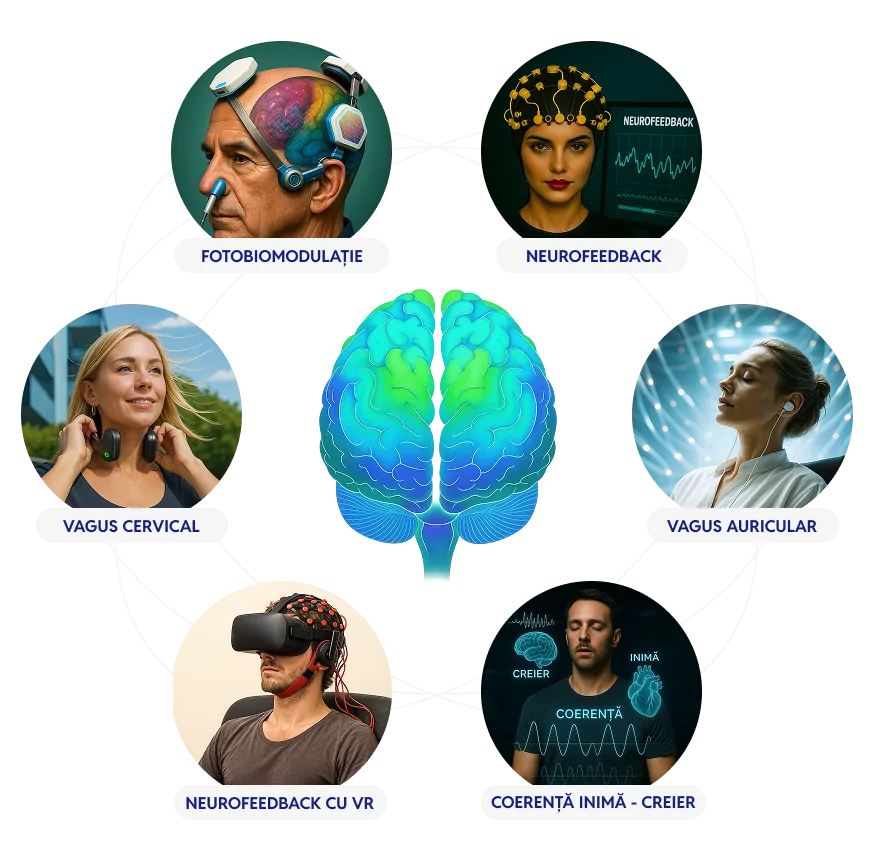
The BrainMap Institute is the only centre in Romania that, following 20 years of studies, has developed a combination unique in the world of 6 brain trainings that blend neurofeedback with photobiomodulation, BrainTune, heart-brain coherence, vagal stimulation and VR neurofeedback.

400 lei
Day7

2 brain training sessions

Your first two training sessions, included in the protocol.

600 lei
  • You receive your results within 7 working days at most
  • Progress check-in and brain optimisation report at 30 days, included
Real value: 3.900 lei
2,000 RON

How does the “scientific” headset work for the BrainMap scan and neurofeedback sessions?

Electrical activity, organised into information that can be interpreted. qEEG scan from 80.000 points, 47 areas of the brain.

Electrodes placed on the scalp record EEG signals. Quantitative analysis, called qEEG, processes these signals and represents them through indicators and maps.

The specialist explains what they mean in the context of your assessment. The first step in the protocol is collecting objective data.

The analysis looks at indicators of the EEG signals and their distribution. These indicators do not measure energy reserves, iron, thyroid hormones or dopamine. This map contains no diagnosis of “laziness” or any certain explanation of procrastination.

Alpha 8-12 Hz

Educational illustration of the frequency bands analysed in qEEG.

Brain rhythms

The analysis looks at activity in frequency bands, such as delta, theta, alpha and beta, and their contribution to the recorded signal. In the interpretation you learn what these indicators describe and why they are relevant to the discussion with the specialist.

Distribution of activity

The maps show how indicators are distributed across the recorded areas and allow differences or asymmetries to be observed. You receive explanations about your map and about the findings worth discussing.

Relationships between signals

Coherence and connectivity indicators describe relationships between signals recorded in different areas. The specialist looks at them together with the rest of the data, for an overall interpretation.

Comparison with age norms

The data are put in context by comparison with a normative database for the age group, according to the protocol used. You understand what a difference from the reference means and how it is interpreted in your situation.

Protocol technology for attention and self-regulation: 2 types of BrainMap headsets

We use the most advanced equipment for the BrainMap investigation.

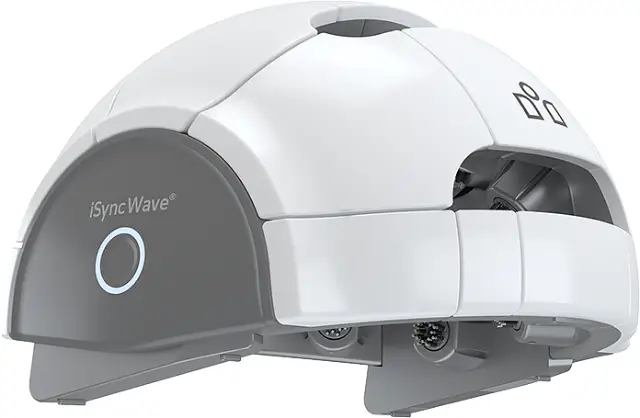
The headset measures dry EEG, without gel, and the platform processes the signals in the cloud with AI analysis (on a database of over 100 million people) and provides a complex, detailed qEEG analysis from over 80.000 points of the brain, on brain activity in the 47 Brodmann areas, giving information about their specific functions.

The result is a visual map that helps the specialist discuss your brain activity in concrete terms.

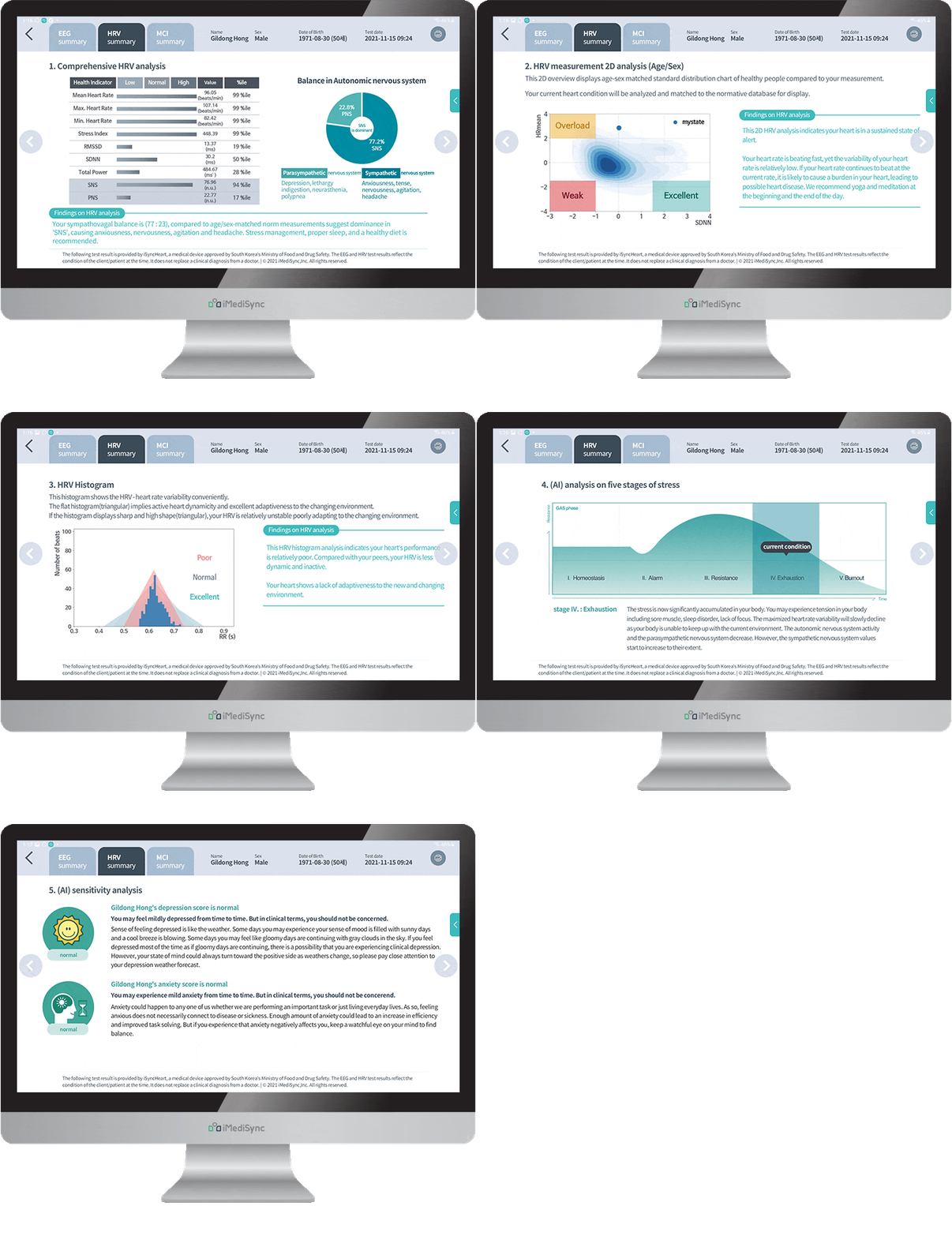
The iMediSync report displayed on a computer, with the stress analysis

You can choose iMediSync for a quick check-up or Discovery 24 for a detailed investigation that also identifies predispositions and hidden anomalies.

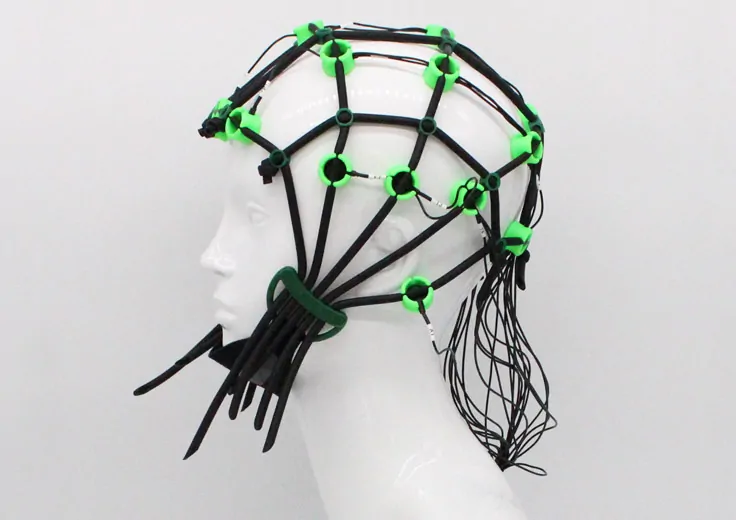
The sensor headset used with the BrainMaster Discovery 24E
Detailed investigation

BrainMaster Discovery 24E

Clinical 24-channel EEG amplifier, analysis with software of your choice, clinically oriented or neurofeedback reports.

Scan duration
14 min (7 eyes closed + 7 eyes open)
Results
By e-mail within 3 days, interpreted by experts
Type of analysis
Detailed report: neuronal connectivity, brain network activity, in-depth analysis of each Brodmann area
Method
24-channel qEEG, silver electrodes with sponges moistened with saline solution
Price
2.000 RON
Sampling rate1024 Hz internal; sent to the PC at 256 samples/s; DC-100 Hz band (EEG 0.43-80 Hz)
AI data analysisBrainAvatar AI (database of over 100 million people)
Brain coverageDetailed qEEG analysis from over 80.000 points of the brain
Therapeutic functionsAdvanced neurofeedback, multimodal biofeedback (heart rate, breathing, muscle tension), evoked potentials (ERP), EEG stimulation. Support for clinical protocols and research.
Signal qualityHigh-quality, stable signal with no loss, thanks to the moistened electrodes
Analysis resultsBy e-mail within 3 days, interpreted by experts in BrainMapping and Neurofeedback: Dr. Alina Diana Nemeș and Psych. Alina Robu + personalised recommendations
StrengthsHigh-fidelity signal, extended channel count, DC/SCP; high sampling; mature software ecosystem (incl. sLORETA)
Country of originUSA
CertificationsFDA 510(k) K150498 (clinical EEG); FDA 510(k) K990538 (biofeedback training); ISO 13485; CE Class I Biofeedback Device; IEC-60601; AAMI
Weight20 g
Minimum age2 years

At the BrainMap Institute we use both technologies, depending on the patient's needs.

What happens after the scan, the map, the interpretation and the consultation?

You start the neurofeedback and brain training sessions.

You actually start working and training your brain. Neurofeedback works through real-time feedback and repetition.

Neurofeedback uses information from EEG activity for visual or auditory feedback. It can be discussed as an individualised adjunct for self-regulation and attention, alongside the interventions recommended for your situation.

“I want to start, but I keep putting it off.” This gap deserves to be understood, not judged.

your willpower is not enough., but the brain can regulate these imbalances by itself, if it is taught how.

That is exactly what neurofeedback does: it sends the brain real-time feedback about how it should work. Over time, through this brain training, the brain learns to function without the imbalances that affect your day-to-day life.

You are not buying a universal number of sessions up front. You start with the two included in the protocol and discuss continuing after the assessment.

Assessment, interpretation, consultation, plan and two initial sessions included.

6 brain training methods: neurofeedback and complementary neurotechnologies, chosen individually, not a recipe for motivation.

The BrainMap Institute combines neurofeedback with complementary neurotechnologies. The specialist discusses which method may be suitable and what its limits are. These options are not presented as a proven treatment for procrastination or tiredness and do not replace prescribed medication.

While classic neurofeedback uses visual and auditory stimuli, brain training combines the classic version with 5 other neurotechnologies. This way, we can offer brain training that is 100% personalised to the uniqueness of your brain.

Different technologies, different indications and evidence
Diagram: BrainMap technologies, photobiomodulation, neurofeedback, cervical vagus, auricular vagus, VR neurofeedback and heart-brain coherence

Start the BrainMap Protocol for attention, lack of motivation, laziness, procrastination and focus

  • The most advanced BrainMapping in Europe (qEEG scan of 80.000 points, 47 brain areas)
  • Interpretation, explanations and recommendations from the founders of the Institute, who pioneered neurofeedback in Romania (Dr. Alina Diana Nemeș and Clin. Psych. Alina Robu)
  • Post-BrainMap consultation with a specialist (30-60 min, discussion of results + recommendations)
  • Personalised brain training plan
  • 2 brain training sessions included
  • Progress check-in and brain optimisation report at 30 days, included
  • You receive your results within 7 working days at most
The BrainMap Protocol for attention and self-regulation: what is included
Real value: 3.900 lei
2,000 RON
Book the BrainMap ProtocolBook the Protocol

Do you have questions about booking or costs? Request the free phone discussion before you decide.

Real experiences from the Institute, in different contexts.

General testimonials, kept in their original form. They are not demonstrated cases of treating procrastination or fatigue and do not prove effectiveness for these difficulties. Results and the number of sessions differ.

Anxiety and depression after childbirth
“When the therapies began, I had given birth 3 months earlier, and depression and anxiety were a heavy burden for me. I am deeply grateful to the Brainmap Neuroscience team for their involvement and warmth. It took a while until I started to be functional again and to be a present mother in my child's life. That is because I understood and accepted this responsibility, which frightened me terribly.”
A
Andreea M.BrainMap patient
Tension, agitation and irritability · 88 sessions
“For many years I felt a constant mental tension that caused me discomfort, restlessness and irritability. I had the inspiration to go to the institute, and following the assessment I learned that I had overactivation in certain areas of the brain. I did 88 training sessions and now I am a different person: calm, peaceful, optimistic, and sometimes I wonder whether my state is not happiness itself. Thank you to Mrs Alina Robu for the patience and attention given, hello to Mia, hello to all the highly qualified staff I worked with!”
I
Ion T.BrainMap patient
Sleep, concentration, inner calm
“Neurofeedback improved my life: sleep quality, concentration, inner calm. I warmly recommend it!”
S
Simona D.BrainMap patient
Stress and other aspects of functioning
“Noticeable effects appeared already after the first two sessions, and then came many pleasant surprises related to a better ability to manage stress, boosted empathy, improved communication, memory, concentration... All of this, projected towards those around me too... led to the creation of a circle of good consequences, also improving other people's attitude towards me. In other words... total success!”
P
Petrica S.BrainMap patient
Another experience from the Institute · ADHD in a child
“As the parent of a child with ADHD, I am extremely grateful to the Brainmap Neuroscience team for their patience and dedication. I have noticed remarkable improvements in my child's behaviour and ability to concentrate. At school he is more attentive, he can sit at his desk without disturbing the class, we managed to build a homework routine, we can now take him to basketball too, and he has time to play.”
I
Ioana I.Parent

“But what about my case?” Start with the concrete answers.

You don't have to come with everything figured out. But you should know what the assessment is and what you are buying.

I am always tired. Where do I start?

Start with your family doctor, especially if the fatigue has lasted several weeks, is getting worse or is limiting your activities. Depending on your history and examination, they may recommend assessment for anaemia, thyroid function, sleep disorders or depression. Do not prescribe yourself iron or other supplements. BrainMap does not replace this path.

Is neurofeedback proven for procrastination?

We do not present it as a proven treatment for procrastination. The evidence is uncertain for this goal. It can be considered as an individualised adjunct for attention and self-regulation, with tracked goals and reassessment. Psychotherapy, adapting tasks and treating medical causes may each have a distinct role.

Does BrainMap show the cause of my lack of motivation?

No. qEEG describes the brain's electrical activity, does not measure motivation or dopamine and does not diagnose procrastination. Interpretation is done in a clinical context. Anaemia, thyroid problems, sleep disorders or depression require appropriate assessments and are not ruled out by an EEG map.

Do I get electric shocks during the assessment?

In the EEG assessment, the sensors record. No current is sent through these sensors. The assessment and any training methods are different stages; the team explains what each one involves.

How long does the first visit last and when do I get the results?

Set aside about 50 minutes for preparation and recording. The interpretation and consultation are not squeezed into the same visit. The report is ready within seven working days at most; the separate consultation of 30-60 minutes follows.

Are the two sessions the whole treatment?

The two sessions are the start of the training. They are not a complete treatment or a promise that tiredness and procrastination are resolved in two meetings. The specialist discusses the goals, the response to the sessions and whether continuing is appropriate.

Do I have to buy a big package from the start?

You don't have to choose a whole programme now. The entry offer has explicit inclusions and a clear price: 2.000 lei. If continuing is recommended, you learn the number, frequency and costs before you decide. The listed rate for an additional individual session is 300 lei.

I already see a psychotherapist or take medication. What do I do?

Bring up what you are already doing and what has helped you. Do not stop your treatment for this evaluation and do not change your medication on your own. BrainMap recommendations are placed in the context of your care; treatment decisions are discussed with the clinician who looks after you.

How many sessions will I need and when will I feel changes?

It would be simple to give you a fixed number. But the plan has to take you into account: evaluation, goals and response to the sessions. Discuss with the specialist how progress is tracked and what continuing would mean. We do not promise one timeframe that is the same for everyone.

I am not ready to book. Can I ask questions first?

You can start with a free informational call. You ask about the process, what is included, the location and the booking steps. The call does not oblige you to buy the protocol, and it is not a free investigation or diagnosis.

Choose the centre you want to visit.

Tell us where you want to come. The team checks availability and explains the booking. Tap a city to see the address, opening hours and phone number.

You don't have to decide the logistical details on your own. The team will tell you the address and how to prepare for your first visit.

Choose your city and see the addresses

Have questions before you book?

Request an informational phone call, free and with no obligation.

Leave us your name, your number and the city you would like to come to. The phone conversation is informative, free of charge and with no obligation to buy the protocol.

Enter your name, so we know how to address you.
Check the number: it needs at least 10 digits.
Choose the city.

Brain training and investigations are NOT free. The phone discussion is for information only.

We have received your request.

We have received your request for an information call. This is the first step for questions, not a confirmed evaluation appointment.

You don't have to understand everything to take the first step.

Start with the BrainMap assessment, the specialist's interpretation and the first included training sessions.

If procrastination and lack of energy fill your days, it is worth asking for support suited to the cause. If tiredness persists, start with your doctor. The BrainMap Protocol includes evaluation, interpretation, consultation, a personalised plan and two initial neurofeedback sessions. 2.000 lei in total.

Book · 2.000 lei