
What brain mechanisms cause tinnitus and how can they be regulated?

Discover the real cause of tinnitus and treat it right at the source, through brain training personalized to the uniqueness of your brain.

What is tinnitus?
Tinnitus (or ringing in the ears) is the perception of a sound in the ear or in the head without a real external source. It can show up as ringing, buzzing, whistling or hissing and it can vary in intensity.
This symptom affects over 749 million people worldwide (JAMA Neurology). Although it is not a disease in itself, it is associated with more than 200 conditions, from neurological disorders to emotional imbalances. In many cases tinnitus becomes persistent and influences sleep, attention and well-being.
Do you recognize yourself in any of the situations below?
- You hear a ringing or a buzzing in your ears every day
- Your sleep is fragmented because of the noise inside
- Your focus and attention are affected
- You become anxious or irritable in quiet moments
- Your quality of life and your social relationships are affected
Classic treatment methods
- Medication (antidepressants, anxiolytics, vasodilators) – sometimes reduces the symptoms, but does not address the neuronal cause.
- Sound therapy (TRT) – masks the noise with background sounds, offering temporary relief.
- Psychotherapy – supports the management of the anxiety and stress associated with tinnitus.
Brain training
✅ Addresses the real cause: Yes
✅ Side effects: No
✅ Relapse risk: Low
✅ Personalization: Complete
⏱️ Time to results: After a few sessions
How the classic treatment methods compare
Classic methods can bring relief, but they act on the symptoms rather than on the neuronal cause of tinnitus. Here is how each one stands on the aspects that matter.
Medication
- Addresses the real cause: symptoms only
- Side effects: yes
- Relapse risk: high
- Personalization: limited
- Time to results: 2–6 weeks
Sound therapy
- Addresses the real cause: partial
- Relapse risk: variable
- Time to results: variable
Psychotherapy
- Personalization: standard
How neurotechnology works in tinnitus
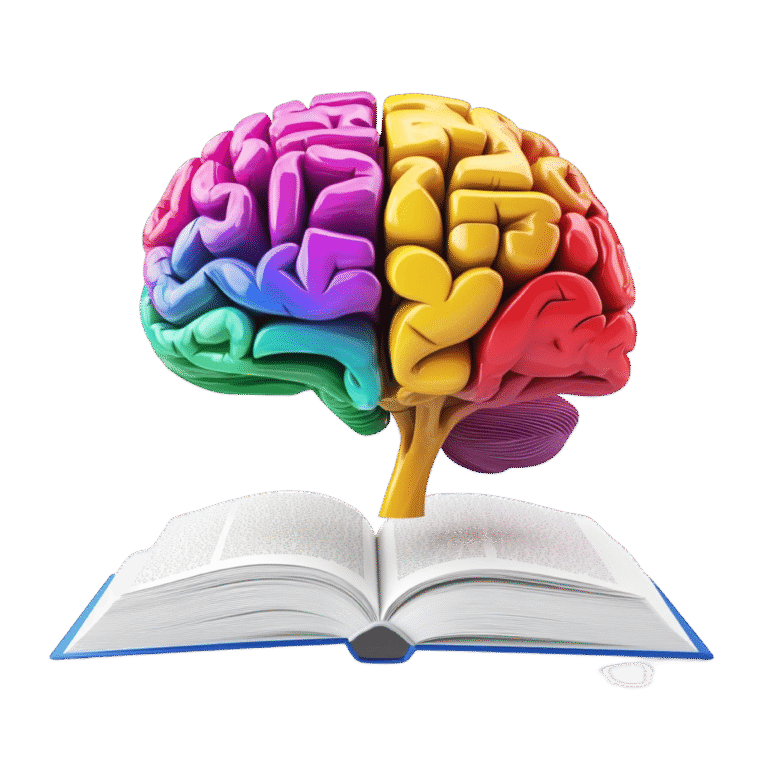
- It normalizes brain activity in the auditory areas
- It reduces the persistent perception of phantom sounds
- It lowers the anxiety and tension that worsen the symptoms
- It improves the quality of sleep and relaxation
- It is completely non-invasive and free of adverse effects
What do the studies say?
EEG and MEG have identified a pattern that is frequent in tinnitus: increased activity in the delta and gamma frequencies and reduced activity in alpha, which suggests an imbalance between excitation and inhibition in the thalamocortical circuits. The results showed that neurofeedback allows patients to voluntarily regulate their brain activity, through real-time visual or auditory feedback, in order to “unlearn” the neuronal patterns associated with tinnitus.
Frequently asked questions
Treating tinnitus often involves a combination of methods:
These approaches can bring benefits, but the effects tend to be variable and fragile as long as the abnormal activity in the auditory areas and in the neuronal networks associated with tinnitus persists.
Have you tried medication or sound therapy, but the noise persists? At the BrainMap Institute we use modern, neuroscience-based methods that act directly on the brain imbalances that keep tinnitus going.
Our methods, based on applied neuroscience, regulate the brain hyperactivity associated with tinnitus, especially in the auditory and emotional areas. Using real-time EEG feedback, the brain is guided to reduce its excessive activity and to restore neuronal balance. Instead of masking the sound, the method trains the brain to normalize its own neuronal activity.
Clinical studies show that neurofeedback can reduce the abnormal neuronal activity associated with tinnitus and can improve auditory perception.
NEUROFEEDBACK AND QUANTITATIVE ELECTROENCEPHALOGRAPHY (2002)
The study showed that neurofeedback reduces delta and theta activity, increases alpha activity and normalizes vestibular potentials in patients with vertigo and tinnitus. The effects were still present 12 months after treatment, indicating lasting neurophysiological changes and symptom relief.
NEUROFEEDBACK THERAPY IN THE TREATMENT OF TINNITUS (2018)
The study highlights the advantages of neurofeedback in tinnitus, especially its efficacy independent of the degree of hearing loss. Patients recorded improvements confirmed both by subjective assessments and by EEG changes. The positive results remained stable for six months after treatment.
We analyze the electrical activity of the brain through a state-of-the-art neurocognitive assessment (qEEG), in order to identify the brain hyperactivity associated with tinnitus.
Based on your brain map, you receive the interpretation of the results and a treatment plan adapted 100% to your brain pattern, prepared by Dr. Alina Diana Nemes and Clin. Psych. Alina Robu.
Your brain learns to self-regulate, reducing tinnitus and hearing imbalances. The training sessions are relaxing, non-invasive and free of adverse effects.
Can neurotechnology help with chronic tinnitus?
Yes. By regulating cortical hyperactivity, persistent tinnitus becomes less intense and the brain learns to stop generating phantom noises.
How long until the first results appear?
Many patients report a drop in intensity after 8–12 sessions, with stable effects after 30–40 sessions.
Is it a safe method?
Yes. It is 100% non-invasive, based on EEG measurement and visual-auditory feedback, with no medication.
What happens during a session?
EEG sensors measure brain activity, and the patient interacts with animations or games that change according to the brain's responses. This way, the brain is trained to reduce the internal noise.
Can it be combined with other therapies?
Yes. It integrates very well with audiological treatments, psychotherapy or medication, increasing their efficacy by stabilizing neuronal activity.
Brain training unique in the world
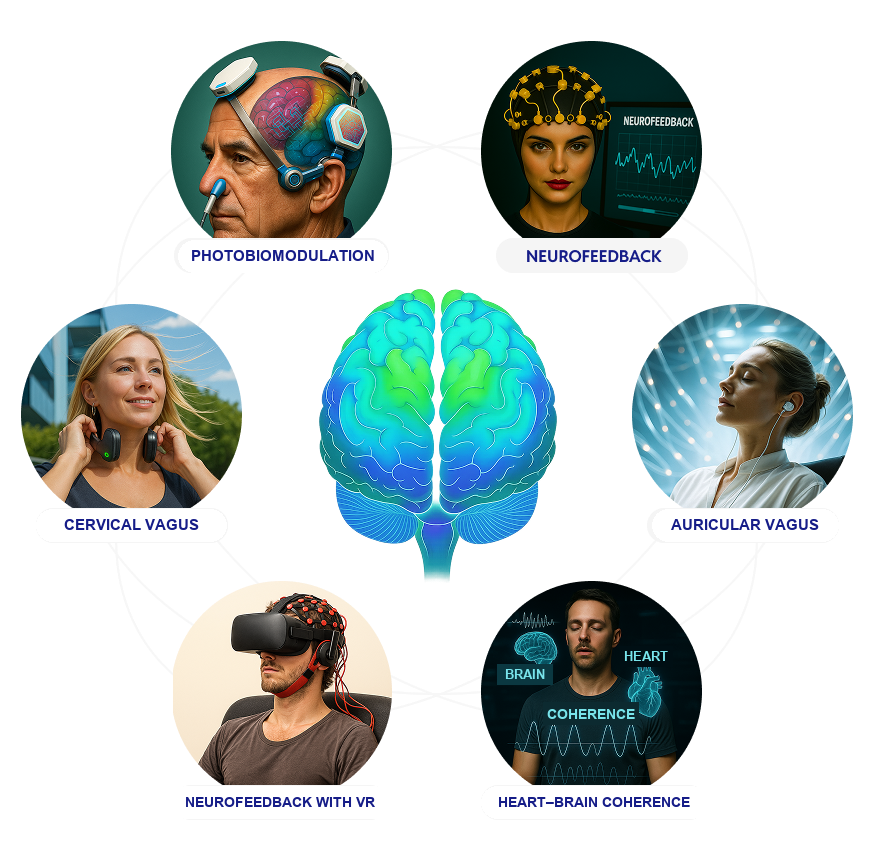
Brain training unique in the world, combining neurofeedback with other complementary neurotechnologies such as photobiomodulation, heart–brain coherence and vagus nerve stimulation, to help you reach your full potential and live the best life possible.
- Results up to 50% faster than classic neurofeedback
- Treats neuropsychiatric and pathological conditions
- Works directly on the cause, not the symptoms
- Restores emotional balance, sleep and mental clarity
- Increases focus, resistance to stress and cognitive performance
- A protocol 100% personalized to the uniqueness of your brain
- Validated by 65+ years of research in neuroscience
Book a free phone consultation with one of the BrainMap Institute's specialists
- You get answers to any questions you have about BrainMap and brain training
- You find out how brain training is applied to the uniqueness of your brain and your situation
- You will know the exact steps to follow to live the best life possible
Effectiveness proven in international scientific studies
What our patients say
Read the experiences of those who overcame their condition.
See testimonialsDo you want to understand what is happening in your brain?
Book a call with the BrainMap Institute's specialists and find out how a BrainMap and brain training can help you.
Book a free call